
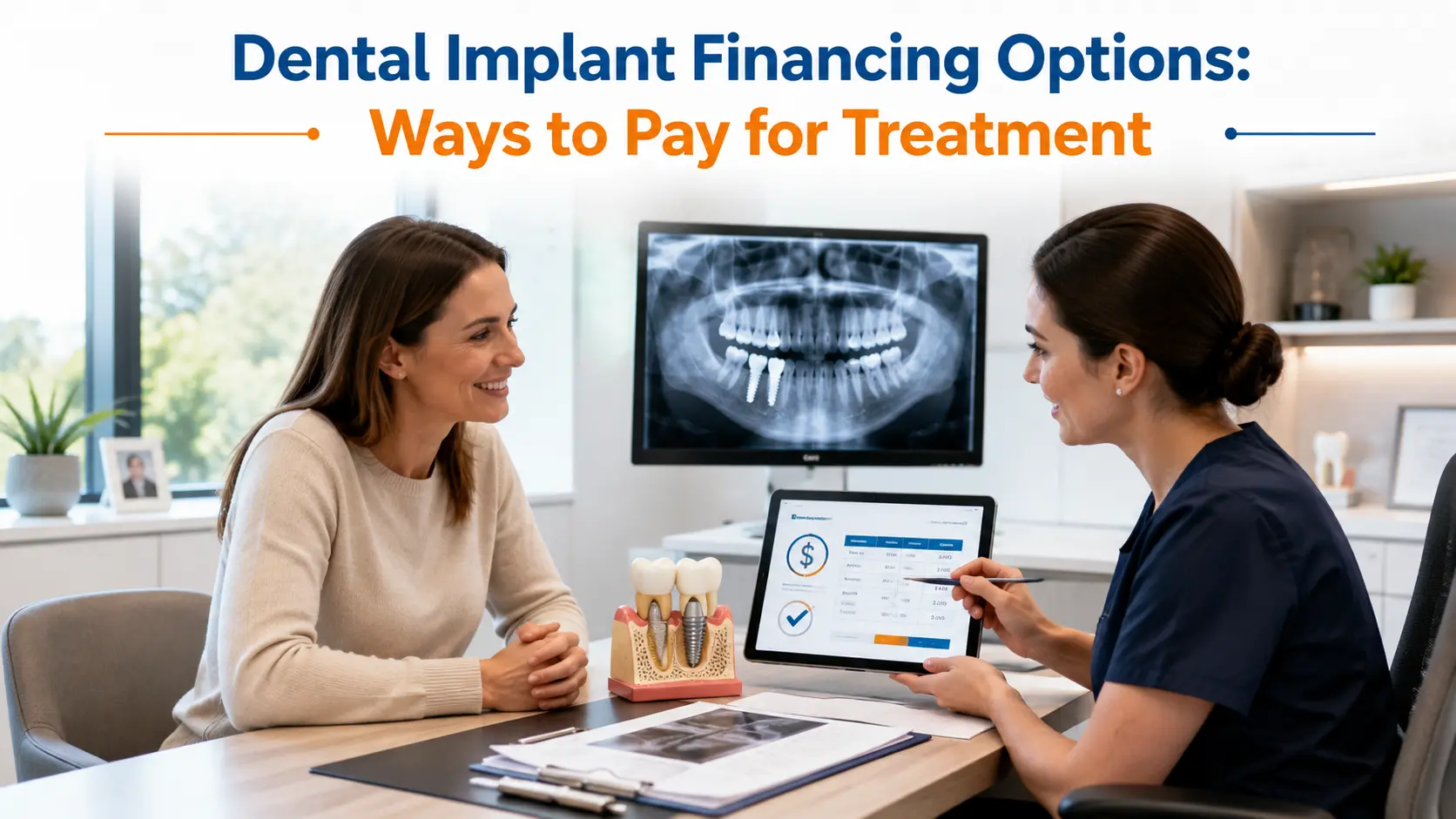
Dental implants can be an important investment in your oral health, but paying the full treatment cost at once may not fit your budget. This can be especially challenging if you have limited insurance coverage, little savings, or need treatment sooner rather than later.
Several dental implant financing options can help make the cost easier to manage. Depending on your situation, you may use a dental payment plan, third-party financing, a personal loan, insurance benefits, HSA/FSA funds, personal savings, or a combination of payment methods.
Before choosing any financing plan, first understand the complete treatment estimate. This gives you a clearer picture of how much you actually need to borrow.
What Are the Main Dental Implant Financing Options?
You can often pay for dental implant treatment in more than one way. The best approach depends on your treatment cost, available benefits, credit situation, and monthly budget.
Common options include:
- Dental office payment plans
- Third-party healthcare financing
- Personal loans
- Dental insurance benefits
- HSA or FSA funds
- Personal savings or a down payment
- A combination of several payment methods
A common mistake is choosing a lender before getting a complete treatment plan. It is better to know the expected cost first, then compare payment options for the remaining balance.
How Much Do You Actually Need to Finance?
The total dental implant estimate is not always the same as the amount you need to finance. Insurance, HSA or FSA funds, and your own contribution may reduce the remaining balance.
A simple way to calculate it is:
Treatment Estimate − Insurance or Benefits − Personal Contribution = Approximate Amount to Finance
An implant estimate may include more than the implant post. Depending on your oral health, treatment can also involve:
- Dental imaging
- Tooth extraction
- Bone grafting
- Implant placement
- Abutment
- Dental crown
- Sedation or related procedures
A single implant and a more complex case that requires grafting or multiple implants can have very different costs. Ask for an itemized estimate so you are not comparing financing options based on an incomplete price.
How Do Dental Implant Payment Plans Work?
A dental implant payment plan spreads treatment costs across scheduled payments instead of requiring the entire balance upfront.
The dental practice may arrange some plans, while an outside financing company may provide others. That distinction matters because a third-party lender may control approval, credit checks, interest rates, and repayment rules.
Before agreeing to monthly payments, review:
- Required down payment
- Monthly payment
- Repayment length
- APR or interest rate
- Additional fees
- Credit requirements
- Late-payment rules
Ask for the terms in writing before treatment begins.
How Do Healthcare Financing and Personal Loans Compare?
Healthcare financing is designed for medical or dental costs, while a personal loan can usually cover many types of expenses.
Neither option is automatically better. Compare the actual terms offered to you.
| Feature | Healthcare Financing | Personal Loan |
|---|---|---|
| Purpose | Medical or dental care | General borrowing |
| Credit Check | Often required | Usually required |
| Interest | May include promotional offers | Usually based on APR |
| Repayment | Varies by provider | Often a fixed term |
| Main Concern | Promotional conditions | Interest and fees |
Do not judge affordability by the monthly payment alone. A longer repayment period may lower your monthly payment while increasing the total amount you repay.
Also check whether a promotional offer is true 0% financing or uses deferred interest. With some deferred-interest plans, additional interest may apply if you do not pay the balance in full within the promotional period.
Can Insurance, HSA, or FSA Funds Reduce Implant Costs?
Dental insurance may help pay for part of implant treatment, but benefits depend on your individual policy. Annual maximums, exclusions, waiting periods, and coverage rules can affect what the insurer pays.
An insurance estimate can help with planning, but the final benefit may differ once the claim is processed.
You may also be able to use eligible HSA or FSA funds for qualifying dental expenses. Using these funds or personal savings before borrowing can reduce the amount financed and may lower your overall borrowing cost.
If insurance is expected to contribute, ask how the dental office handles insurance payments before financing the entire quoted amount.
Can You Finance Dental Implants With Bad or Limited Credit?
Patients with poor or limited credit may still have financing options, but approval requirements and terms vary between providers.
Before applying, ask whether checking eligibility uses a soft credit inquiry or a hard credit inquiry. A hard inquiry may appear on your credit report.
If borrowing the full amount is difficult, you may be able to reduce the amount you need to finance by:
- Using available insurance benefits
- Applying eligible HSA/FSA funds
- Making an affordable down payment
- Financing only the remaining balance
- Asking the dental office about other payment arrangements
Be cautious of claims such as guaranteed approval. Financing should always come with clear eligibility requirements and written terms.
What Should You Compare Before Choosing Financing?
The lowest monthly payment is not always the least expensive option.
Use this simple four-number check:
- Confirm the total treatment estimate.
- Calculate the amount you need to finance.
- Review the monthly payment.
- Check the total repayment.
Then compare the details behind those numbers.
| What to Compare | Why It Matters |
|---|---|
| Amount Financed | Shows how much you are borrowing |
| APR | Shows the cost of borrowing |
| Monthly Payment | Helps with monthly budgeting |
| Repayment Term | Shows how long you will make payments |
| Fees | May increase the overall cost |
| Total Repayment | Shows your total financial commitment |
These numbers help you compare both short-term affordability and long-term cost.
What Should You Ask Before Signing?
Before accepting dental financing, ask:
- What is the APR?
- Are there financing or application fees?
- What will I repay in total?
- Is the interest rate fixed?
- Is there deferred interest?
- Will applying affect my credit?
- Can I repay the balance early without a penalty?
- What happens if I miss a payment?
- What happens if my treatment plan changes?
Financing terms, interest rates, eligibility requirements, and insurance benefits vary. Always confirm current terms before signing an agreement.
Dental Implant Financing in Issaquah, WA
If you are considering dental implants in Issaquah, begin with a complete examination and written treatment estimate before choosing how to pay.
Eastside Modern Dentistry can help patients review expected treatment costs, insurance information, and available financing or payment options. Knowing the full treatment plan first makes it easier to decide how much you may need to finance.
FAQ's
Can I finance only part of my dental implant cost?
Yes. You may use insurance, savings, HSA/FSA funds, or an upfront payment and finance only the remaining balance.
Can I use a co-signer for dental financing?
Some financing companies may allow a co-signer or joint application. Eligibility requirements vary by lender.
Can dental financing be paid off early?
Many plans allow early repayment, but check the agreement for possible prepayment fees or other conditions.
Should I apply for financing before my implant consultation?
It is usually better to know your treatment plan and estimated cost first. This can help you avoid borrowing more than necessary.
Final Thoughts
A financing plan should fit both your dental treatment needs and your budget. Before committing, make sure you understand the complete treatment estimate, how much you are borrowing, and what you will repay over time.
If you are planning dental implant treatment in Issaquah, a consultation can help clarify your treatment needs, expected costs, and available payment options.