
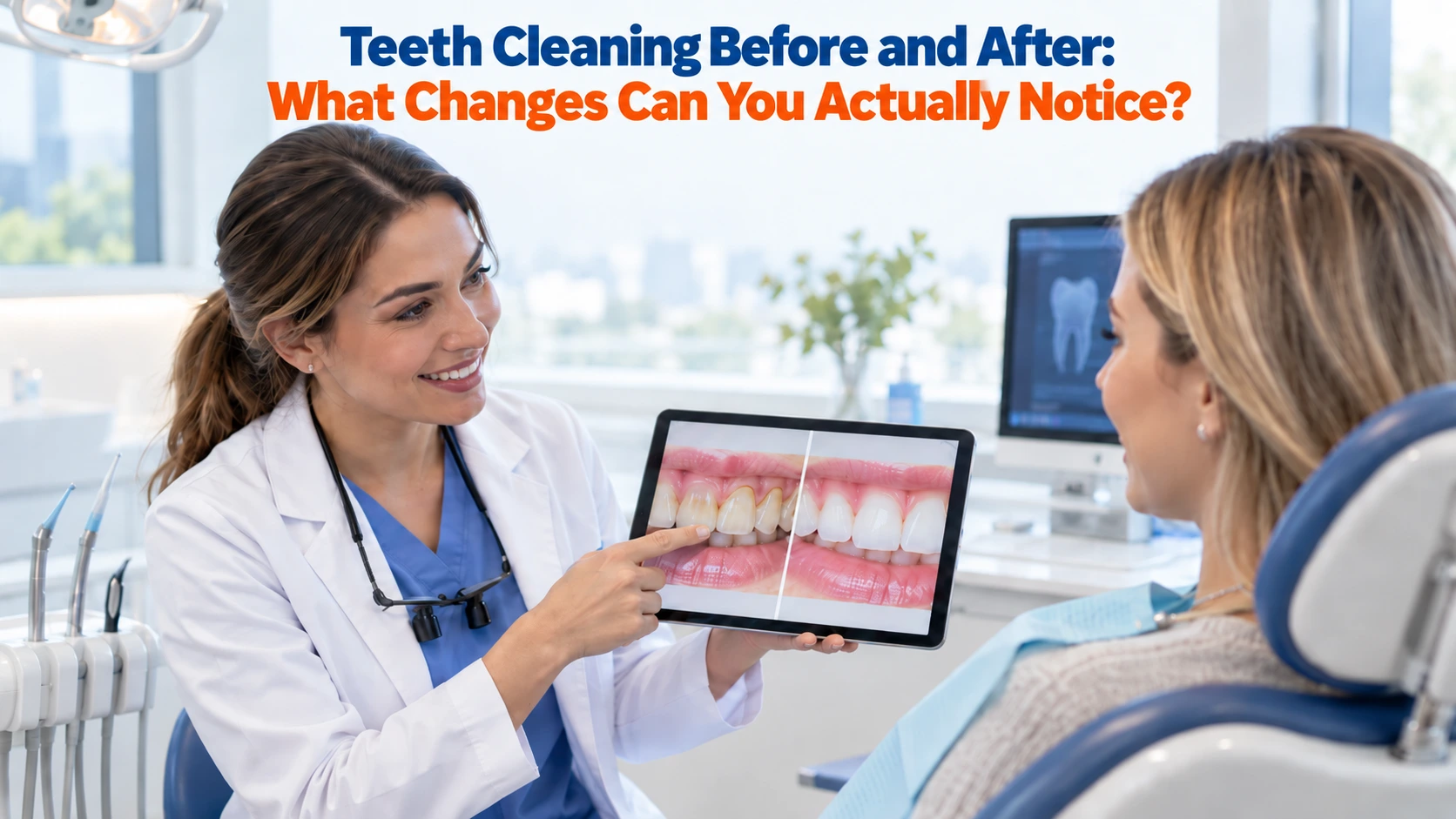
Before a dental cleaning, you may wonder how different your teeth will look afterward. Will tartar disappear? Will they look whiter or feel different?
The changes you see after a teeth cleaning depend on what was present before treatment. Heavy tartar or surface staining may lead to an obvious visual difference. If you already have regular cleanings, the biggest change may be how smooth and fresh your mouth feels.
What Changes After Professional Teeth Cleaning?
Professional cleaning removes plaque and hardened tartar, also called dental calculus. Plaque is a soft bacterial film that daily brushing and interdental cleaning can usually remove. When plaque hardens into tartar, a dentist or dental hygienist must remove it. NIDCR also notes that normal brushing alone cannot remove tartar.
After cleaning, you may notice:
- Less visible tartar around the gumline
- Smoother tooth surfaces
- A cleaner-looking gumline
- Less surface staining
- Fresher breath
Removing heavy deposits can also make the true condition of tooth surfaces and gums easier to see. A dramatic cosmetic change is not required for a cleaning to be useful.
Why Do Teeth Feel Smoother?
Tartar creates a hard, rough surface that may be easy to feel with your tongue. Once these deposits are removed and the teeth are polished when appropriate, the surfaces often feel noticeably smoother.
This can be easy to notice behind the lower front teeth, where tartar commonly collects. The smooth feeling comes from removing buildup, not adding anything to the tooth.
What Can You Notice Before vs. After Teeth Cleaning?
The starting condition matters more than many before-and-after photos suggest. Visible tartar or dark surface stains may create a bigger change than regularly maintained teeth.
Before cleaning, teeth may feel rough, and deposits may be visible near the gums. Right afterward, the surfaces often feel cleaner and smoother, while some external stains may look lighter. Mild gum tenderness or sensitivity can occur in some people.
Over the next few days, irritated gums may look healthier as long as you keep brushing well and cleaning between your teeth. New plaque will still form, so home care remains important.
Does Teeth Cleaning Make Your Teeth Whiter?
Professional cleaning can make teeth look brighter, but it does not work like tooth whitening.
Cleaning may reduce extrinsic stains, which are stains on the outside of the teeth caused by things such as coffee, tea, tobacco, or strongly colored foods. The American Dental Association notes that professional prophylaxis can reduce some types of external staining.
Whitening works differently because bleaching agents change tooth color. Cleaning mainly removes deposits and certain surface stains. If your teeth's natural shade is yellowish, routine cleaning will not automatically turn them bright white.
This is why two people can have successful cleanings but see very different cosmetic results.
Why Can Teeth Feel Different After Cleaning?
Once tartar is removed, areas that were covered by buildup may suddenly feel unfamiliar. Teeth may feel very smooth, while some people notice short-term sensitivity around the gumline.
Cold drinks, cool air, or brushing may feel stronger for a short time. If sensitivity becomes severe, worsens, or doesn't settle, a dental professional should check it.
Why Can Gaps or Longer-Looking Teeth Become More Noticeable?
Cleaning does not normally create new gaps between teeth. Heavy tartar can occupy or hide part of an existing space near the gumline. Once you remove that deposit, the space may become easier to see.
Teeth can also appear slightly longer if buildup is removed or swollen gum tissue settles. Gum recession and changes in tooth support can have other causes, however, so worrying changes should be examined rather than assumed to be a normal cleaning result.
Routine Cleaning vs. Deep Cleaning: Are the Results Different?
Routine cleaning and deep cleaning are not interchangeable.
Routine professional cleaning is mainly preventive and removes plaque and tartar from accessible tooth surfaces and around the gumline.
Scaling and root planing is a periodontal treatment used when gum disease requires deeper cleaning below the gumline and around affected root surfaces. The ADA describes scaling and root planing as treatment for gum disease, not simply a stronger version of routine cleaning.
Routine cleaning does not:
- Repair cavities
- Straighten teeth
- Change tooth shape
- Bleach the natural tooth shade.
- Replace periodontal treatment for deeper gum disease.
The right type of cleaning depends on the condition of the teeth, gums, and supporting tissues.
How Long Do Teeth Cleaning Results Last?
Professional cleaning removes existing deposits, but new plaque forms again over time. How long your mouth feels clean depends on brushing, cleaning between the teeth, diet, staining habits, and overall oral health.
To maintain the results:
- Brush twice a day with fluoride toothpaste.
- Clean between the teeth every day.
- Follow your dentist’s recommended cleaning schedule.
- Attend regular dental exams.
Not everyone needs the same cleaning interval. Your dentist can recommend a schedule based on gum health, cavity risk, tartar buildup, and other individual factors.
FAQs
Can I eat after professional teeth cleaning?
Usually, yes. If your dental team applied fluoride or another treatment, follow their instructions before eating or drinking.
Can teeth cleaning damage enamel?
Professional cleaning is intended to remove plaque, tartar, and deposits without intentionally removing healthy enamel. If you have pain or notice a rough area afterward, ask your dentist to check it.
Why does tartar return even when I brush?
Some plaque can remain in hard-to-reach areas and later harden into tartar. Tooth position, saliva, and home-care technique can all influence buildup.
Can cleaning remove stains between teeth?
Some external stains may improve with professional cleaning. Deeper or internal tooth discoloration may require a different type of treatment.
Final Thoughts
The most useful before-and-after result is not always a dramatic color change. For many people, removing hardened deposits and making tooth surfaces easier to keep clean is the more important benefit.
If you have heavy tartar, ongoing gum bleeding, unusual sensitivity, or changes around the gumline, a dental exam can help determine whether routine cleaning or periodontal care is more appropriate.