
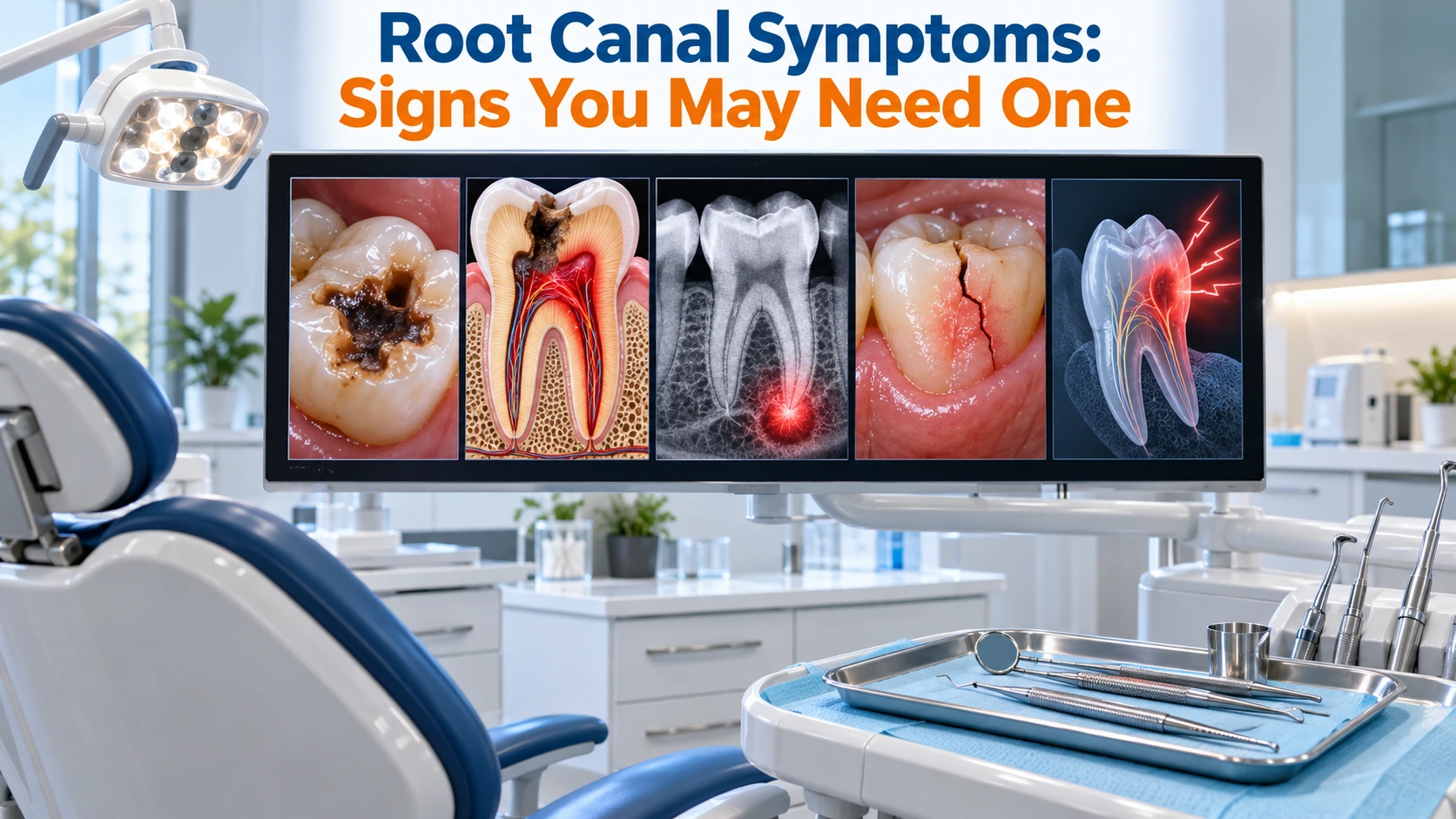
Does your tooth hurt when you bite into food? Or does it stay sensitive long after drinking something cold? You may wonder whether you need a root canal.
Recognizing root canal symptoms can help you understand when something is wrong inside your tooth. Some signs involve severe pain, while others are easy to miss. Knowing what to look for can help you seek dental care before the problem becomes more serious.
What Are the Common Signs You May Need a Root Canal?
A root canal may be necessary when the dental pulp, the soft tissue inside your tooth, becomes badly inflamed or infected. This tissue contains nerves and blood vessels.
Several symptoms can suggest pulp damage, although none can confirm the need for treatment on its own.
1. Persistent or Throbbing Tooth Pain
Pain that continues for hours, returns frequently, or wakes you at night may indicate inflammation inside your tooth.
Sometimes the pain spreads toward your jaw or nearby teeth, making it difficult to identify exactly where it started.
2. Lingering Sensitivity to Hot or Cold
A tooth may feel sensitive when you drink something hot or cold. Brief sensitivity does not always mean there is a serious problem.
However, pain that continues after you stop eating or drinking may suggest significant pulp inflammation.
3. Swollen or Tender Gums
Swelling near a painful tooth can be a warning sign of infection.
Other possible signs include:
- A small pimple-like bump on the gum
- Tenderness around one tooth
- An unpleasant taste from gum drainage
- Swelling that returns after temporarily improving
A draining gum bump may become less noticeable, but the infection causing it may still need treatment.
4. Tooth Discoloration
A tooth that becomes darker than nearby teeth may have suffered an injury or changes inside its pulp.
However, stains and other dental problems can also change tooth color. A dentist can identify the likely cause.
5. Pain When Chewing
Pain while chewing may occur when a tooth is cracked or the tissues around its root become inflamed.
The discomfort may feel sharp or make the tooth seem tender whenever pressure is applied.
6. A Tooth That Suddenly Stops Hurting
Sometimes severe tooth pain disappears even though the problem has not healed.
This can happen when damaged pulp loses its ability to respond normally. A dental examination is important if the tooth previously caused significant pain.
Why Does Your Tooth Hurt With Pressure?
A tooth that hurts when you bite or apply pressure does not always need a root canal. The pain may come from a crack, deep decay, an uneven filling, or inflammation around the root.
What Causes Pressure Pain Before a Root Canal?
Different dental problems can produce similar symptoms:
- Cracked tooth: A crack may cause sharp pain while biting or releasing pressure.
- Deep cavity: Decay may reach the inner tooth and irritate its pulp.
- Inflamed root tissues: The supporting tissues may become tender when chewing.
- High filling or crown: An uneven bite may place extra pressure on one tooth.
Because these problems require different treatments, pressure pain alone cannot confirm that root canal treatment is needed.
Why Does a Tooth Hurt With Pressure After a Root Canal?
A tooth may remain tender for a few days after root canal treatment while the tissues around its root recover.
Although a root canal removes the pulp inside the tooth, the surrounding tissues still contain nerves. These tissues can become sore from inflammation or biting pressure.
If pain becomes worse, lasts longer than expected, or returns after healing, contact your dentist. An uneven bite, crack, or continuing infection may need evaluation.
Can You Need a Root Canal Without Pain?
Yes. A tooth can have serious pulp damage without causing noticeable pain.
When the pulp dies, a condition called pulp necrosis, the tooth may stop responding to hot and cold temperatures. However, bacteria can still cause an infection around its root.
For example, a tooth injured years earlier may slowly lose its vitality without causing obvious symptoms.
Dentists sometimes discover these problems during routine examinations or dental X-rays. This is why the absence of pain does not always mean a tooth is healthy.
What Else Can Cause Symptoms Similar to Root Canal Problems?
Not every toothache comes from damaged pulp. Several conditions can produce similar discomfort.
| Dental Problem | Possible Symptoms |
| Tooth decay | Sensitivity or pain when eating |
| Cracked tooth | Sharp pain when biting |
| Gum disease | Swollen or bleeding gums |
| Sinus infection | An ache in several upper back teeth at once |
| Teeth grinding | Sore teeth and jaw in the morning |
| Heart problems | Jaw pain with chest pressure or shortness of breath |
Jaw pain with chest pressure, sweating, or shortness of breath is an emergency. Call 911.
How Do Dentists Determine Whether You Need a Root Canal?
Dentists confirm the diagnosis with a few quick tests:
- A cold test to see how the nerve responds
- Gentle tapping and a bite test to find the sore tooth
- Dental X-rays or a 3D CBCT scan to check for infection around the root
If the pulp can still heal, a filling may be enough. Complex teeth may be referred to an endodontist, a root canal specialist.
When Should You See a Dentist Right Away?
Get same-day dental care if you notice facial swelling, a fever, pus, or trouble opening your mouth. If swelling makes it hard to breathe or swallow, go to the emergency room.
FAQ's
Can antibiotics replace a root canal?
Antibiotics can calm swelling, but they cannot remove the infected tissue inside the tooth. The infection usually returns.
When is tooth pain an emergency?
Facial swelling, fever, pus, or trouble opening your mouth need same-day care. Trouble breathing or swallowing means the ER.
How long does a root canal take?
Usually 60 to 90 minutes. Some need a second visit.
Do I need a crown after a root canal?
Back teeth usually do, to handle chewing forces. Front teeth often don't.
Final Thoughts
Before your visit, write down when the pain happens, what triggers it, and how long it lasts. These notes help your dentist find the cause faster.
If you are noticing any of these signs, Eastside Modern Dentistry in Issaquah offers same-day emergency visits.