
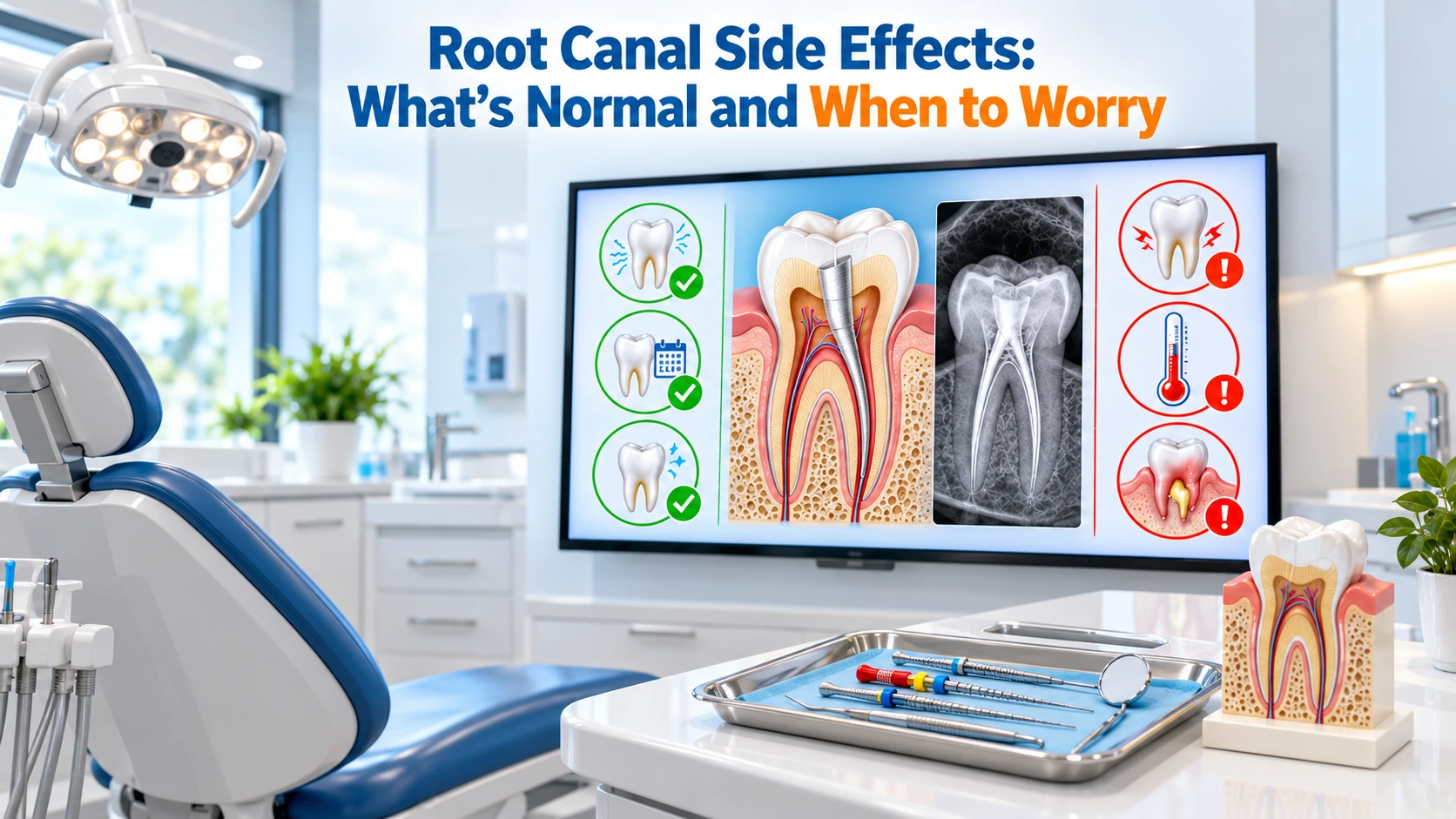
You had a root canal a few days ago, and your tooth still feels sore when you eat. Or perhaps you had the treatment years ago, but the same tooth has started hurting again. Should you be worried?
Most root canal side effects are mild and improve as your mouth heals. However, pain that gets worse or returns after a long time may signal a problem.
Knowing which symptoms are expected and which need attention can help you protect your natural tooth and seek care at the right time.
What Are the Common Side Effects of a Root Canal?
A root canal removes infected or damaged pulp from inside a tooth. Although the pulp is removed, the tissues around the tooth’s roots still contain nerves. These tissues may feel sore while healing.
Common short-term side effects include:
- Mild tooth soreness: The treated tooth may feel tender for a few days.
- Pain when chewing: Pressure from biting can irritate healing tissues.
- Gum tenderness: The area around the tooth may feel sensitive.
- Jaw discomfort: Keeping your mouth open during treatment may leave your jaw feeling tired.
- Mild inflammation: The tissues surrounding the roots may need time to recover.
These symptoms should gradually improve rather than become more painful.
One thing patients often misunderstand is temperature sensitivity. A fully treated tooth should no longer sense hot and cold through its removed pulp. New temperature sensitivity may come from a nearby tooth or another problem that needs checking.
How Long Do Root Canal Side Effects Last?
Most people begin feeling better within a few days after treatment. According to Cleveland Clinic, root canal recovery usually takes less than a week, although healing time varies.
If the tooth had a serious infection before treatment, the surrounding tissues may take longer to settle.
Normal Recovery vs. Possible Complications
| Normal Recovery | Possible Complication |
|---|---|
| Mild soreness that improves | Pain that gets worse |
| Temporary biting tenderness | Persistent or returning biting pain |
| Gum tenderness that decreases | Increasing gum swelling |
| Improving comfort over several days | New pain after feeling better |
The most useful sign of healing is steady improvement, not reaching a certain day without discomfort.
During recovery, choose softer foods and avoid chewing hard items on the treated tooth. If you have a temporary filling, follow your dentist’s advice until the final restoration is placed.
What Are the Signs of a Reinfected Root Canal?
A previously treated tooth can develop problems when the original infection does not fully clear or when bacteria enter the tooth again later.
The symptoms of a root canal that is infected may appear months or even years after treatment.
Common Signs of Root Canal Infection
- Recurring toothache: Pain returns after the tooth was comfortable.
- Pain when biting: Chewing causes sharp or ongoing discomfort.
- Swollen gums: The gum near the treated tooth becomes tender or enlarged.
- Pimple-like gum bump: A small bump may appear where infection drains.
- Bad taste: Drainage around the tooth may cause an unpleasant taste.
- Facial swelling: Infection may cause swelling around the jaw or face.
These symptoms do not always mean the root canal has failed. Other dental problems can cause similar changes.
Can an Infected Root Canal Have No Pain?
Yes. Some people have an infection around a treated tooth without feeling pain.
This can happen with apical periodontitis, which affects the tissues around the root tip. A dentist may find signs of this condition during an examination or dental X-ray.
Regular dental visits can help identify problems before they become painful.
Why Can a Root Canal Become Infected Again?
Root canal treatment removes infection and seals the canals. However, bacteria can sometimes remain in hidden spaces or enter the tooth again.
The American Association of Endodontists identifies several reasons why previously treated teeth may develop new problems.
Damaged Crowns, Fillings, and Tooth Decay
A crown or filling helps protect the treated tooth from bacteria.
If it becomes loose, cracked, or damaged, bacteria may enter through small gaps. New cavities can also expose the tooth to infection.
Delaying a permanent restoration may increase the risk of problems. This is why completing the recommended crown or filling is an important part of root canal care.
Missed Root Canals and Persistent Infection
Root canals are not always straight. Some curve or branch into tiny spaces that are difficult to clean.
If an area remains untreated, bacteria may continue causing infection.
An endodontist may need to examine the tooth’s canal structure before deciding whether another procedure could help.
Does Pain After a Root Canal Always Mean Infection?
No. Pain after a root canal does not always mean the treatment has failed.
Several problems can cause discomfort in a previously treated tooth:
- Uneven bite: A filling or crown that sits too high may put extra pressure on the tooth.
- Cracked tooth: A small crack may cause pain when chewing.
- Gum inflammation: Problems in the surrounding gums can make the area tender.
- Nearby tooth pain: Discomfort from another tooth may seem to come from the treated tooth.
A common mistake is assuming that every painful root canal needs retreatment.
A dentist must identify the cause before recommending another procedure. This may prevent unnecessary treatment and help address the actual problem.
How Is a Reinfected Root Canal Diagnosed and Treated?
A dentist begins by asking when the symptoms started and whether they have changed.
The examination may include checking the gums, testing biting pressure, and looking for damaged restorations or cracks.
Dental X-Rays and Clinical Examination
Dental X-rays help dentists look for changes around the tooth’s roots.
Some problems, including certain cracks or early bone changes, may not be clear on a standard X-ray. In selected cases, CBCT imaging provides a more detailed three-dimensional view.
The dentist uses the examination and imaging findings together to make a diagnosis.
Can a Reinfected Root Canal Be Saved?
Many previously treated teeth can still be saved, depending on their condition.
Treatment options include:
- Root canal retreatment: The old filling material is removed so the canals can be cleaned and sealed again.
- Endodontic surgery: Surgery near the root tip may be recommended in certain cases.
- Tooth extraction: Removal may be necessary when severe cracks or damage make the tooth impossible to restore.
The amount of healthy tooth structure left is an important factor in choosing treatment.
When Should You See a Dentist After a Root Canal?
Contact your dentist if pain keeps getting worse, swelling develops, or discomfort returns after the tooth has healed.
Persistent drainage, a gum bump, or pain when chewing also deserves evaluation.
Seek prompt dental care for fever or increasing facial swelling. Rapidly spreading facial or neck swelling, difficulty swallowing, or trouble breathing requires emergency medical attention.
Getting the tooth examined early may provide more treatment options.
FAQ's
Can a root canal infection heal without treatment?
Symptoms may improve temporarily, but an active root canal infection generally requires professional dental treatment. Feeling better does not always mean the infection has cleared.
Can antibiotics cure a reinfected root canal?
Antibiotics alone usually cannot remove the source of infection inside a treated tooth. The American Dental Association recommends definitive dental treatment for most localized dental infections.
Can a root canal become infected even with a crown?
Yes. A crown offers protection, but new decay, cracks, or gaps around its edges can sometimes allow bacteria to enter.
Is retreatment better than extracting the tooth?
Saving the natural tooth is often preferred when possible. However, severe fractures or extensive damage may make extraction the better option.
Can a root canal-treated tooth change color?
Yes. Some treated teeth darken over time. Discoloration alone does not prove infection, but a dentist can check the cause and discuss treatment options.
Get Your Tooth Checked When Something Feels Different
A tooth that has already received root canal treatment can still develop new dental problems. If discomfort returns, finding the cause early may help protect the tooth.
If you are experiencing ongoing pain or signs of infection, Eastside Modern Dentistry in Issaquah, WA, can evaluate your symptoms and discuss suitable treatment options.
Schedule a dental evaluation to find out what may be causing your discomfort.