
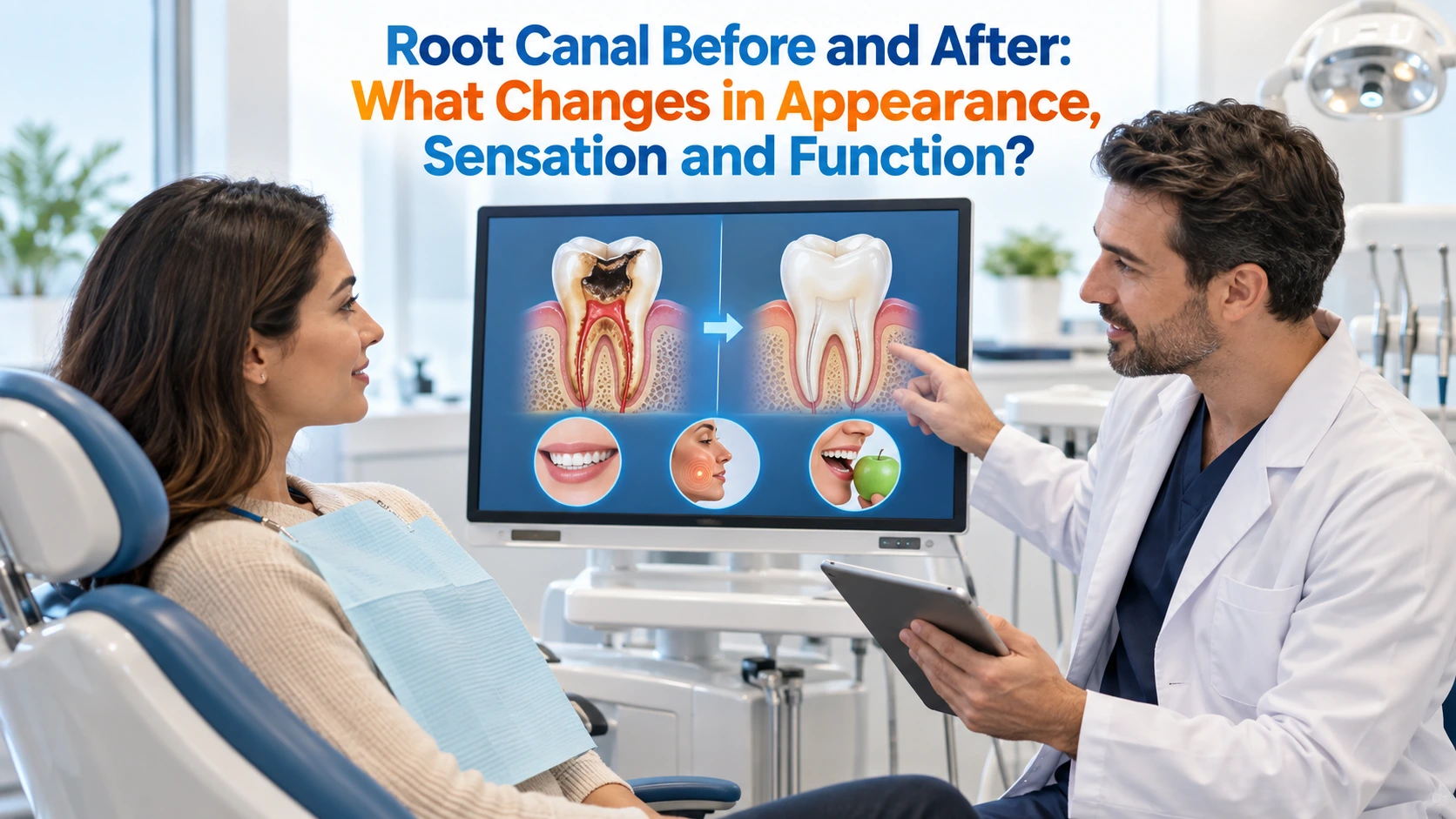
A root canal changes mainly what happens inside your tooth. The dentist removes inflamed or infected pulp, cleans and seals the canals, and restores the tooth so it can keep functioning. The tooth may look almost unchanged afterward, or it may need a filling, crown, or other restoration depending on its condition.
The easiest way to understand a root canal before and after is to look at four stages: before treatment, after the root canal, after final restoration, and after healing.
What Changes Before and After a Root Canal?
Before root canal treatment, the pulp inside the tooth may be inflamed, infected, or otherwise unhealthy. This can cause pain, sensitivity, swelling, pain while chewing, or sometimes no obvious symptoms at all.
After treatment, the diseased pulp is removed, and the root canals are cleaned, shaped, filled, and sealed. The tooth is then restored to protect it and restore normal function.
Feature |
Before Root Canal |
After Treatment and Restoration |
| Pulp | Inflamed, infected, or damaged | Removed |
| Root canals | May contain bacteria or diseased tissue | Cleaned and sealed |
| Sensitivity | May react strongly to hot or cold | Pulp-based temperature sensation is absent |
| Appearance | May show decay, damage, or discoloration | Depends on the final restoration |
| Function | Chewing may be painful | Comfortable function is the goal |
A useful distinction is that finishing the root canal and fully restoring the tooth are not always the same stage.
What Happens Inside the Tooth After a Root Canal?
During root canal treatment, the dentist or endodontist removes the damaged pulp from the center of the tooth and its root canals. The dentist then cleans, disinfects, fills, and seals the canals.
Although the pulp and its nerve tissue are removed, the tooth does not lose every type of sensation. The periodontal ligament and other tissues surrounding the root remain alive and can still detect pressure.
Can You Still Feel a Root-Canal-Treated Tooth?
Yes. A root-canal-treated tooth can still feel pressure when you bite or chew because the tissues around the root remain responsive.
What usually changes is the tooth's response to temperature. Because the pulp has been removed, the treated tooth no longer reacts to hot and cold in the same way it did before treatment.
This is also why mild biting tenderness can sometimes occur during recovery even though the nerve tissue inside the tooth has been removed.
Does a Tooth Look Different After a Root Canal?
A root canal does not automatically make a tooth look noticeably different. The finished appearance depends on how much tooth structure was damaged, whether the tooth was already discolored, and what type of restoration is placed.
A temporary filling may look or feel different from the final result, so the tooth's appearance immediately after treatment is not always its permanent appearance.
Front Tooth vs Molar
Appearance is often a bigger concern with a front tooth because it is visible when you smile. If a front tooth has darkened because of trauma or previous pulp damage, you may discuss cosmetic treatment after the root canal.
For molars and premolars, protection during chewing is often the bigger concern because these teeth handle stronger biting forces.
Can You Chew Normally After a Root Canal?
The goal of root canal treatment and final restoration is to allow comfortable, normal chewing again. However, you may need to avoid heavy chewing on the treated tooth until the dentist confirms that the permanent restoration is complete.
A root canal treats the inside of the tooth, while a filling, onlay, or crown restores and protects the remaining tooth structure.
Does Every Root Canal Need a Crown?
No. Not every root-canal-treated tooth automatically needs a crown.
The decision depends on factors such as:
- which tooth was treated
- how much healthy tooth structure remains
- whether there is a large filling or crack
- how much chewing pressure the tooth receives
- the dentist's assessment of fracture risk
Back teeth often need stronger restorative protection than front teeth, but the treatment plan should be individualized.
How Long Does a Tooth Take to Feel Normal After a Root Canal?
A treated tooth may not feel completely normal immediately after the procedure. Mild tenderness around the tooth or discomfort while biting can occur during the first few days as the surrounding tissues recover.
The general pattern should be toward improvement rather than worsening.
Contact your dentist or endodontist if you develop severe pain, increasing swelling, symptoms that continue instead of improving, or discomfort that returns after the tooth had previously settled.
The final restoration also matters. If you're using a temporary filling or crown, follow your dentist's instructions until they place the permanent restoration.
How Do You Know Whether a Root Canal Worked?
Dentists do not judge root canal success based only on how the tooth looks. They consider symptoms, comfortable chewing, the condition of the restoration, and, when needed, follow-up X-rays showing what is happening around the root.
A useful distinction is:
Tooth survival means the tooth is still present and functioning.
Treatment success means disease has healed or remains controlled, symptoms are acceptable, and the tooth continues to function properly.
Even a successfully treated tooth can develop new problems later if it cracks, develops new decay, or loses its seal. In some cases, root canal retreatment may be possible instead of removing the tooth.
FAQs
Can a tooth need a root canal without hurting?
Yes. Pain is an important symptom, but it is not the only way dentists identify pulp damage. Clinical tests, dental history, tooth structure, and X-rays may reveal a problem even without severe pain.
Why does my tooth hurt when I bite after a root canal?
The pulp has been removed, but tissues around the root remain sensitive to pressure. Temporary inflammation in these tissues can make biting feel tender during recovery.
Can a root canal tooth become darker?
It can happen, especially in front teeth that were previously injured or had changes inside the tooth. The cosmetic solution depends on the cause and the tooth's condition.
What does a root canal look like on an X-ray?
After treatment, the cleaned root canals usually appear filled with radiopaque material. Follow-up X-rays may also be used to monitor healing around the root when infection was previously present.
How long can a root-canal-treated tooth last?
A properly treated and restored tooth may function for many years. Longevity depends on factors such as remaining tooth structure, restoration quality, oral hygiene, cracks, decay, and future dental care.
Final Takeaway
The biggest difference before and after a root canal is not always what you see in the mirror. The main change happens inside the tooth, where the dentist removes diseased pulp, and cleans and seals the canals.
The final result depends on three things working together: successful root canal treatment, proper restoration, and healthy healing around the tooth. If the tooth does not improve as expected, a dentist or endodontist should evaluate the symptoms and restoration rather than relying on appearance alone.