
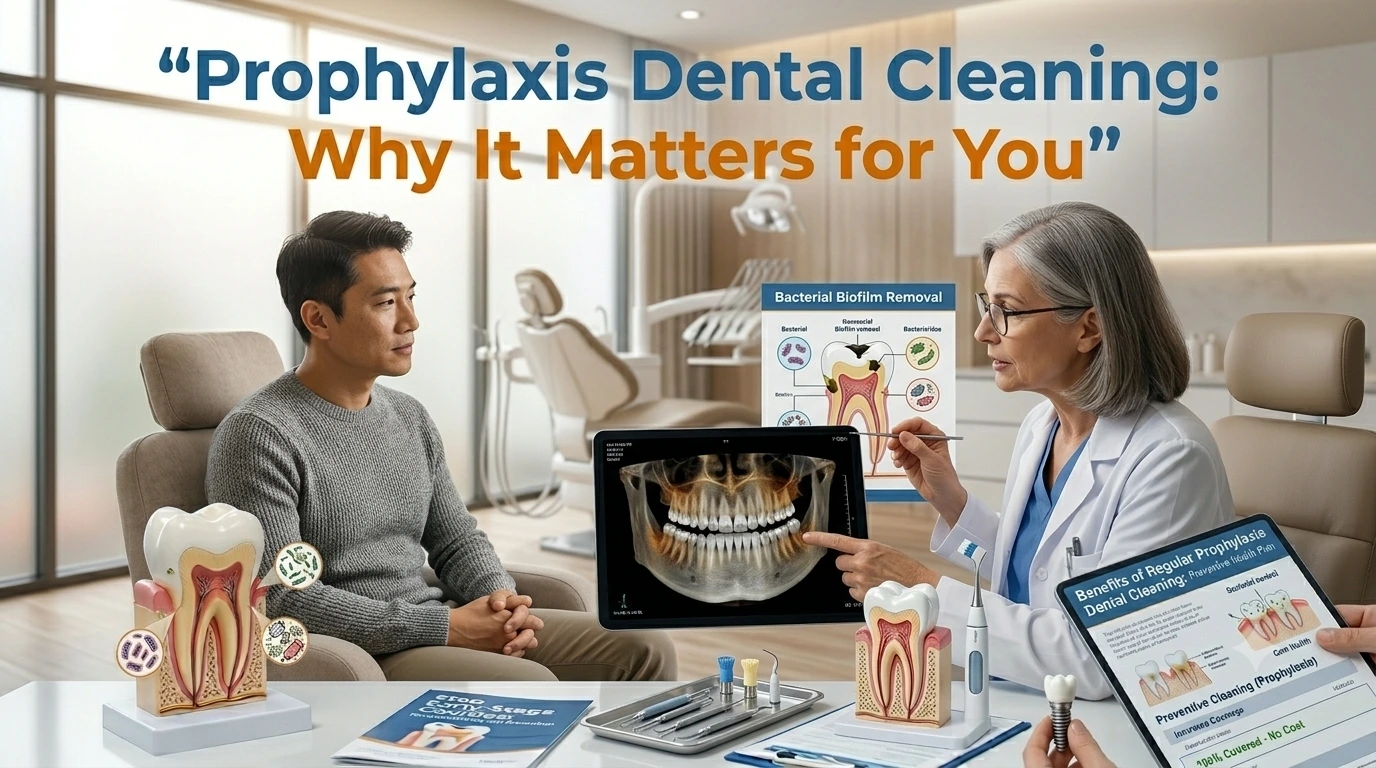
Most people know that brushing and flossing are important for keeping their teeth healthy. Yet even those with excellent oral hygiene can develop plaque, tartar buildup, and early gum problems over time.
That is because some areas of the mouth are difficult to clean completely at home. As plaque accumulates, it can harden into tartar, creating an environment where harmful bacteria thrive.
A prophylaxis dental cleaning is one of the simplest and most effective ways to protect your teeth and gums before problems develop. This preventive dental procedure helps remove plaque, tartar, and surface stains while supporting long-term oral health.
In this article, you'll learn what oral prophylaxis is, how it works, why dentists recommend it, and how routine cleanings can help you avoid more extensive restorative dental treatments in the future.
What Is Prophylaxis Dental Cleaning?
Dental prophylaxis is a routine professional cleaning designed to remove plaque and tartar before they contribute to oral health problems. It is one of the most common preventive dental services recommended for adults with generally healthy gums.
The term "prophylaxis" means prevention. In dentistry, it refers to treatment aimed at preventing disease rather than treating it after it develops.
While brushing and flossing remain essential, they cannot always remove plaque from every surface of the teeth. Over time, plaque can harden into tartar, which requires professional removal.
Why Is Oral Prophylaxis Important?
Oral prophylaxis helps remove harmful plaque and tartar deposits that can contribute to cavities, gum disease, and other oral health issues.
Many people believe that if their teeth feel clean, everything must be healthy. However, dental professionals frequently detect early signs of gum inflammation and tartar buildup in patients with no noticeable symptoms.
Without regular professional cleanings, plaque can accumulate around the gumline and between teeth, creating conditions that allow bacteria to flourish.
Benefits of Oral Prophylaxis Include:
- Reduced risk of cavities
- Improved gum health
- Fresher breath
- Removal of surface stains
- Early detection of dental concerns
- Long-term oral health maintenance
Plaque vs Tartar: Why the Difference Matters
Plaque and tartar are closely related, but they are not the same thing.
| Plaque | Tartar |
| Soft, sticky bacterial film | Hardened plaque deposits |
| Forms daily on teeth | Develops when plaque remains untreated |
| It can be removed by brushing and flossing | Requires professional removal |
| Contributes to tooth decay | Increases gum disease risk |
When plaque remains on the teeth, minerals in saliva cause it to harden into tartar. Once tartar forms, a toothbrush can no longer remove it.
This is one of the main reasons routine dental cleanings are important.
What Happens During a Prophylaxis Dental Cleaning?
A prophylaxis dental cleaning usually includes a dental examination, plaque and tartar removal, polishing, flossing, and personalized oral hygiene recommendations.
Most appointments involve:
1. Oral Health Evaluation
Your dentist or hygienist examines your teeth and gums for signs of decay, inflammation, or other concerns.
2. Plaque and Tartar Removal
Specialized instruments are used to remove hardened deposits from the teeth and gumline.
3. Tooth Polishing
A polishing paste helps remove minor stains and smooth tooth surfaces.
4. Flossing and Rinsing
Any remaining debris is removed between the teeth.
5. Personalized Recommendations
Your dental team may recommend adjustments to your home care routine based on your needs.
The PREVENT Framework for Long-Term Oral Health
One simple way to understand the value of prophylaxis dental cleaning is through the PREVENT framework:
- P – Prevent plaque buildup
- R – Reduce tartar accumulation
- E – Evaluate oral health regularly
- V – Verify gum health
- E – Eliminate harmful bacteria
- N – Notice problems early
- T – Treat issues before they worsen
This preventive approach can help reduce the likelihood of future restorative procedures.
What Are the Benefits of Regular Dental Prophylaxis?
Regular prophylaxis cleanings support both short-term and long-term oral health.
Helps Prevent Cavities
Plaque contains bacteria that produce acids capable of damaging tooth enamel.
Supports Healthy Gums
Removing plaque and tartar helps reduce inflammation and lowers the risk of gingivitis.
Improves Breath
Many cases of chronic bad breath are linked to bacterial buildup.
Removes Surface Stains
Professional polishing can reduce stains caused by coffee, tea, wine, and tobacco.
Saves Money Over Time
Preventive care is often significantly less expensive than restorative treatment.
Prophylaxis Cleaning vs Deep Cleaning
Prophylaxis cleaning is designed for prevention, while deep cleaning is used to treat active gum disease.
| Feature | Prophylaxis Cleaning | Deep Cleaning |
| Purpose | Prevention | Treatment |
| Gum Disease Present | No | Yes |
| Cleaning Area | Above and near gumline | Below gumline |
| Recommended For | Healthy gums | Periodontal disease |
| Frequency | Routine maintenance | As prescribed |
What Happens If You Skip Routine Dental Cleanings?
Skipping routine cleanings can increase the risk of plaque accumulation, tartar formation, cavities, and gum disease.
One important fact many patients do not realize is that oral disease often develops silently. Pain may not appear until significant damage has already occurred.
Potential Consequences Include:
- Increased cavity risk
- Persistent bad breath
- Gum inflammation
- Periodontal disease
- Tooth loss
- Higher treatment costs
The Hidden Cost of Delaying Care
A preventive cleaning is often far less costly than procedures such as:
- Dental fillings
- Root canal treatment
- Periodontal therapy
- Dental crowns
- Tooth replacement
Expert Insight From Dr. Nitin Jaggi
As a graduate of the University of Colorado School of Dental Medicine with extensive experience in oral surgery, implant dentistry, and endodontics, Dr. Nitin Jaggi has seen firsthand how preventive care impacts long-term oral health.
One common observation in clinical practice is that many patients who brush consistently still develop tartar deposits in hard-to-reach areas, particularly behind the lower front teeth and around the gumline.
Routine prophylaxis appointments allow these areas to be cleaned before they contribute to more significant dental concerns.
Myth vs Fact: Dental Cleaning Misconceptions
| Myth | Fact |
| Brushing removes tartar | Only professional cleaning removes tartar |
| No pain means healthy teeth | Many dental problems develop without pain |
| Dental cleanings damage enamel | Professional cleanings help protect oral health |
| Healthy teeth don't need cleanings | Preventive visits help maintain healthy teeth |
FAQ’s
How often should adults get a prophylaxis dental cleaning?
Many adults benefit from professional cleanings every six months. Some patients may require more frequent visits based on their oral health status and risk factors.
Can oral prophylaxis remove tartar?
Yes. Professional prophylaxis is specifically designed to remove tartar deposits that cannot be removed through brushing or flossing.
Is prophylaxis cleaning painful?
Most patients find routine cleanings comfortable. Mild sensitivity may occur if there is existing gum inflammation.
Does dental insurance cover prophylaxis cleaning?
Many dental insurance plans include preventive cleanings, though coverage varies by provider and policy.
Conclusion
Prophylaxis dental cleaning is one of the most valuable preventive services available in dentistry. By removing plaque, tartar, and harmful bacteria before they cause damage, routine cleanings help support healthy teeth, healthy gums, and long-term oral health.
They also play an important role in preventing the need for more extensive restorative treatments in the future.
At Eastside Modern Dentistry, our team is committed to providing personalized preventive and restorative care in a comfortable environment. If it has been several months since your last dental cleaning, scheduling a preventive visit can be a simple step toward protecting your smile for years to come.