
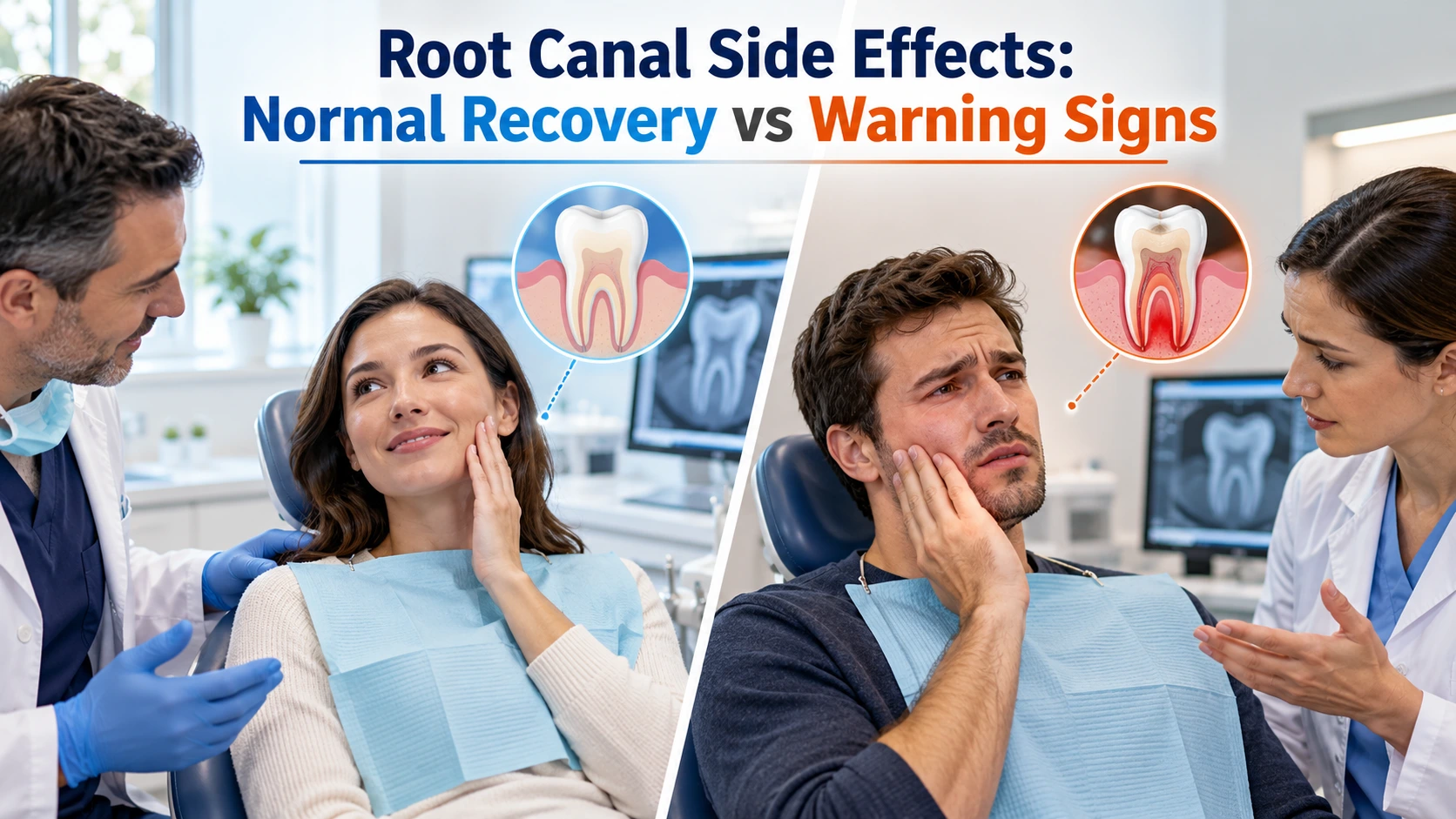
You expected your root canal to stop the toothache, but the tooth still feels sore, tender, or strange when you bite.
Some pain after root canal treatment can happen while the tissues around the tooth heal. What matters most is when the discomfort appears, what triggers it, and whether it is getting better or worse.
Is Pain After a Root Canal Normal?
Mild soreness or tenderness can be normal for the first few days after treatment. Sensitivity may be more noticeable if the tooth was painful or infected before treatment because tissues around the root still need time to settle. The American Association of Endodontists also notes that mild tenderness can occur while the area heals.
A toothache after root canal treatment should generally improve. Early healing may include:
- Mild tenderness around the treated tooth
- Sensitivity when chewing
- A bruised feeling around the root
- Discomfort that becomes less noticeable over time
Most patients improve within about three to five days. A dentist or endodontist should assess severe pain, worsening pain, or discomfort that continues beyond the expected early healing period.
Why Can a Tooth Hurt If the Nerve Was Removed?
A root canal treats the inside of the tooth. The dentist removes inflamed or infected dental pulp, cleans the root canal system, and seals the space.
But the tissues around the tooth are still alive. The periodontal ligament, bone, gums, and other tissues around the root can still sense pressure and inflammation. That is why a treated tooth may feel fine at rest but sore when you bite.
Removing damaged pulp does not remove sensation from every structure around the tooth. Post-treatment discomfort can therefore come from tissues outside the treated root canal system.
How Long Does Pain After a Root Canal Last?
Recovery varies from person to person, but the usual pattern is gradual improvement. A tooth that was badly inflamed before treatment may remain tender a little longer.
A simple recovery timeline may look like this:
- First one to two days: Tenderness or pressure may be most noticeable.
- Next few days: Discomfort should usually become milder.
- After early healing: The tooth should become easier to use.
The better question is not only, “How many days has it been?” but also, “Is the tooth feeling better than before?”
The AAE states that most patients experience mild discomfort for a few days and that symptoms usually improve within three to five days. Evaluate increasing or prolonged pain.
What Different Pain Patterns After a Root Canal May Mean
The way your tooth hurts can give your dentist useful clues. One simple way to describe your symptoms is the 4T Check:
- Time: How long has it been since treatment?
- Trigger: Does the tooth hurt while biting, touching, or without a trigger?
- Trend: Is it improving, unchanged, or getting worse?
- Tissue signs: Is there swelling, drainage, or a visible gum change?
The 4T Check is not a diagnostic test; it helps you describe symptoms clearly.
| What you notice | What may be happening | What to do |
| Mild soreness that improves | Healing tissues | Follow aftercare instructions |
| Pain mainly when biting | Tissue irritation or extra bite pressure | Get it checked if it continues |
| Tooth feels too high | Bite may need adjustment | Contact your dentist |
| Pain stops and later returns | A new or unresolved issue may be present | Arrange an exam |
| Pain with swelling | A complication may need attention | Seek prompt dental care |
An uneven bite matters because even a small change in how the teeth meet can place extra force on the treated tooth. The AAE specifically lists an uneven bite as a reason to contact an endodontist after treatment.
Can a Temporary Filling or Crown Make the Tooth Feel Different?
Yes. Some teeth have a temporary filling or crown before the final restoration is placed. During this stage, the tooth may feel slightly different when you bite.
The AAE advises avoiding heavy chewing on the treated tooth until it has been properly restored. A final crown or other restoration protects the tooth and restores normal function. If a temporary filling or crown comes out, or the bite feels uneven, contact your dentist or endodontist.
Why Can Root Canal Pain Return Weeks or Months Later?
Pain that appears after the tooth has already settled is different from soreness during early healing.
Possible causes include:
- A crack in the tooth
- New decay
- A problem with a crown or filling
- A change in the bite
- Persistent disease around the root
- Pain coming from another nearby tooth or structure.
Persistent pain does not automatically mean the root canal failed.
A 2026 systematic review and meta-analysis estimated persistent pain after endodontic treatment at about 5%. This figure refers to longer-lasting pain studied over extended follow-up periods, not the mild soreness that may occur during the first few days after treatment.
Persistent pain can also come from muscles, nerves, or nearby structures, so identify the source before considering further treatment. Earlier systematic-review evidence also shows that some long-lasting pain in the treated area may have a non-dental source.
When Should You Call Your Dentist or Endodontist?
Contact your dental provider if you notice:
- Severe pain or pressure lasting more than a few days
- Pain that becomes stronger instead of improving
- Visible swelling inside or outside your mouth
- A bite that feels uneven
- Symptoms that disappeared and then returned
- A temporary filling or crown that comes out
These signs do not prove that treatment failed. They mean you should have the tooth reassessed. Your dentist or endodontist may check the bite, inspect the restoration, examine nearby teeth, or use dental imaging when needed.
FAQs
Can a root canal tooth feel different even without pain?
Yes. A treated tooth may feel slightly different for a while, especially during chewing. If the sensation continues or your bite feels wrong, mention it to your dentist.
Does pain when biting mean the root canal failed?
No. Biting pain can come from healing tissues, extra bite pressure, cracks, or other causes. An examination is needed if the discomfort continues.
Does every painful root canal need retreatment?
No. Treatment depends on the cause. Bite problems, restoration issues, cracks, persistent disease, and pain from another source require different approaches.
When the Tooth Needs Another Look
A treated tooth can still feel tender because the surrounding tissues remain alive and need time to heal.
If pain worsens, swelling appears, your bite feels off, or symptoms return after the tooth has settled, schedule a dental evaluation rather than assuming the root canal has failed.