
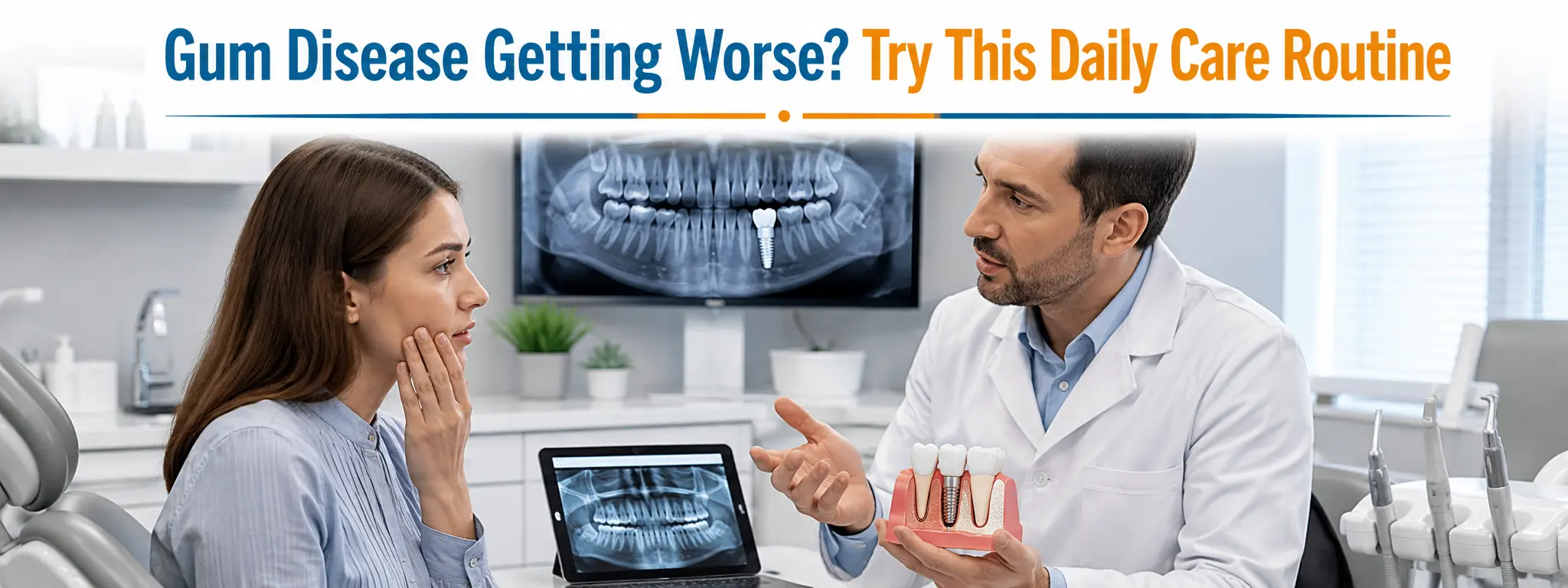
Bleeding gums, bad breath and gum tenderness can be common and easy to ignore, particularly if they don't appear to be a serious problem. These symptoms can however be early signs of gum disease. The problem is, many people wait until it starts to really bother them before they do anything about it, then, the problem gets worse. Thankfully, there are ways to help to control early symptoms and promote healthier gums by practicing gum disease self-care.
The good news is that effective gum disease self-care can help control early symptoms and support healthier gums. With the right daily habits and professional guidance when needed, it is possible to reduce inflammation and prevent more serious oral health problems.
Why Gum Disease Progresses
Gum disease typically starts as gingivitis, which is a type of gum inflammation resulting from a mass of gum-causing plaque forming along the gum line. Once the plaque builds up, bacteria will keep causing gum irritation, causing redness, swelling, and bleeding.
Untreated gingivitis may develop into a more serious condition, known as periodontitis, which could cause the tissues and bone supporting the teeth to be damaged.Some signs of warning are:
- Bleeding gums during brushing or flossing
- Persistent bad breath
- Red or swollen gums
- Gum sensitivity
- Receding gums
The Awareness Stage: What is Gum Disease & When is it Present?
If you know the various stages of gum disease, you will be better able to know when you need to get your oral routine going or when you need professional assistance.
The difference between Gingivitis and Periodontitis
Gingivitis is the first sign of gum disease and is usually treatable. It is primarily a gum problem and usually results in slight inflammation and the bleeding of gums.
Gingivitis can progress into a more serious disease known as periodontitis which can result in receding gums, teeth that loosen and bone loss. That is why patients often ask themselves, can gingivitis be reversed before it gets worse. Yes—for many, when diagnosed and treated early.
Risk Factors
Several factors can increase the risk of gum disease progressing, including:
- Poor oral hygiene
- Smoking or tobacco use
- Diabetes
- Hormonal changes
- Chronic stress
Small changes in your everyday life can have a big impact in maintaining your gum health. Put into practice good daily care.
Consideration Stage: Effective Daily Self-Care Practices
The key to gingivitis self care is a good daily oral hygiene regimen. Many people may be asking, “how do i cure gingivitis at home?” but the idea behind it is to not just treat the symptoms, but prevent further damage being caused by plaque and bacteria.
Daily Oral Hygiene Steps
The following are the steps to take every day for oral hygiene. With proper plaque removal, the gums will not be irritated by the plaque and inflammation will be reduced.
These are things you should do every day:
- Brushing twice daily with a soft-bristle toothbrush
- Cleaning gently along the gumline
- Flossing once a day
- Using an antimicrobial mouthwash if recommended by your dentist
Lifestyle Adjustments
If you're looking for ways to improve gum health, your lifestyle choices can have the same effect as brushing and flossing.
Helpful habits include:
- Cutting down on sugary foods and beverages
- Consuming vitamin C-rich foods and beverages.Increased intake of vitamin C foods or beverages.
- Consuming a lot of water.
- Avoiding tobacco products
- Limiting alcohol consumption
Maintaining a healthy overall lifestyle can help support healthy gums.
Gum Health Advanced Tips:
After you have a consistent routine, a couple more practices can promote gingivitis self care.
- Clean your tongue daily
- Change your toothbrush every three to four months.
- If the dentist suggests interdental brushes use them
- Make sure to schedule regular dental cleanings.
Common Mistakes |
Correct Self-Care Practices |
| Skipping flossing | Flossing daily |
| Brushing too hard | Gentle brushing techniques |
| Ignoring bleeding gums | Addressing symptoms early |
| Inconsistent oral care | The ability to follow a routine each day.Ability to follow a daily routine.
The following section is designed to help you make your decision.The following section is intended to assist you in making your decision. |
Decision Stage: Professional Support & Solutions
Although home care is important, certain symptoms necessitates professional care. If bleeding, swelling or bad breath persists despite your attempts, you may need dental treatment.
At EMD, we help patients improve their gum disease self-care routine through personalized guidance, professional cleanings, and ongoing monitoring.
How We Solve It
Our strategy is based on the principles of prevention and early intervention with the following strategies:
- Individual oral health plan recommendations
- Professional plaque and tartar removal.
- Routine examination of gums for health problems.
- Information and assistance for patients.
Why Choose Us
Our experienced dental team provides patient-focused care designed to support long-term oral health. We work with you to create practical solutions that fit your needs and help prevent future complications.
Make an appointment for your consultation today.
Common Mistakes & Myths
There are a lot of people out there that are unaware that they are being given advice that can actually be detrimental for their gum health instead of beneficial.
Myth |
Fact |
| Flossing is optional | Flossing gets rid of plaque between teeth. |
| Mouthwash replaces brushing | Please use mouthwash in addition to brushing |
| Bleeding gums are normal | Bleeding may be a symptom of gum disease. |
| The more he/she brushes, the more clean he/she will be! | Toothbrushing can cause gum irritation. |
FAQ Section
Is it possible to treat gingivitis at home?
Simple brushing and flossing and good oral hygiene can often cure early gingivitis. Depending on the severity of symptoms, professional care may be recommended as well.
If I have gum disease, how many times a day should I floss?
You are recommended to floss every day to get rid of the plaque and bacteria in hard to get at places.
What foods are good for the prevention of gum inflammation?
Vitamin-C, antioxidants, and essential nutrients are found in certain foods that can help keep gums healthy.
When to visit dentist for gum bleeding?
If you notice bleeding despite proper oral care regimen, consult a dentist to find out what is causing it.
Key Takeaways & CTA
However, if you practice good gum care habits, you can prevent gingivitis from developing into a more serious problem. Brush and floss daily, maintain a healthy lifestyle, and make it a regular practice to visit the dentist for check-ups, all of these are important to keeping gums healthy.
When it comes to signs of gum disease and/or the question of can you reverse gingivitis, prevention is the best treatment. Even with the right home care, coupled with professional care, you can keep your smile safe for years.
Schedule a Professional Gum Check Today