
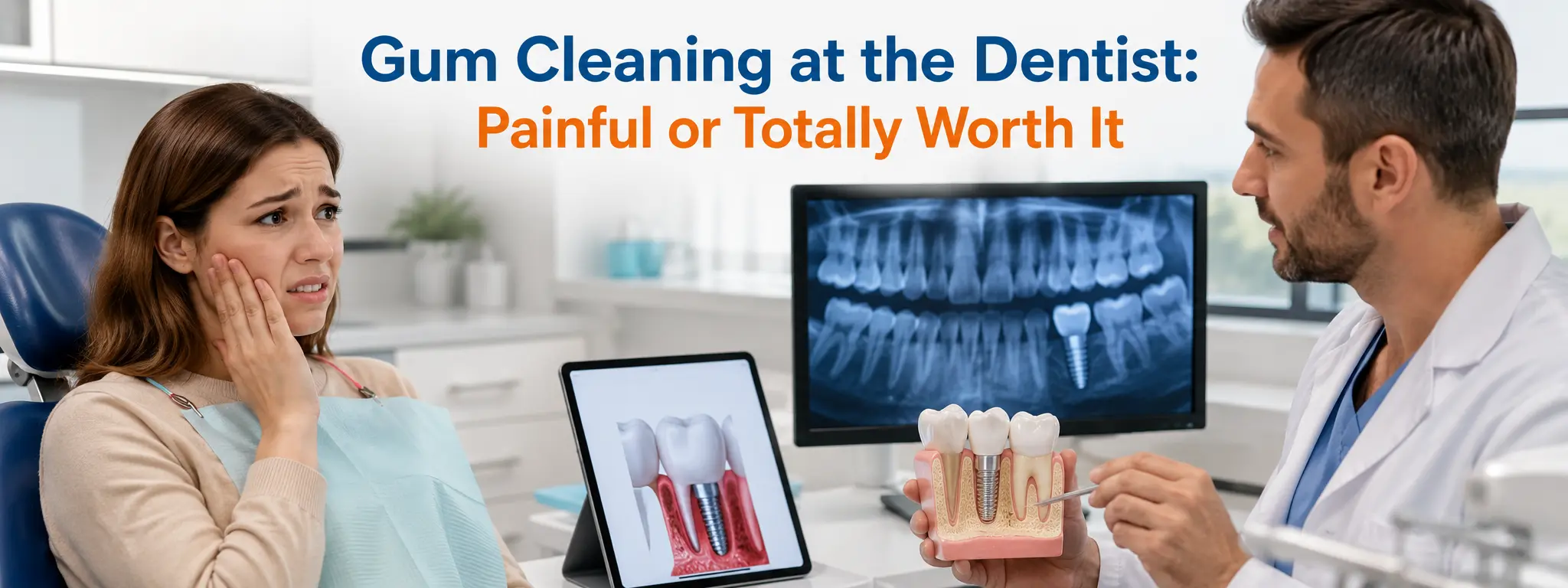
What is the best way to get rid of gum disease? How to clean gums at the dentist: Is it painful or totally worth it? A lot of people do not like going to the dentist for gum cleaning as they think it will cause discomfort or it will hurt. Others think that home- brushing and flossing is sufficient for healthy gums.
Such fears frequently mean that people wait until they have more severe symptoms (bleeding gums, plaque, tooth sensitivity, or bad breath) before they seek professional dental treatment. If not cleaned regularly, tartar can remain around the gums, and raise the risk of gum disease. Knowing what is considered a normal feeling, and why it is important to oral health, can help make the process seem less scary.
Why Gum Cleaning Matters?
So why is gum cleaning important? Plaque is always building up on teeth during the day. If it is not removed properly it becomes hard like tartar, and cannot be removed using the brushing method. Tartar which accumulates around the gum line over time can lead to inflammation, gum disease, cavities and ongoing foul breath. That is why cleaning your gums at the dentist is an integral part of preventive dental care.
Professional cleanings help:
- Get rid of plaque and tartar accumulation.
- Minimize bacteria in the gum area.
- Keep a beautiful smile and strong teeth.
- Avoid gum disease and tooth decay.
- Help keep teeth and gums healthy.
- Promote long-term oral health
If left untreated for an extended amount of time, these professional cleanings can result in more advanced dental care.
Common Fears and Misconceptions
The following are some typical concerns about WordPress and their answers. Pain is one of the major worries of patients while for teeth scaling. Many are expecting the process to be very painful, particularly if they have sensitive teeth. In fact, the modern methods that are used for dental scaling are meant to minimise discomfort.
Most patients do not see a lot of pain or sensitivity, it is mild. Another common misconception is that a person will just brush and floss alone, which is not enough. Although it is important to have home care, it can't cleanse hardened tartar deposits under the gum line.
There have been some who think gum cleaning damages teeth as well. Usually, cleaning will merely eliminate tartar that might be concealing an existing inflammation or gum recession. People may also not get treatment because they are afraid of the cost. But, the cleaning process is generally easier and cheaper when it comes to prevention than to advanced gum disease later in the day.
The Gum Cleaning Procedure Step-by-Step
Typically, professional gum cleaning takes only one appointment.
Initial Examination
The dentist or hygienist will first check the gums and teeth for signs of plaque, gum inflammation, and periodontal disease. Sometimes it is necessary to take an X-ray.
Scaling & Root Planing
Teeth scaling involves the use of ultrasonic or manual instruments to break up and eliminate plaque and tartar from the teeth and gum line. Root planing can be done if there is gum disease, or to smooth the roots of the teeth so healing can take place. Most patients feel:
- A slight vibration or pressure.
- Temporary sensitivity
- Some pain in the swollen gums
It does not cause severe pain, particularly during the normal cleaning.
Post-Cleaning Care
Teeth may feel smoother and cleaner following treatment. It is possible for there to be some temporary tenderness or sensitivity for a brief time. Dentists generally recommend:
- Soft-bristled toothbrush and gentle brushing technique
- Regular flossing
- If prescribed, use antibacterial mouthwash to prevent gum and tooth infections.
- Refrain from eating extremely hot or cold foods for a while
Benefits of Professional Gum Cleaning
The advantages of Expert Gum Cleaning. Professional cleaning offers preventive and cosmetic benefits. The following are some of the many advantages:
- Superior plaque and tartar removal skills
- Protected from gum disease.Minimal risk of gum disease.
- Fresher breath
- Better looking teeth and gums.
- Continued protection against tooth loss.Long-term protection against tooth loss.
Comparison Overview
Expert Tips: How to Reduce Discomfort
There are a number of steps you can take to make visits to your gum cleaner less uncomfortable. Sensitive patients can have local anesthetic or numbing gels used by the dentist. A patient who openly discusses his or her anxiety or feeling uncomfortable also allows the dental team to make adjustments to the treatment. There are other useful guidelines:
- Do not overdo caffeine prior to appointment
- Eat a light meal prior to the event.
- Practice relaxation techniques
- Plan regular cleanings to avoid major accumulation:
- Choose an experienced dental team
Making the Decision: When to Schedule Your Cleaning
When to Schedule Your Cleaning: Making the Decision For most patients, professional cleaning is recommended every six months. For some, however, it may be necessary to visit more often depending on their oral health needs. You should consider booking an appointment if you notice:
- Bleeding gums
- Persistent bad breath
| Home Oral Care | Professional Gum Cleaning |
| Removes surface plaque | Removes hardened tartar |
| Daily maintenance | Deep preventive cleaning |
| The toothbrush reaches only to the gum line. | Prominent gumline cleaners work well |
FAQs About Gum Cleaning
Does gum cleaning hurt?
There is no pain or discomfort in most patients, just sensitivity or mild discomfort.
How long are gum cleanings?
Typical routine cleanings take about 30–60 minutes.
Can gum cleaning help prevent tooth loss?
Yes. One of the main reasons for tooth loss is gum disease and professional cleaning can help to mitigate this risk.
How We Can Help
We know that many patients may be afraid of having their gums cleaned at the dentist at EMD. We are dedicated to providing gentle and supportive care, ensuring optimal oral health and comfort for our patients. We employ state-of-the-art cleaning methods, tailor-made cleaning strategies and caring handling to ensure a smooth process.
Key Takeaways & Next Steps
Gum cleaning is a safe, effective and often much more pleasant experience than was previously thought. Plaque and tartar are removed with regular cleanings which help to reduce the risk of gum disease and to maintain oral health for the long term. One of the best ways to help get a better smile is to use good brushing and flossing techniques with the proper dental care.