
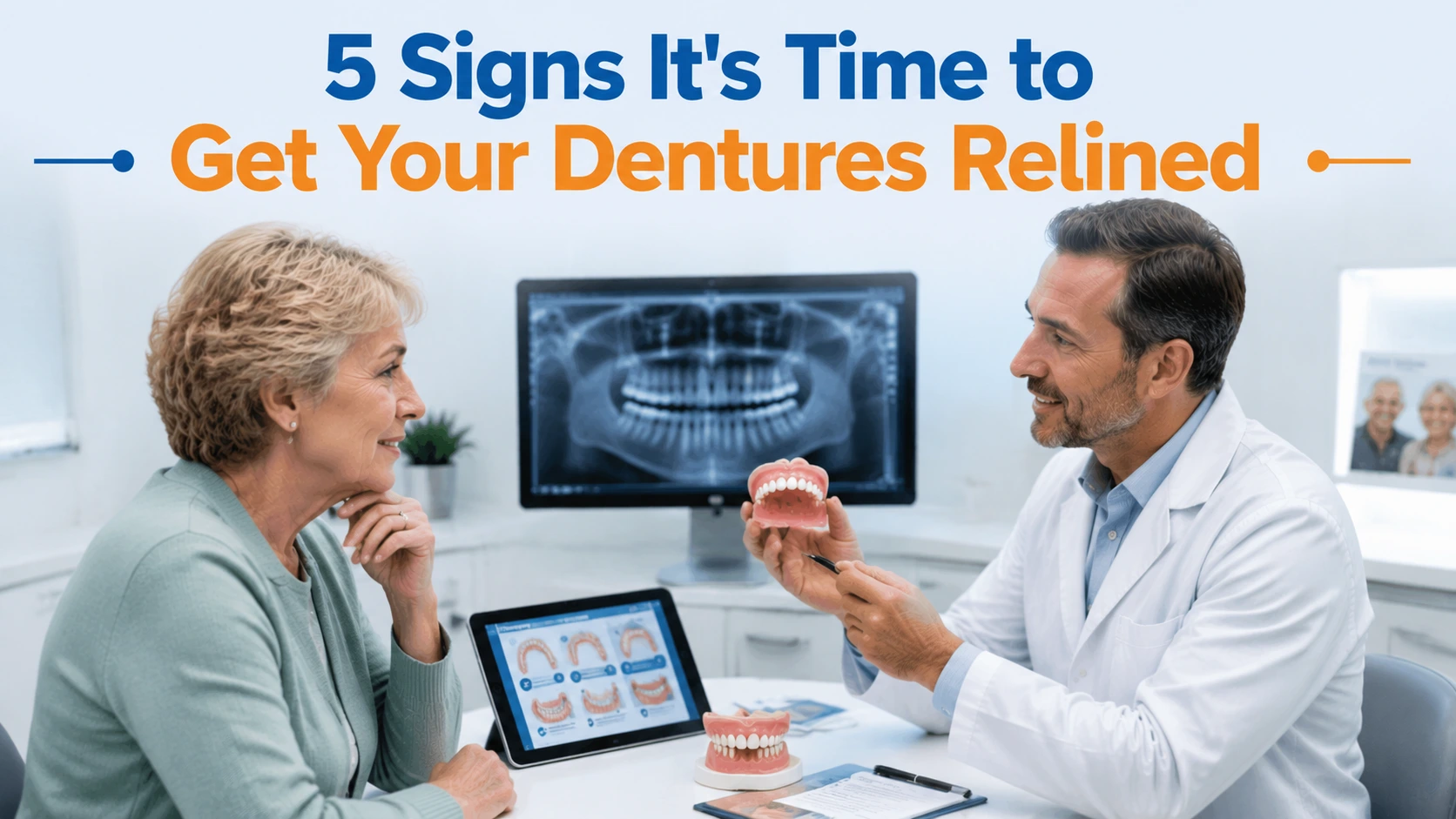
Dentures can fit comfortably when they are first made but gradually become loose as the shape of your gums and jaw changes. You may notice movement while eating, recurring sore spots, food getting under the denture, or needing to use more adhesive.
Dentures may need relining when they become loose, move during eating or speaking, irritate the gums, trap food underneath, or require more adhesive than before. These signs do not confirm that relining is the only solution. A dentist must examine your mouth, bite, and dentures to determine whether you need an adjustment, reline, repair, or replacement.
What Is a Denture Reline?
A denture reline is a procedure that renews the part of a denture that rests against the gums. New material is added or used to reshape the inner surface so it better matches your mouth's current shape.
Relining improves contact between the denture base and the supporting gums without automatically replacing the artificial teeth. It can improve comfort, retention, and denture stabilization when the existing denture is otherwise acceptable.
A reline is different from an adjustment. An adjustment corrects a small pressure point or bite problem. A reline reshapes a broader area of the denture base.
The American College of Prosthodontists explains that relining can help some poorly fitting dentures fit more securely. However, dentures with additional problems may need to be remade instead.
Why Do Dentures Become Loose Over Time?
Dentures usually become loose because the tissues supporting them continue to change after teeth are lost. The gums and underlying jaw ridge may slowly shrink or change shape, creating space between the denture and the mouth.
A denture that once fitted closely may then begin to:
- Lift away from the gums
- Rock from side to side
- Rub against certain areas
- Let food enter underneath
- Feel less secure during chewing
It helps to understand the difference between retention and stability. Retention is the denture's ability to resist lifting away from the gums. Stability is its ability to resist rocking or moving sideways. A denture may have one problem without the other.
Complete and partial dentures should be checked regularly because the condition of the denture and the supporting tissues can change even when the appliance does not look damaged.
What Are the 5 Signs You May Need a Denture Reline?
The five most common warning signs are denture movement, recurring gum soreness, difficulty eating or speaking, food collecting underneath the denture, and increasing reliance on adhesive.
1. Your Dentures Move While You Eat or Speak
Dentures that lift, slip, rock, or click during everyday activities may no longer fit your gums properly. The movement may be mild at first and become more noticeable when you bite firm or sticky foods.
For example, your denture may feel secure while your mouth is resting but lift when you bite into a sandwich. You might also notice movement when laughing, coughing, or pronouncing certain words.
These symptoms may indicate reduced retention, poor stability, a bite problem, or general wear. A reline may improve the fit when the denture is still structurally sound, but movement alone does not determine the treatment.
2. You Develop Recurring Gum Soreness
Repeated gum soreness can be a sign that a denture is applying uneven pressure. As the mouth changes, one part of the denture may press too firmly while another part loses contact with the gums.
You may notice:
- Red or tender areas
- A burning or rubbing feeling
- One sore spot that repeatedly returns
- Discomfort that becomes worse while chewing
A small pressure spot may need only an adjustment. Soreness across a larger area may suggest that the overall fit has changed.
Do not assume that the denture causes every sore area. Persistent irritation, swelling, bleeding, white or red patches, or a sore that does not heal should be examined by a dental professional. The ADA notes that poorly fitting dentures can contribute to mouth sores and should be evaluated for relining or replacement.
3. Chewing or Speaking Has Become More Difficult
A poorly fitting denture may move when you chew, reducing your ability to break food down comfortably. You may begin to avoid certain foods, chew only on one side, or take longer to finish meals.
Changes in speech can also occur. You might hear clicking sounds or find that some words are harder to pronounce because the denture shifts as your tongue and lips move.
Difficulty chewing does not always mean that the denture needs relining. Worn denture teeth, bite changes, dry mouth, damaged components, or other oral conditions can produce similar problems.
The American College of Prosthodontists advises that the decision to reline, rebase, or remake dentures should consider fit, support, bite, speech, appearance, and patient satisfaction—not looseness alone.
4. Food Keeps Getting Under Your Dentures
Food particles may enter beneath a denture when gaps develop between its inner surface and the gums. Seeds and small food pieces are especially likely to become trapped.
Occasional food collection does not necessarily mean you need a reline. However, frequent trapping in the same areas may indicate that the denture no longer has close, even contact with the supporting tissues.
Trapped food can make the denture feel uncomfortable and may contribute to irritation if the area is not cleaned properly. Removing and cleaning the denture according to your dentist's instructions remains important, but improved hygiene alone cannot correct a poor fit.
5. You Need More Denture Adhesive Than Before
Using increasing amounts of adhesive may indicate that your dentures have lost some retention. Adhesive may offer temporary support, but it cannot reshape a denture or restore the changing relationship between the appliance and your gums.
A small amount of adhesive may help some denture wearers. The concern arises when:
- You need more than you previously used
- The denture becomes loose before the end of the day
- Adhesive spreads outside the denture
- You repeatedly reapply it
- The denture remains unstable despite adhesive
The ADA states that denture adhesive is not a remedy for an ill-fitting denture. Poorly fitting dentures may need to be relined or replaced after a professional examination.
Key point: Adhesive may temporarily improve retention, but it does not correct the underlying change in the relationship between the denture and the supporting tissues.
Do You Need an Adjustment, Reline, or New Dentures?
Not every loose denture needs relining. Dentists consider four areas when recommending treatment: fit, tissue health, function, and denture condition.
| Finding | Recommended Treatment | What It Addresses |
|---|---|---|
| Small pressure point or bite problem | Denture Adjustment | Corrects localized rubbing, sore spots, or uneven bite contact. |
| Tender or healing gum tissues | Soft Reline | Adds a cushioned lining to improve comfort while the gums heal. |
| Loose but otherwise usable denture | Hard Reline | Reshapes the inner denture surface for a secure, long-lasting fit. |
| Crack, chip, or broken denture component | Denture Repair | Restores structural damage without replacing the entire denture. |
| Worn, old, or poorly fitting denture | Denture Replacement | Resolves significant issues with fit, bite, function, comfort, and appearance. |
A reline corrects the relationship between the denture base and the gums. It does not fix every problem involving worn denture teeth, major bite changes, fractures, or an unsuitable denture design.
For patients with repeated instability, a dentist may also discuss implant-retained dentures as a possible method of improving stabilization. Dental implants can be used to support certain complete or partial dentures.
What Happens During a Denture Reline?
A denture reline normally begins with an examination of your gums, jaw, bite, and existing denture. The dentist checks where the denture moves, whether pressure areas are present, and whether the appliance is healthy enough to reline.
A soft reline uses a more cushioning material and may be recommended for tender or healing tissues. A hard reline uses a firmer material intended to provide a more durable fit.
Depending on the denture and the procedure, relining may be completed in the dental office or sent to a dental laboratory. Follow-up adjustments may be needed after the relined denture is placed.
Can You Use an At-Home Denture Reliner?
An over-the-counter denture reliner may provide temporary cushioning, but it cannot determine why the denture has become loose. Uneven or excessive material may affect the fit, bite, cleaning, or comfort of the denture.
At-home products may also delay the diagnosis of gum irritation, damage, or a denture that should be replaced rather than relined. The American College of Prosthodontists recommends a professional evaluation rather than using over-the-counter reline kits to address an ongoing fit problem.
When Should You See a Denture Relining Dentist?
Schedule an examination when your dentures repeatedly move, cause sore spots, trap food, interfere with eating, or require more adhesive than before.
At Eastside Modern Dentistry, Dr. Nitin Jaggi and the dental team can assess:
- The fit and stability of your dentures
- The condition of your gums
- Changes in your bite
- Pressure or irritation points
- Wear or damage to the denture
- Whether an adjustment, reline, repair, or replacement is appropriate
Patients often notice the practical effects of poor fit before they understand why it is happening. A denture may look intact yet still fail to match the mouth's current shape.
If your dentures feel loose or uncomfortable, schedule a denture evaluation at Eastside Modern Dentistry in Issaquah, WA.
FAQ's
How often should dentures be relined?
There is no fixed relining schedule for every patient. The need depends on changes in your gums and jaw, the condition of the denture, and how well it functions. Regular dental examinations help identify fit problems before they become severe.
Can partial dentures be relined?
Some partial dentures can be relined, depending on their design, materials, supporting teeth, and overall condition. Your dentist must also check whether the clasps, bite, or remaining natural teeth contribute to the problem.
Is denture relining painful?
The procedure itself is generally intended to improve comfort. You may experience temporary pressure or mild tenderness as you adapt to the new fit. Persistent pain should be reported so the denture can be checked and adjusted.
Can I use more adhesive instead of getting a reline?
Adhesive may temporarily improve retention, but increasing use does not correct an ill-fitting denture. If your denture requires more adhesive than before, arrange an examination to identify the cause.
How long does a denture reline take?
The timing depends on whether the procedure is performed chairside or by a dental laboratory. Some relines may be completed during an office visit, while laboratory procedures can take longer. Your dentist can explain the expected timeline after examining the denture.