
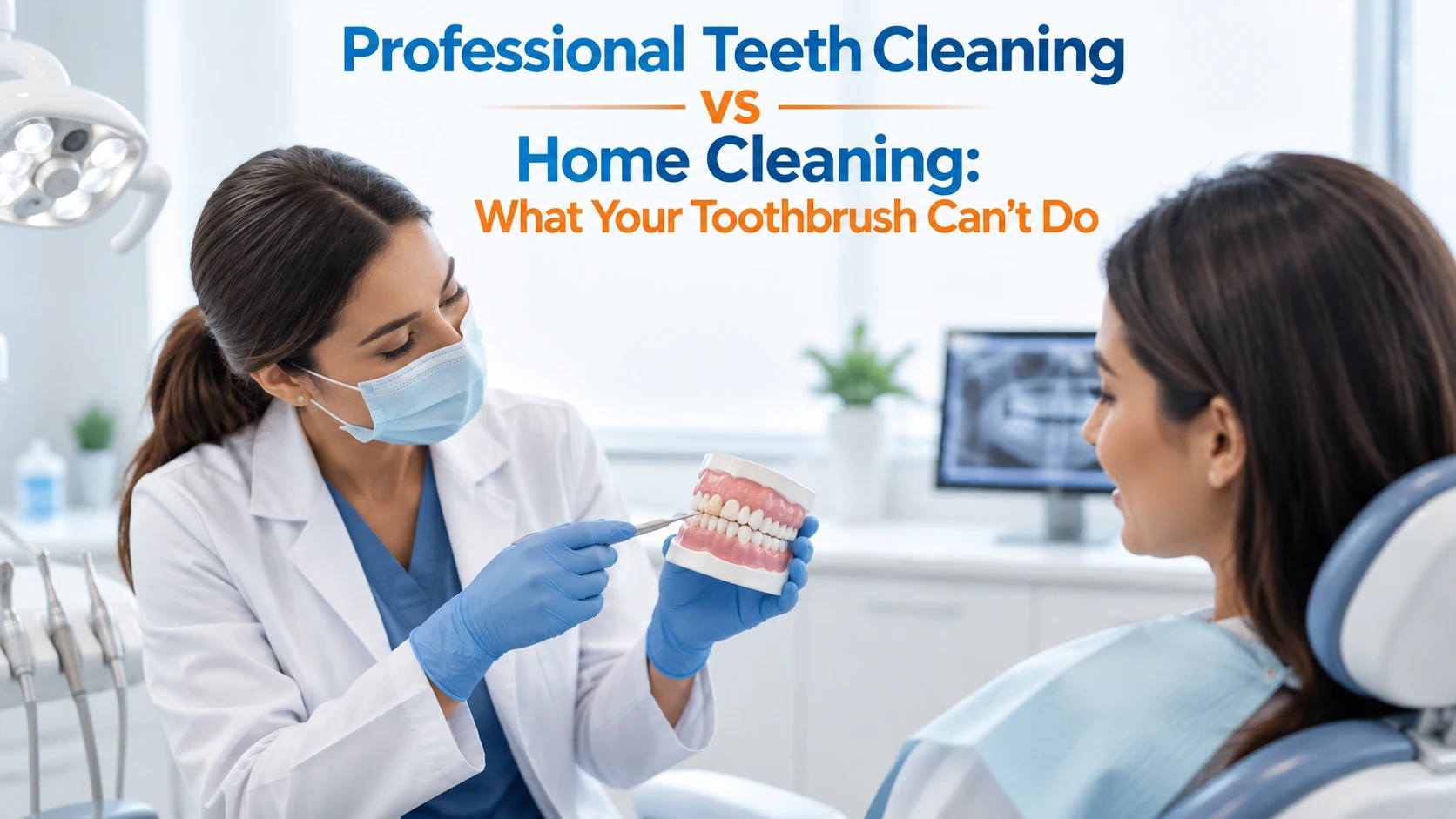
You brush twice a day, clean between your teeth, and your mouth feels fresh. So why would you still need a dental cleaning?
The reason is simple: home care and professional cleaning do different jobs. Your daily routine helps control plaque before it causes problems. A dental cleaning can remove hardened buildup that a toothbrush cannot reach or remove. Knowing this difference can help you make better choices for your teeth and gums.
What Is the Difference Between Home Cleaning and Professional Teeth Cleaning?
At-home cleaning removes food debris and helps control soft plaque every day. Professional dental cleaning can remove tartar, also called calculus, after plaque has hardened onto the teeth.
Plaque that stays on the teeth can contribute to both tooth decay and gum problems. Once it becomes tartar, normal brushing cannot remove it. The CDC states that professional treatment is needed to remove hardened tartar.
| Home Cleaning | Professional Dental Cleaning |
| Controls soft plaque | Removes hardened tartar |
| Removes food debris | Cleans difficult areas |
| Cleans between teeth with floss or other tools | Uses professional scaling instruments |
| Done every day | Done based on individual dental needs |
| Helps prevent buildup | Allows teeth and gums to be examined |
Home care and professional cleaning are not substitutes for each other. They work together.
What Can You Remove With At-Home Teeth Cleaning?
Brushing helps clean the front, back, and chewing surfaces of your teeth. Cleaning between teeth is just as important because toothbrush bristles cannot fully reach tight spaces.
The American Dental Association recommends brushing twice a day and cleaning between the teeth daily. These habits help remove plaque before it hardens.
Plaque and Tartar Are Not the Same
Plaque is a soft, sticky film of bacteria. It forms on teeth throughout the day and can usually be controlled with good daily oral hygiene.
Tartar is plaque that has hardened. It often collects near the gumline and can make the area harder to keep clean.
Plaque bacteria can also produce acids that harm tooth enamel and increase the risk of cavities. This is why daily plaque removal protects both the teeth and gums.
Can an Electric Toothbrush Remove Tartar?
An electric toothbrush can help control plaque, but it cannot remove tartar that has already hardened onto a tooth.
Think of an electric toothbrush as a tool for preventing buildup, not a tool for scraping away existing calculus.
Can You Remove Tartar at Home?
Once tartar is firmly attached to a tooth, brushing, flossing, mouthwash, and home remedies cannot safely remove it.
Trying to scrape tartar off with sharp tools is also not a good substitute for professional care. Without proper training, it may injure the gums or tooth surface.
Home care is still important because removing plaque daily can reduce the chance of new tartar forming.
What Happens During Teeth Cleaning and Polishing?
A professional cleaning may vary based on the amount of buildup, staining, and your gum health. A routine visit often includes several steps.
- The dental professional examines the teeth and gums.
- The dental professional removes plaque and tartar using scaling instruments.
- The dental professional cleans areas between the teeth as needed.
- Tooth surfaces may be polished when appropriate.
- The dental team may suggest changes to your home-care routine.
Not every cleaning looks the same. The amount of tartar, gum condition, sensitivity, and other oral health needs can affect the care provided.
Scaling, Polishing, and Whitening Are Different
These terms are often used together, but they do not mean the same thing.
Treatment |
Main Purpose |
| Scaling | Removes plaque and hardened tartar |
| Polishing | Helps remove certain external surface stains |
| Teeth whitening | Changes the visible shade of teeth |
| Scaling and root planing | Treats areas below the gumline affected by gum disease |
Polishing may make teeth look cleaner by removing surface stains, but it should not be confused with professional whitening.
Is Regular Cleaning Different From Deep Cleaning?
Yes. A regular dental cleaning is mainly preventive. A deep cleaning, also called scaling and root planing, is used when gum disease affects areas below the gumline.
Gum disease can cause the gums to pull away from teeth and create deeper spaces called periodontal pockets. Plaque and tartar can collect in these areas where normal brushing cannot reach.
Scaling and root planing removes deposits from above and below the gumline and treats the root surfaces. It is a periodontal treatment, not simply a stronger version of a routine cleaning.
How Often Do You Need Professional Teeth Cleaning?
No single cleaning schedule fits everyone.
The right interval may depend on:
- How quickly tartar builds up
- Gum health
- Previous gum disease
- Daily brushing and interdental cleaning
- Other oral health risks
- Whether periodontal maintenance is needed
Tartar also forms faster in some people than in others. That is one reason dental visits should be based on individual oral health needs rather than only a fixed calendar.
The ADA recommends seeing a dentist regularly and following a care routine based on your personal needs.
Can Professional Teeth Cleaning Damage Enamel?
Professional dental cleaning is meant to remove buildup from the teeth, not remove healthy enamel.
Some people may notice temporary sensitivity or gum tenderness afterward. This may be more noticeable if the gums are already inflamed, the teeth are sensitive, or a large amount of tartar has been removed.
Why Can Teeth Feel Different After Tartar Removal?
Heavy tartar may cover part of a tooth for a long time. Once it is removed, the tooth surface may feel different, or spaces between teeth may seem more noticeable.
The cleaning did not create the tartar-related space. Removing the buildup may make the natural tooth surface easier to feel.
When Should You Schedule a Professional Dental Cleaning?
A dental visit may be useful if you notice visible tartar, gums that often bleed or swell, ongoing bad breath, or if it has been a long time since your last dental examination.
You should also follow the cleaning or periodontal schedule recommended for your own gum health rather than waiting for pain. Gum disease can sometimes progress with few early warning signs.
FAQ
Can mouthwash replace professional teeth cleaning?
No. Mouthwash can support daily oral hygiene and may help control plaque, but it cannot remove hardened tartar already attached to the teeth.
Should I brush before a dental cleaning?
Yes, you can follow your normal brushing routine. You don't need to brush harder or try to hide buildup before your appointment.
Can I eat after professional teeth cleaning?
Many people can eat normally after a routine cleaning. If your dental team used fluoride, anesthesia, or another treatment, follow their instructions.
Why do some people build tartar faster than others?
Tartar buildup can vary from person to person. Tooth position, cleaning habits, gum health, and other individual factors can affect how quickly deposits collect.
Good home care helps prevent daily buildup, but it cannot replace professional care once tartar has formed. If you are unsure whether you need routine cleaning or periodontal treatment, a dental examination can help identify the right next step. Eastside Modern Dentistry provides preventive dental care for patients in Issaquah, Washington.