
By Eastside Modern Dentistry | Reviewed by Dr. Nitin Jaggi, DDS | Last reviewed: [add date]
It's late at night. Your tooth throbs, your gum looks puffy, and a bad taste keeps creeping into your mouth. You want to know if this can wait until morning.
Most people searching for dental abscess symptoms are scared and unsure. This guide helps you judge how urgent it is, tell the two main types apart, and know what a dentist will do. It also explains why pain that suddenly stops can be a bad sign.
What Are the Symptoms of a Tooth Abscess?
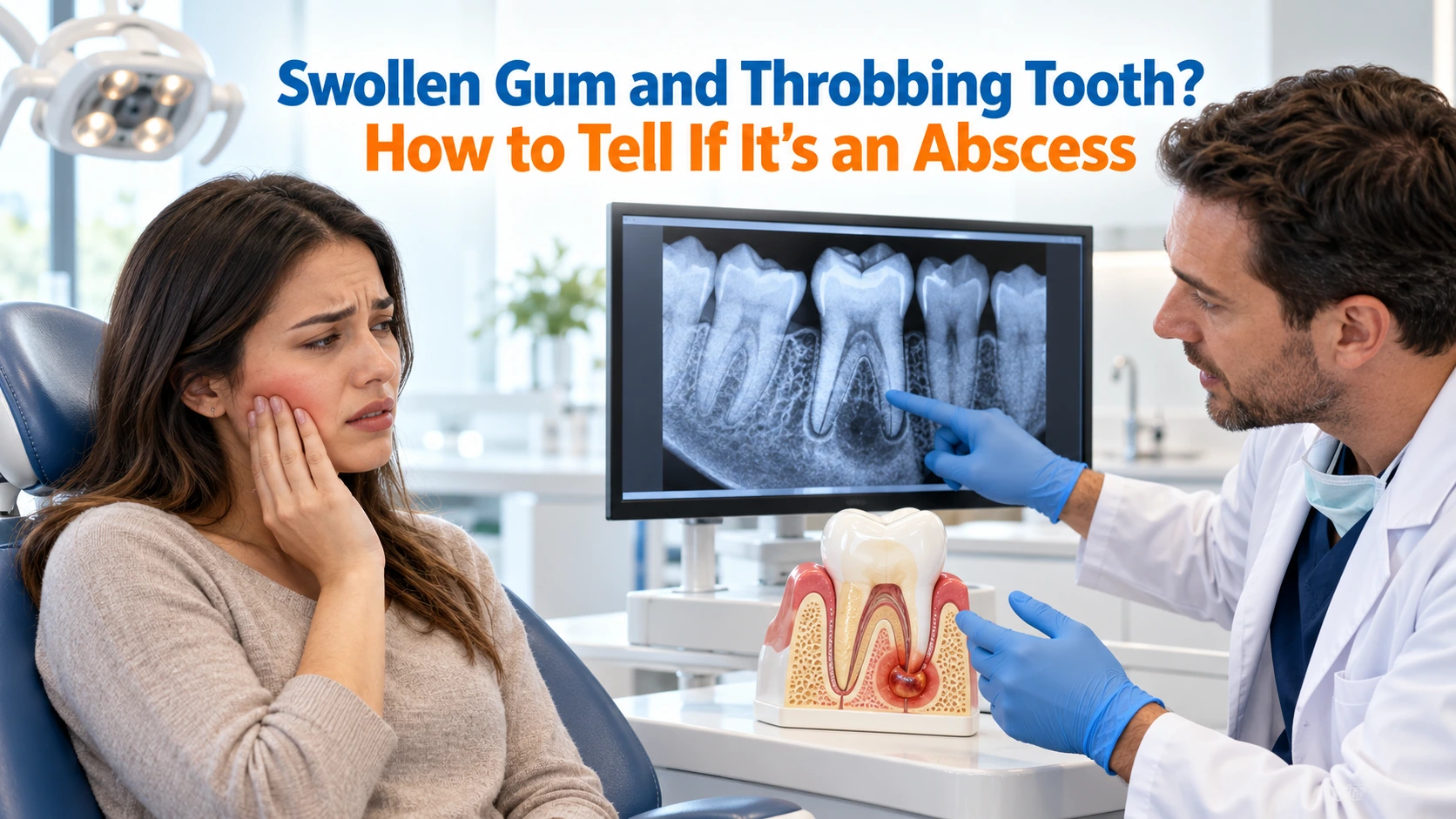
A tooth abscess is a pocket of pus caused by a bacterial infection in or around a tooth. It is a type of oral infection. On the gum, it often looks like a small, red or white, pimple-like bump that may leak fluid.
Common symptoms include:
- A throbbing toothache that may wake you at night
- Pain when you chew or tap the tooth
- A swollen, red, or tender gum
- A bad taste or bad breath
- A swollen cheek or jaw
- Sensitivity to hot or cold, especially early on
That last symptom often fades as the nerve dies, so a quiet tooth isn't always healthy. A tooth can look perfectly fine and still hold an abscess, because the infection sits deep inside the tooth or under the gum.
Pain can also travel to the ear, jaw, or neck. Some people think they have an earache or sore throat. If the top and bottom teeth on one side both ache, it can be hard to tell which one is the source.
When Is a Tooth Infection an Emergency?
Think of it in three levels:
- Go to the ER or call 911 for trouble breathing or swallowing, swelling toward the eye or neck, or fever with confusion.
- Call a dentist the same day for facial swelling, fever, or visible pus.
- Get seen within one to two days if you only have throbbing pain and a gum bump.
These levels exist because an untreated abscess can spread into the face, neck, or bloodstream. Doctors call this cellulitis or sepsis. Swelling under the tongue is especially serious because it can narrow the airway.
People with diabetes or a weak immune system should treat every abscess as more urgent. Their bodies fight infection less well.
If you have swelling or fever, a "next available" appointment on Monday isn't a good plan over a weekend. When you call, lead with your most serious symptoms. Say "I have a swollen face and a fever" before "my tooth hurts." Offices sort patients by urgency, and those words place you correctly.
Periapical vs. Periodontal Abscess: What Is the Difference?
The two main types start in different places. A periapical abscess forms at the tip of the tooth root, usually after deep decay, a crack, or an injury kills the nerve. A periodontal abscess forms in the gum beside the tooth, usually from gum disease or trapped debris in a deep gum pocket.
Periapical abscess |
Periodontal abscess |
|
| Where | Tip of the tooth root | Gum beside the tooth |
| Usual cause | Decay, crack, or injury that kills the nerve | Gum disease or trapped debris |
| Typical clue | Pain when biting or tapping | Swelling on the side of the gum, maybe a loose tooth |
| Main treatment | Root canal therapy or extraction | Drainage and deep cleaning below the gumline |
A dying nerve may stop reacting to cold. That feels like good news, but it often means the nerve has died. Only a dentist can confirm the type, usually with an exam and an X-ray. An endodontist (root canal specialist) often handles periapical problems, and a periodontist (gum specialist) often handles gum abscesses, though a general dentist can start treatment for both.
Can a Tooth Abscess Go Away on Its Own?
Rarely. If severe pain suddenly fades and a salty or bad taste fills your mouth, the abscess may have burst and drained. The pressure drops, so you feel better, but the infection source remains.
Relief from sudden pain is not recovery.
Patients often cancel their visit once the pain stops. The infection can quietly return or spread weeks later.
While you wait for care, a few things are safe, and a few are not:
- Rinse gently with warm salt water.
- Take over-the-counter pain relief exactly as the label says
- Keep your head raised when you sleep to ease throbbing.
- Do not pop or squeeze the bump, since this can push germs deeper.
- Do not place pills on the gum, since this can burn the tissue.
These steps bring comfort. They do not cure the infection.
How Do Dentists Treat a Tooth Abscess or Infection?
The goal is to remove the source, not just calm the symptoms. A typical visit goes like this:
- The dentist examines the area and takes an X-ray
- The area is numbed
- The pus is drained
- The source is treated.
- You get aftercare instructions and a follow-up plan.
For a periapical abscess, treatment means a root canal to save the tooth or an extraction if it cannot be saved. A gum abscess is drained and cleaned below the gumline instead.
Whether to save or remove a tooth depends on how much healthy tooth remains, how strong the surrounding bone is, and whether a crown can rebuild it. Sometimes saving is the better long-term choice. Sometimes removal is cleaner and safer.
Antibiotics alone do not cure a tooth abscess because you must drain or remove the source of the infection. Dentists add them when the infection has spread, or your health puts you at higher risk.
If you are nervous, say so. Infected tissue can reduce the effectiveness of numbing medicine, so speak up if you still feel pain. Sedation options exist for anxious patients.
What If You Cannot Afford Treatment?
Cost is a big reason people wait, and waiting often leads to a bigger procedure. You have more options than you might think:
- Ask the dental office about payment plans, financing, or insurance help.
- Look for a dental school clinic, where supervised students offer lower fees.
- Check community health centers, which often charge based on income.
- Use the ER for swelling, severe pain, or breathing trouble, knowing it usually cannot fix the tooth itself.
Ask for a written estimate before treatment to avoid surprises. When you call, you can say: "I have a swollen gum and tooth pain. Can I be seen today, and what are my payment options?" Good offices expect that question.
FAQ's
How long can you wait with a tooth abscess?
Not long. Swelling or fever needs care the same day. Even with pain alone, aim to be seen within one to two days.
Can a tooth abscess spread to the brain?
Rarely, but it can happen if the infection travels through the face and skull. If you have a fever, severe headache, or confusion, go to the ER.
Can a tooth that had a root canal get an abscess later?
Yes. Germs can enter through a crack or leaky filling years later. A root canal removes the nerve but does not make the tooth immune.
Can children get a tooth abscess?
Yes, even in baby teeth. Watch for swelling or fever in a child.
Can I use leftover antibiotics?
No. They may be the wrong type or amount, and they can hide symptoms while the infection stays.
Final Thoughts
Before you call, jot down when the pain started, what it feels like, and whether you have swelling or a fever. A daily photo of the swelling helps your dentist see how fast things are changing.
If you are near Issaquah, Washington, Eastside Modern Dentistry offers emergency dental care. Call, describe your symptoms, and ask whether it is safe to wait.