
A root canal can save an infected or damaged tooth, but the tooth may not feel completely normal right away. You may notice soreness when biting, pressure around the tooth, or a different response to hot and cold.
Most root canal side effects are linked to short-term healing or to removing the pulp inside the tooth. Knowing what changes, what stays the same, and what deserves a dental check can make recovery easier to understand.
What Changes in Your Tooth After a Root Canal?
Each tooth contains dental pulp, a soft tissue with nerves, blood vessels, and connective tissue. During root canal treatment, a dentist or endodontist removes inflamed or infected pulp, cleans and shapes the canals, then fills them with a biocompatible material, usually gutta-percha, before sealing the space.
A mature tooth can continue to function without its pulp because tissues around the root still support and nourish it. The inside has changed, but the tooth remains attached to living tissues and can still take part in normal biting and chewing.
What Are the Common Root Canal Treatment Side Effects?
Some soreness after treatment is expected because tissues around the root may be irritated.
Common short-term effects can include:
- Mild soreness around the treated tooth
- Tenderness when biting or chewing
- Temporary numbness from local anesthesia
- Mild sensitivity in nearby tissues
The trend matters more than one uncomfortable moment. A tooth that feels a little better each day is different from one that becomes steadily more painful.
Cleveland Clinic notes that mild soreness can occur after treatment and that most people recover in less than a week, though recovery can vary.
Why Can a Root Canal Tooth Still Feel Pain or Pressure?
A root canal removes nerve tissue from the pulp inside the tooth. It does not remove the nerves in tissues surrounding the root.
One of those tissues is the periodontal ligament, which attaches the tooth to surrounding structures. It contains living tissue that can still respond to pressure. If the area around the root is irritated after treatment, chewing may feel tender even though the pulp nerve is gone.
A bite that feels “high” can also put extra pressure on the treated tooth. If that tooth seems to touch before your other teeth, or biting stays uncomfortable, tell your dentist.
Hot and cold can feel different because the pulp that carries internal nerve sensation is no longer present, while tissues outside the root can still respond to pressure.
Does Root Canal Treatment Weaken the Tooth?
A root-canal-treated tooth can be more vulnerable to fracture, but nerve removal is not the whole story. Teeth that need root canal treatment often already have lost structure because of deep decay, cracks, large fillings, or earlier dental work.
A 2025 systematic review found that the amount and condition of remaining tooth structure are closely linked to how well restored root-canal-treated teeth perform over time. Teeth with greater structural loss may benefit more from protective coverage.
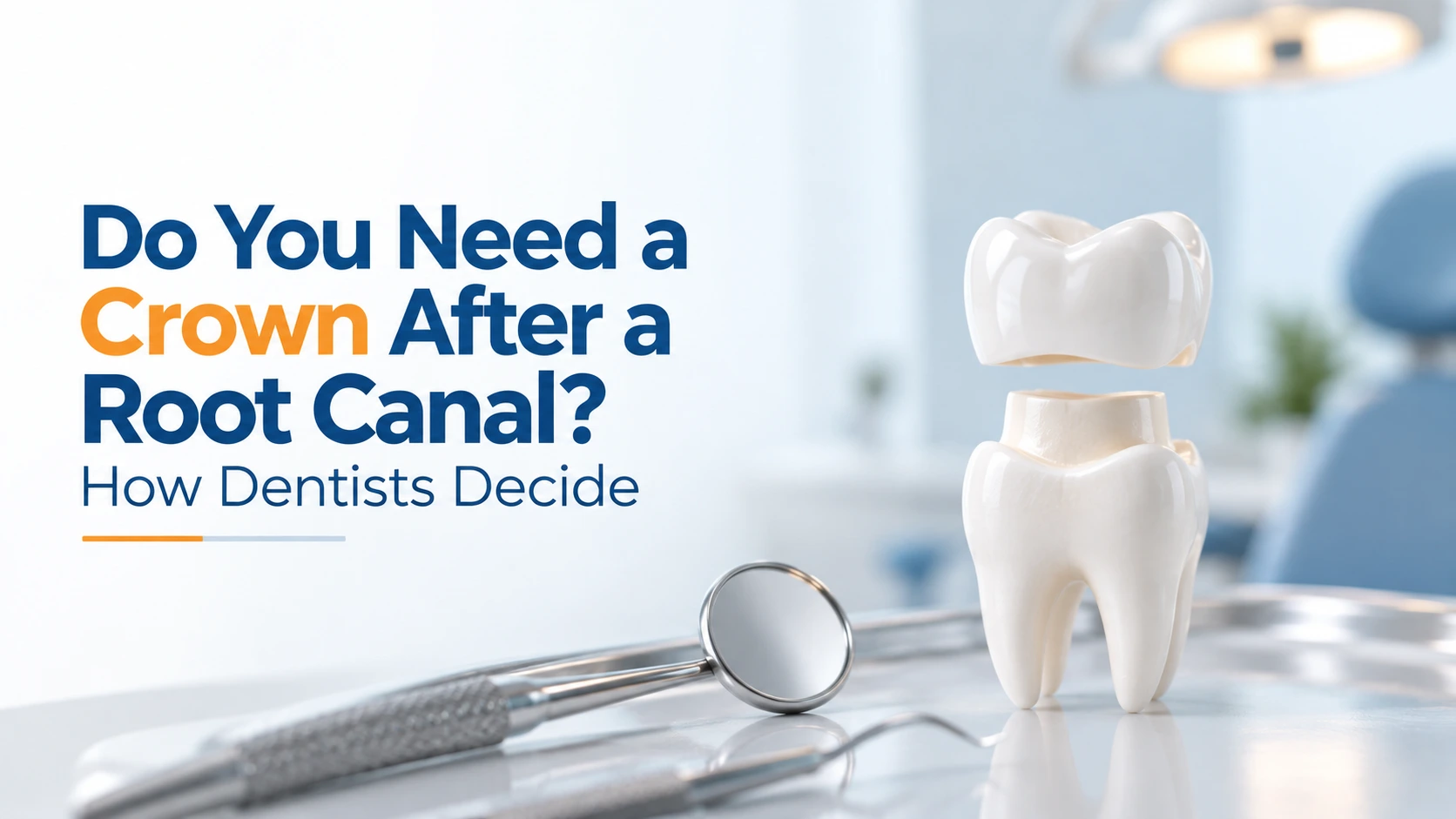
This is why the final restoration matters. Depending on the tooth and how much healthy structure remains, a dentist may use a filling, onlay, or crown to help protect it from chewing forces.
Does Every Root Canal Tooth Need a Crown?
Not always. Back teeth such as molars and premolars handle stronger chewing forces and often need more protection. Front teeth may sometimes be restored without a crown when enough healthy structure remains.
The choice depends on:
- Which tooth was treated
- How much natural tooth remains
- Whether cracks or large fillings are present
- How much chewing force the tooth receives
The American Association of Endodontists explains that a crown or another restoration is placed after root canal treatment to protect the tooth and restore its function. The exact restoration depends on the individual tooth.
If your dentist has planned a permanent restoration, do not assume treatment is finished just because the pain has stopped.
How Can You Tell Normal Healing From a Problem?
Normal recovery should generally improve. Mild soreness or bite tenderness can happen early, but symptoms that worsen, return after improving, or come with swelling warrant a dental review.
| Usually Part of Recovery | Needs Dental Evaluation |
| Mild soreness that improves | Pain that keeps getting stronger |
| Temporary bite tenderness | Significant or increasing swelling |
| Gradually easier chewing | Symptoms that return after improving |
| Mild local sensitivity | Loose, cracked, or broken restoration |
Pain does not automatically mean the root canal failed. Several issues can cause discomfort, so a dental examination should confirm the cause rather than symptoms alone.
Can Root Canal Problems Develop Months or Years Later?
A root-canal-treated tooth can work well for many years, but new problems can appear. Possible reasons include complex canal anatomy that was difficult to treat, new decay, a damaged or leaking restoration, or a fracture.
If a previously comfortable tooth starts hurting again, don't treat the new symptoms as part of the original recovery. A dentist or endodontist can check whether the tooth needs another restoration, root canal retreatment, or different care.
FAQs
Can a root canal tooth still get a cavity?
Yes. The pulp has been removed, but the enamel and dentin can still develop decay. Brushing, flossing, and regular dental checks remain important.
Can I eat normally after a root canal?
Wait until the numbness wears off so you don't bite your cheek or tongue. Avoid heavy chewing on the treated tooth if the final restoration hasn't been placed yet.
Can a root canal tooth change color?
Some treated teeth can become darker over time. A dentist can check the cause and discuss suitable options if the color change bothers you.
Should I see a dentist or an endodontist for ongoing pain?
A general dentist can examine the tooth first. For more complex or persistent problems, they may refer you to an endodontist, a dentist with advanced training in treating problems inside teeth.
When Should You Get the Tooth Checked?
A treated tooth doesn't have to feel exactly like your other teeth right away. What matters most is whether it becomes more comfortable as the area heals.
If pain increases, swelling develops, your restoration breaks, or an old root canal becomes painful again, schedule a dental examination. An exam is the safest way to find the cause and decide what the tooth needs next.