
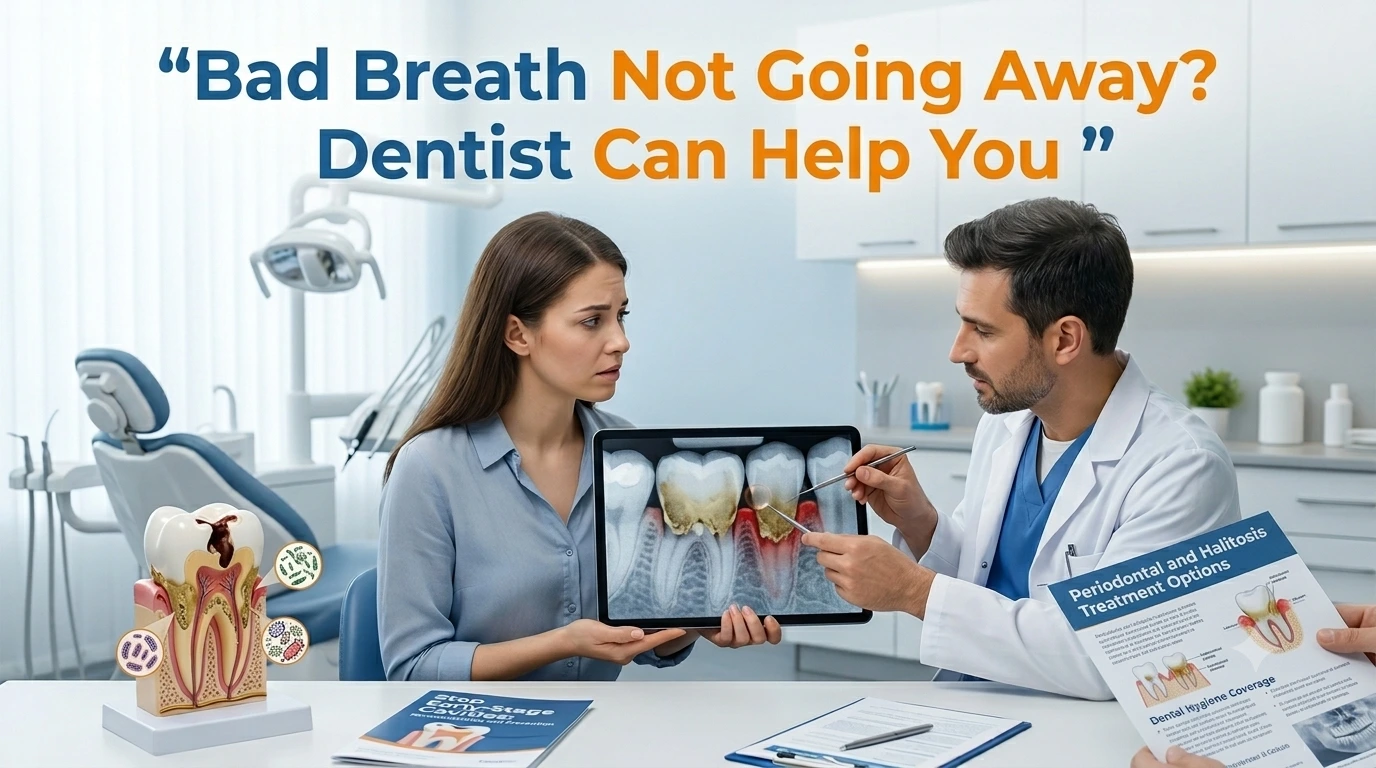
Have you been brushing, flossing, and using mouthwash regularly, yet your bad breath keeps coming back?
Persistent bad breath can be frustrating and embarrassing. Many people assume they need to brush more often, but chronic bad breath is usually a sign that something deeper is happening in the mouth.
Persistent bad breath, also known as chronic halitosis, is an ongoing unpleasant breath odor that continues despite regular oral hygiene. In many cases, the cause can be identified and treated by a dentist.
If your breath odor returns shortly after brushing or has been present for weeks, it's time to look beyond temporary fixes. Understanding the root cause is the first step toward long-term relief.
Why Is My Bad Breath Not Going Away?
Bad breath that won't go away is often caused by gum disease, cavities, plaque buildup, tongue bacteria, or dry mouth. These issues allow odor-producing bacteria to thrive and typically require professional evaluation and treatment.
Many people are surprised to learn that bad breath is not always caused by poor hygiene. Dentists frequently see patients who brush and floss daily but still struggle with chronic halitosis because the source of the odor is hidden beneath the gumline, inside a cavity, or elsewhere in the mouth.
Temporary Bad Breath vs. Chronic Halitosis
Temporary bad breath may happen after:
- Eating garlic, onions, or spicy foods
- Drinking coffee
- Smoking
- Waking up in the morning
Chronic halitosis is different.
The odor persists despite brushing, flossing, and mouthwash use.
What Causes Persistent Bad Breath?
Most cases of chronic bad breath originate in the mouth. Oral bacteria break down food particles and release volatile sulfur compounds (VSCs), which are largely responsible for unpleasant odors.
Common Causes of Bad Breath
Gum Disease
Gum disease is one of the leading causes of persistent bad breath. When plaque accumulates below the gumline, bacteria multiply and create odor-causing sulfur compounds.
Common signs include:
- Bleeding gums
- Swollen gums
- Gum tenderness
- Persistent bad taste
Cavities and Tooth Decay
Even small cavities can trap food debris and bacteria. Over time, these areas become breeding grounds for odor-producing bacteria.
Dry Mouth
Saliva naturally cleans the mouth by washing away food particles and bacteria. When saliva production decreases, bacteria can multiply more easily.
Dry mouth may be caused by:
- Certain medications
- Dehydration
- Mouth breathing
- Smoking
Tongue Bacteria
The tongue's textured surface can hold millions of bacteria. Without regular tongue cleaning, these bacteria can contribute significantly to bad breath.
Oral Microbiome Imbalance
The oral microbiome refers to the community of bacteria that naturally lives in the mouth. When harmful bacteria outnumber beneficial bacteria, bad breath and gum disease become more likely.
| Cause | How It Creates Bad Breath |
| Gum Disease | Bacterial infection below the gums |
| Cavities | Trapped food and bacteria |
| Dry Mouth | Reduced saliva increases bacterial growth |
| Tongue Coating | Bacteria accumulate on the tongue |
| Oral Microbiome Imbalance | Harmful bacteria dominate |
Can a Dentist Help With Bad Breath?
Yes. Dentists can diagnose and treat many of the most common causes of chronic bad breath, including gum disease, cavities, plaque buildup, dry mouth, and oral infections.
The goal isn't simply to mask odor—it is to identify why the odor exists in the first place.
Expert Insight from Dr. Nitin Jaggi
"One of the most common misconceptions I see is that persistent bad breath is always caused by poor brushing habits. In reality, many patients have underlying gum disease, dry mouth, or hidden decay that requires professional treatment."
Dr. Nitin Jaggi, a graduate of the University of Colorado School of Dental Medicine, has spent years helping patients identify and treat the root causes of oral health concerns through preventive dentistry and comprehensive dental care.
Many patients arrive having already tried:
- Mouthwash
- Breath sprays
- Mints
- Specialty toothpaste
While these products may provide temporary relief, they rarely address the source of the problem.
How Dentists Diagnose Chronic Bad Breath
Diagnosing chronic bad breath involves identifying the source of odor and evaluating oral health conditions that contribute to bacterial growth.
A dental evaluation may include:
- Reviewing symptoms and medical history
- Examining teeth and gums
- Checking for plaque and tartar buildup
- Evaluating dry mouth risk factors
- Looking for hidden cavities or infections
Many patients report that their breath smells fresh immediately after brushing but returns within an hour or two. This often indicates an issue that cannot be corrected with brushing alone.
Why Mouthwash and Home Remedies Often Fail
Mouthwash, mints, and chewing gum may temporarily improve breath odor, but they usually do not treat the underlying cause of chronic halitosis.
One of the biggest myths about bad breath is that stronger mouthwash equals better results.
In reality, mouthwash often masks odor rather than eliminating the bacteria or dental condition responsible for producing it.
How to Get Rid of Bad Breath Permanently
The best way to get rid of bad breath permanently is to identify and treat the underlying cause. Depending on the diagnosis, treatment may include professional cleanings, gum disease treatment, cavity repair, and dry mouth management.
Common treatment options include:
- Professional dental cleanings
- Gum disease therapy
- Cavity treatment
- Improved oral hygiene techniques
- Tongue cleaning
- Dry mouth management
The most effective solution depends on the source of the problem.
When Should You See a Dentist for Bad Breath?
If bad breath lasts more than two weeks despite good oral hygiene, or if it occurs alongside symptoms such as bleeding gums, tooth pain, or dry mouth, you should schedule a dental evaluation.
Warning signs include:
- Persistent bad breath
- Bleeding gums
- Swollen gums
- Loose teeth
- Tooth pain
- Dry mouth
- Chronic bad taste in the mouth
Early treatment can help prevent more serious dental problems while improving breath quality and confidence.
For patients in Issaquah, WA, a preventive dentistry visit can help identify problems early and create a personalized treatment plan.
Tips to Prevent Bad Breath From Returning
Once the underlying cause is treated, healthy habits can help keep bad breath from coming back.
Daily Prevention Tips
- Brush twice daily
- Floss every day
- Clean your tongue regularly
- Drink plenty of water
- Replace your toothbrush every three to four months
- Schedule routine dental checkups
Regular preventive dental care remains one of the most effective ways to maintain fresh breath and overall oral health.
FAQ’s
Can a dentist cure chronic bad breath?
A dentist can diagnose and treat many of the most common causes of chronic bad breath, including gum disease, cavities, plaque buildup, and dry mouth.
Why does my breath smell bad even after brushing?
Bacteria may remain below the gumline, inside cavities, or on the tongue, causing odor even after brushing.
Does dry mouth cause bad breath?
Yes. Reduced saliva allows odor-causing bacteria to grow more easily.
How do I get rid of bad breath permanently?
Permanent improvement usually requires treating the underlying cause rather than relying on mouthwash or breath fresheners.
Conclusion
Persistent bad breath is often a sign of an underlying dental issue rather than a simple hygiene problem. Conditions such as gum disease, cavities, dry mouth, and bacterial buildup can all contribute to chronic halitosis.
The good news is that most causes of bad breath can be identified and treated with professional care. Once the source is addressed, long-term improvement is often possible.
If your bad breath continues despite brushing and flossing, consider scheduling a preventive dentistry visit. At Eastside Modern Dentistry in Issaquah, WA, Dr. Nitin Jaggi and the team focus on identifying oral health concerns early and helping patients achieve healthier smiles, fresher breath, and greater confidence.