
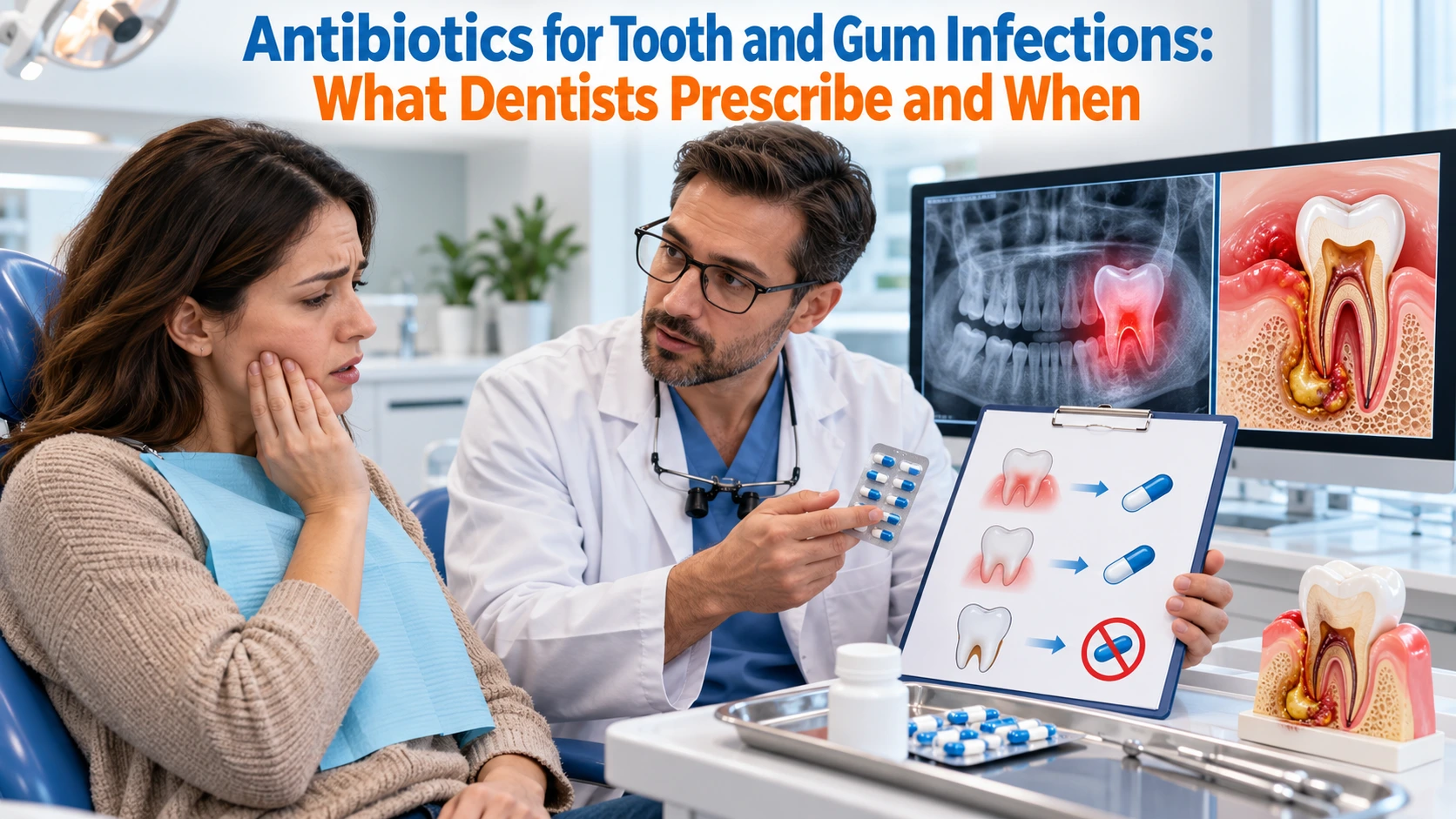
You are hurting, it is the weekend, and you wonder if a pill would fix your tooth or gum infection. Searching for antibiotics for abscess treatment brings up long drug lists but little explanation.
This guide covers which antibiotics dentists prescribe, when they add them, and why the pills rarely work alone. It also covers what to do if you have an allergy, or if the pain is not improving.
Do Antibiotics Cure a Tooth or Gum Infection?
No, not on their own. Antibiotics reach bacteria through the bloodstream, but a dead tooth or a pocket of pus has poor blood supply. The medicine cannot get in well enough to clear it.
That is why dentists focus on source control, which means removing the cause of the infection. For a tooth infection (dental abscess), that means draining it, then saving the tooth with a root canal or removing it. A gum infection, called a periodontal abscess, is usually drained and cleaned below the gumline.
Antibiotics treat bacteria in the blood and tissue. They cannot drain a pocket of pus.
Without source control, infections often return after the pills run out. For the full picture of the tooth itself, see our guide to tooth abscess symptoms and types.
When Do Dentists Prescribe Antibiotics?
Dentists treat antibiotics as an add-on to treatment, not the main fix. Many localized infections are handled by drainage or a root canal alone. Current ADA guidance supports this.
A dentist usually thinks in three steps:
| Step | Signals | Typical Approach |
|---|---|---|
| 1. Source control alone | Localized pain or a gum bump, no fever | Drainage, root canal, or extraction |
| 2. Antibiotic added | Spreading swelling, fever, or a weak immune system | Source control plus an antibiotic |
| 3. ER or hospital care | Trouble breathing or swallowing, swelling toward the eye or neck | Emergency care |
When deciding, a dentist weighs how far the infection has spread, whether you have a fever, your overall health, and whether the area can be drained. Not getting a prescription does not mean you are being dismissed. It often means the better treatment is a procedure.
What Is the Best Antibiotic for a Tooth or Gum Infection?
There is no single best antibiotic. The right choice depends on your allergies, your health, and how far the infection has spread. Dentists commonly choose from these:
| Antibiotic | General Role | Key Caution |
|---|---|---|
| Amoxicillin | Common first choice | Not for penicillin allergy |
| Penicillin V | Common first choice | Not for penicillin allergy |
| Amoxicillin-clavulanate | Broader coverage for harder cases | Can upset the stomach |
| Clindamycin | Option for penicillin allergy | Higher risk of severe diarrhea |
| Metronidazole | Sometimes added for certain bacteria | Avoid alcohol while taking it |
This is general information, not a prescription. A dentist or doctor must choose the drug and decide how to use it.
For a gum infection, the order matters. Drainage and deep cleaning come first, and antibiotics are used selectively.
Do Antibiotics Help Dental Pain?
Not directly. Antibiotics fight bacteria, but they do not numb a toothache. Pain usually eases when a dentist drains the abscess or treats the nerve, because that removes the cause.
Until then, a few comfort steps are safe:
- Over-the-counter pain relief, used exactly as the label says
- Keeping your head raised when you rest
- A gentle warm salt water rinse
These bring comfort, not a cure. Dr. Jaggi focuses on endodontics and oral surgery, the treatments that remove the cause of the pain.
What If You Are Allergic or Still in Pain on Antibiotics?
Tell your dentist about any of the following, since they change the options:
- A penicillin allergy, and what the reaction was
- Other medicines you take
- Pregnancy
- Kidney, heart, or other health conditions
If you are already on antibiotics, call your dentist or doctor the same day if you notice:
- Swelling that is growing
- A fever that returns
- Swallowing that gets harder
Do not stop or change your medicine on your own. Feeling better on antibiotics is not the same as being treated.
Antibiotics also have downsides. They can cause stomach upset, and some can lead to a serious gut infection called C. difficile. Overuse also feeds antibiotic resistance, which is why dentists prescribe them carefully.
If swelling spreads, or you cannot swallow or breathe easily, go to the ER.
Can You Use Leftover Antibiotics or Get Them Online?
Wanting a quick fix is normal, but it is not a good idea. Leftover or animal antibiotics may be the wrong drug or the wrong amount. They can also hide symptoms while the infection grows.
An online prescription has another limit. Without an exam, nobody can drain the abscess. A same-day dental visit is usually the faster route to real relief.
If cost is the worry, you have options:
- Ask the office about payment plans and a written estimate
- Check dental school clinics, where supervised students offer lower fees
- Look into community health centers, which often charge based on income
FAQ's
Can a tooth infection go away with antibiotics?
Rarely. The pain may fade, but the source often remains and the infection can return.
How long do antibiotics take to work?
Improvement is often noticed within a few days. If nothing changes or you get worse, call your dentist.
What happens if I stop antibiotics early?
Bacteria that survive can come back stronger. Ask your dentist or doctor before stopping.
Can I take antibiotics while pregnant?
Tell your dentist you are pregnant. Some antibiotics are considered safer than others, and your dentist or doctor will choose.
Why won’t my dentist prescribe antibiotics?
Often the infection can be treated directly by drainage or a root canal, so the pills are not needed.
Final Thoughts
Before you call, write down your allergies, your current medicines, and when the pain and swelling began. This helps your dentist decide quickly whether you need an antibiotic, a procedure, or both.
If you are near Issaquah, Washington, Eastside Modern Dentistry offers emergency dental care. You can call, describe your symptoms, and ask what you need.