
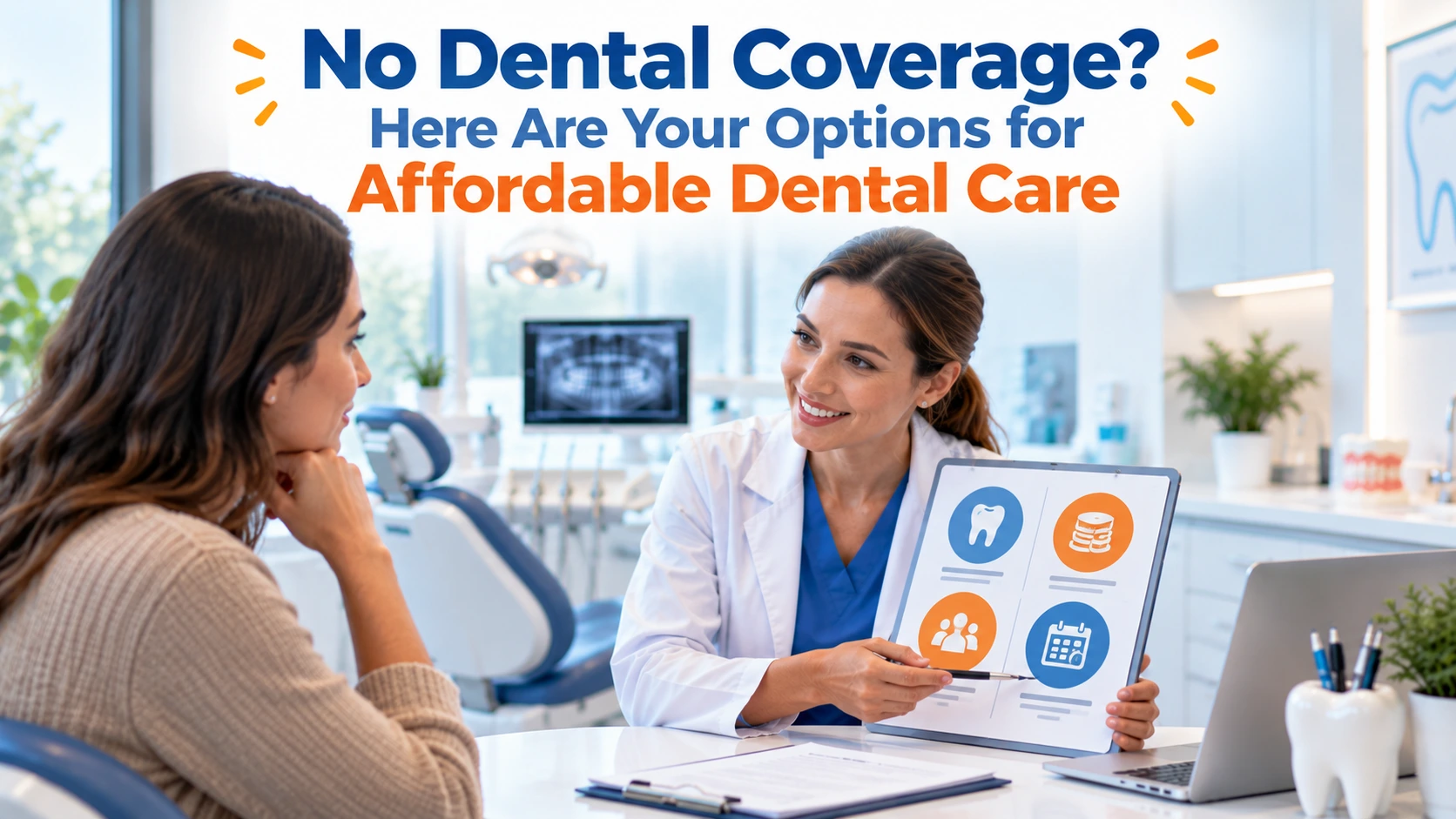
A painful tooth is stressful enough. Without dental coverage, the cost can make it tempting to wait and hope the problem goes away. But delaying care is not always the best choice, especially when tooth decay or pain is getting worse.
The good news is that you do not have to rely on one option. Depending on your income, location, urgency, and budget, you can find lower-cost dental care through public programs, community health centers, dental schools, discount plans, or self-pay dentists.
What Does No Dental Coverage Mean?
Having no dental coverage means you do not have dental insurance or another dental benefit that helps pay for dental services. You can still visit a dentist, but you may need to pay the provider out of pocket.
You can also have health insurance without dental benefits. Routine dental services, such as cleanings, fillings, crowns, and other treatments, may not be included in a regular health plan.
The American Dental Association reports that about 21% of U.S. adults ages 19–64 have no dental benefits. That makes affordable care an important issue for millions of adults.
Can You See a Dentist Without Insurance?
Yes. You can see a dentist without insurance by paying out of pocket or by looking for providers and programs that offer lower-cost care. Prices vary by dentist, location, and treatment, so asking about self-pay prices before an appointment can help.
If you need several procedures, do not be afraid to ask questions before agreeing to treatment. A useful conversation with the dental office can include:
- What does the examination cost?
- What is the estimated cost of treatment?
- Which problem needs attention first?
- Can any treatment be scheduled later?
- Does the office offer payment plans?
- Is there a self-pay or cash price?
A written estimate can also make it easier to compare your options before committing to a large bill.
What If You Have Tooth Decay but Can’t Afford a Dentist?
If you have tooth decay but can’t afford a dentist, look for lower-cost care instead of simply ignoring the problem. Community health centers, dental schools, Medicaid (when eligible), and nonprofit programs may offer more affordable options.
The first step is to find out what is actually wrong and how urgent it is. Tooth decay can progress, and waiting may lead to more complicated treatment.
If you have severe or worsening pain, swelling, fever, facial swelling, or a dental injury, seek prompt professional care. Don't manage these symptoms by trying to find the cheapest possible option.
When money is limited, ask the dentist to help you prioritize treatment:
- Find out which problem needs attention first.
- Ask what treatment is recommended and why.
- Request the expected cost in writing.
- Ask whether there are lower-cost providers nearby.
- Discuss payment options if treatment cannot wait.
This approach can help you make a practical decision without assuming you must pay for everything at once.
7 Affordable Dental Care Options
Your best option depends on your circumstances. Eligibility, pricing, and availability can also vary by state and provider.
1. Medicaid or CHIP
Medicaid may help eligible patients with dental costs, but adult dental benefits vary by state. States can decide which adult dental services they cover.
For eligible children, Medicaid and CHIP provide dental benefits, although specific services can vary.
2. Community Health Centers
Community health centers can provide dental services to people with or without insurance. Some use sliding-fee arrangements based on factors such as income and family size. HRSA’s health center locator can help you find nearby facilities.
3. Dental Schools
Dental schools may provide lower-cost treatment while students gain clinical experience under the supervision of licensed dental professionals. Appointments may take longer, so this option can be better when you have some flexibility.
4. Dental Discount Plans
A dental discount plan is not the same as dental insurance. Instead of paying part of your dental claim, the plan may give you access to negotiated prices at participating dentists.
Before joining, check whether dentists near you participate and compare the discounted prices with their regular self-pay rates.
5. Cash-Pay Dentists
Some dental offices regularly treat patients without insurance. Ask about the self-pay price when scheduling your appointment.
For non-urgent treatment, comparing two or more estimates may help you find a provider that fits your budget.
6. Payment Plans
Some dental practices offer financing or payment arrangements for larger treatments. Look beyond the monthly payment and check interest, fees, down payments, and the total amount you would pay.
7. Nonprofit and Local Programs
Local health departments and nonprofit organizations may know about free or reduced-cost dental programs in your area. HHS recommends checking resources such as community health centers, dental schools, government programs, and local assistance options.
Which Dental Care Option Should You Try First?
The cheapest option isn't always the best for your situation. A lower price may come with a longer wait, while a faster appointment may cost more.
Use four questions to narrow your choices:
| Question | What it helps determine |
| How urgent is the problem? | How quickly you need care |
| What can I afford? | Which payment options fit |
| Do I qualify for assistance? | Whether public or sliding-fee programs may help |
| How quickly do I need an appointment? | Whether waiting for lower-cost care is practical |
For example, someone with limited income may want to check Medicaid and community health centers first. Someone who needs reduced-cost treatment but can wait may consider a dental school. A person who needs faster care may compare self-pay dentists and payment options.
FAQs
Can I get a filling without dental insurance?
Yes. You can pay for a filling yourself or look for lower-cost providers. Ask for the examination and treatment cost before agreeing to the procedure.
What is the cheapest way to see a dentist without insurance?
There is no single cheapest option. Community health centers, dental schools, public programs, nonprofit clinics, discount plans, and self-pay dentists may all be worth comparing.
Does Medicaid cover dental care for adults?
It depends on the state. Adult Medicaid dental benefits are not the same nationwide, so check your state’s current Medicaid rules before assuming a service is covered.
Are dental discount plans the same as insurance?
No. A discount plan generally provides access to reduced prices from participating dentists rather than functioning like dental insurance.
What should I do if I cannot afford my dental treatment plan?
Ask which treatment needs to happen first, request a written estimate, and ask whether the dentist offers payment arrangements or can recommend lower-cost care.
Can I find dental care based on my income?
Yes. Some community health centers use sliding-fee arrangements based on income and family size. Availability and eligibility depend on the specific center.
Make the Next Dental Decision Based on Your Situation
When you have no dental coverage, you do not need to solve every dental expense at once. Start by understanding the problem, its urgency, and what you can realistically afford.
Then compare legitimate care options rather than choosing a provider based only on the lowest advertised price. A clear estimate, realistic payment terms, and appropriate treatment can matter just as much as the initial cost.