
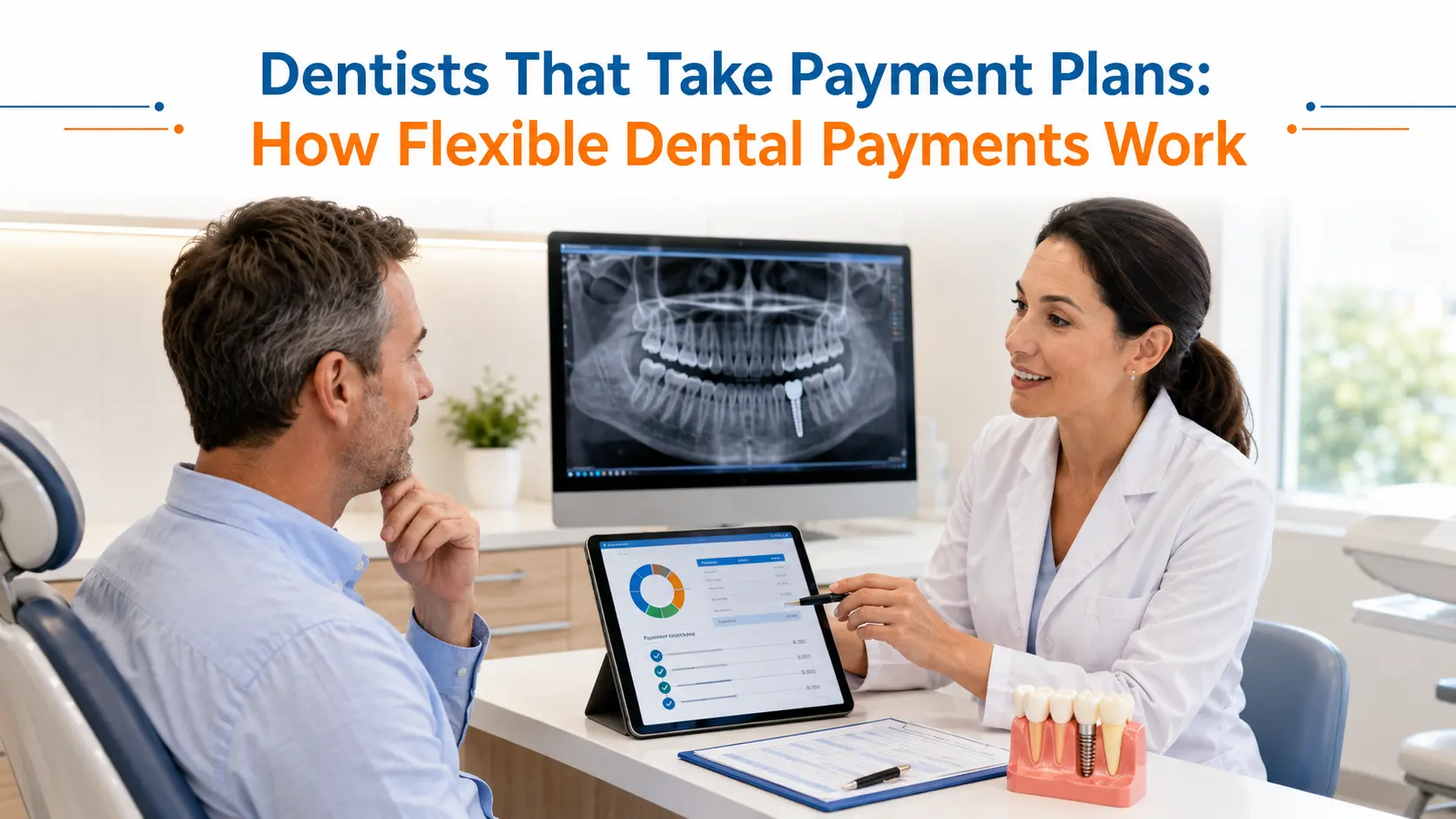
Dental treatment can be hard to plan when you need care but cannot pay the full bill at once. This is common for people without dental insurance, families with limited savings, or patients facing a larger procedure.
If you are searching for dentists that take payment plans, it helps to understand what kind of plan is being offered. Some arrangements come directly from the dental office, while others involve an outside financing company.
Knowing the difference can help you compare monthly costs, interest, credit requirements, and the total amount you may need to repay.
What Is a Dental Payment Plan?
A dental payment plan allows eligible patients to spread the cost of treatment across scheduled payments instead of paying the full amount upfront.
The important detail is who manages the plan. You may arrange an in-house payment plan directly with the dental office. Third-party dental financing is usually managed by a separate company that sets its own approval rules, fees, interest rates, and repayment terms.
The process usually starts after your dentist examines your teeth and gives you a treatment estimate.
A payment arrangement may include:
- An upfront deposit
- Monthly installments
- A fixed repayment period
- Interest or financing fees
- Credit approval
One point patients often miss is that a treatment plan and a financing agreement are not the same thing. The treatment plan explains the recommended dental care. The financing agreement explains how you will pay for that care.
Review both separately before deciding.
What Types of Dental Payment Options Are Available?
Dental offices may provide or accept several ways to manage treatment costs. Each option works differently.
Option |
Who Manages It? |
Credit Review |
Interest or Fees |
Main Difference |
| In-house payment plan | Dental office | Varies | Varies | Payments arranged with the practice |
| Third-party financing | Finance company | Often | May apply | Outside provider sets financing terms |
| Medical credit card | Card company | Usually | May apply | Credit line for healthcare expenses |
| Dental loan | Lender | Usually | Usually | Borrowed money repaid over time |
| Membership plan | Dental practice/network | Usually no | Membership fee | Offers benefits or discounts, not a loan |
In-House Dental Payment Plans
An in-house plan may let patients divide the balance into several payments made directly to the dental practice.
The office may require a deposit before treatment begins. The number of payments, covered treatment types, and eligibility rules depend on the practice.
Third-Party Financing and Medical Credit Cards
Outside financing companies may offer longer repayment periods or financing for larger treatment costs. However, approval can depend on the provider's requirements.
Medical credit cards may also offer promotional financing. Patients should read the terms carefully because some promotions can charge interest if the balance is not paid under the required conditions.
Judge a payment option by its total repayment cost, not just how low the monthly payment looks.
Can You Get Dental Financing With Bad Credit or No Credit Check?
Poor or limited credit does not always mean every dental payment option is unavailable. Different lenders and dental offices use different approval rules.
Some third-party companies check a patient's credit history. An in-house dental plan may use a different process, depending on the office.
People searching for no credit check dental financing should be especially careful with the wording. No credit check does not automatically mean:
- No interest
- No fees
- Guaranteed approval
- No deposit
- No effect from missed payments
Ask how approval works and request the full payment terms before agreeing.
If outside financing is declined, ask the dental practice whether another payment option is available. When clinically safe, a dentist may also be able to explain whether some parts of a larger treatment plan can be completed at different times.
The treatment choice should still be based on your dental needs, not only on which procedure is easier to finance.
Can Emergency Dental Treatment Be Financed?
Emergency dental financing may be available when urgent treatment cannot be paid for fully upfront. Availability depends on the dental office, treatment required, and financing provider.
During an emergency visit, the dentist first needs to identify the problem. Once you understand what care is needed, ask how much must be paid that day and whether the remaining amount can be financed.
Questions worth asking include:
- What treatment needs to be done now?
- How much is due today?
- Can part of the balance be paid later?
- Does my insurance cover any of the cost?
- Is a credit application required?
- Are interest or fees involved?
For example, a patient may need urgent treatment for pain today but need another restorative procedure later. Asking the office to explain immediate and future costs separately can make financial planning easier.
How Do You Find Dentists That Take Payment Plans Near You?
A website saying “financing available” does not tell you everything you need to know.
When searching for a dentist near me that takes payments, check the practice's financing page and contact the office directly.
Use these steps:
- Confirm that payment plans or financing are available.
- Ask whether the plan is in-house or third-party.
- Find out whether a credit check is required.
- Ask which dental treatments qualify.
- Check whether a down payment is needed.
- Request information about APR, fees, and repayment length.
- Ask how insurance benefits affect your balance.
Patients in Issaquah can also ask Eastside Modern Dentistry about available dental financing and payment options when discussing their treatment plan. Eligibility and terms can vary by option.
What Should You Check Before Choosing a Dental Payment Plan?
Do not choose a financing plan based only on the monthly payment. Review the whole agreement.
A simple way to compare options is the 5-Term Dental Financing Check:
- Approval: Is a credit check or application required?
- Upfront Cost: Is a deposit required?
- APR: What interest rate applies?
- Term: How long will you make payments?
- Total Cost: How much will you repay altogether?
Also check late fees, promotional terms, missed-payment rules, and whether you can pay the balance early.
FAQ's
Do dentists require a down payment for payment plans?
Some do, while others may not. The amount depends on the dental office, treatment cost, and financing option.
Can I get a dental payment plan without insurance?
Yes, some payment options are available to uninsured patients. Insurance and financing are separate, though eligibility rules still apply.
Can another person help pay for my dental treatment?
In some cases, another person may help with payment or apply through a financing provider. The rules depend on the company offering the financing.
Will applying for dental financing affect my credit?
It may. Ask whether the provider uses a soft or hard credit inquiry before submitting an application.
Can dental implants be paid for monthly?
Some practices offer financing for higher-cost treatment such as dental implants. Available terms depend on the provider and the patient's eligibility.
Choose a Payment Option You Understand
Before committing to dental financing, ask for both the treatment estimate and the written payment terms. A plan is easier to manage when you understand what is due today, what you will pay each month, and the full cost.
If paying the full cost upfront is difficult, ask your dental office which payment options may be available before treatment begins.