
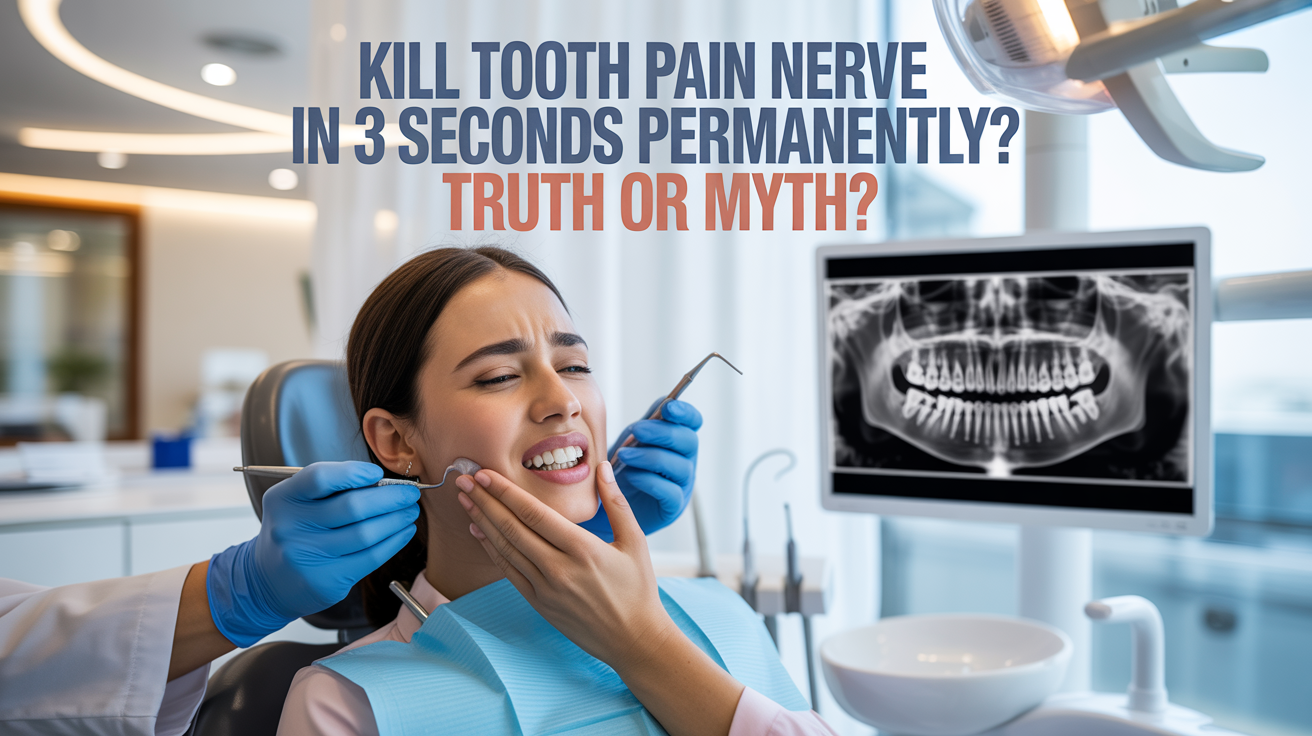
A toothache can easily disrupt one’s daily routine. With sharp or deep pain, it is normal to search online for quick fixes. One popular claim says you can kill tooth pain nerve in 3 seconds permanently. While that sounds so hopeful, it is not actually safe. Let us break it down clearly and help you understand what works and what doesn't.
Why Tooth Pain Nerve Pain Happens
Inside every tooth, there is the pulp. This soft inner tissue consists of blood vessels and nerves. These nerves permit you to perceive pressure, temperature, and injury. But if the pulp has inflammation or infection, the nerves react very strongly. As a result, tooth pain feels intense.
Causes of Sharp Tooth Pain
Dental caries
Cavities allow bacteria to penetrate deep layers of the tooth, and irritation of the nerve in such a manner is extremely painful.
Gum disease or infection
Infected gums have the tendency to expose the roots, which are sensitive and quick to react.
Cracked or damaged tooth
If that crack reaches the nerve, it may suddenly hurt when you bite.
Exposed roots of the teeth
These roots cannot bear the cold or pressure because receding gums expose them.
Failed dental restorations
Old fillings or crowns can leak, allowing bacteria to irritate the pulp.
Symptoms of an Infected Tooth Nerve
Cold, hot, or sweet sensitivity
These reactions are indicative of nerve inflammation.
Sharp shooting pain
A sudden jolt often means that inner structures are affected.
Constant throbbing pain
This usually points to a deep infection inside the tooth.
Extreme tooth pain can't sleep
Pain at night often indicates the pulp is under heavy pressure.
Now that you know why nerves hurt, let's look at the viral myth.
Can You Kill a Tooth Pain Nerve in 3 Seconds?
Social media videos boast of killing a tooth nerve instantly with some home tricks. The trend goes viral really fast since people are looking for instant relief. But let’s dig deep to know the truth.
Why Can't Tooth Nerve Pain End in Seconds?
The nerves inside the tooth are deep. You cannot remove or reach them at home. Only a dentist can safely remove or treat the nerve of your tooth. Quick fixes that numb the surface do not address the real problem.
What happens when you try to DIY tooth nerve "killing"?
So many house hacks are associated with false promises but real dangers.
- Clove oil or numbing gels: These numb the surface but don't reach the nerve.
- Alcohol or homemade chemical solutions: These can burn your gums or damage the soft tissue, making the pain worse.
- Methods like ice, heat, or vibration: It can blunt the pain for minutes, but nothing is fixed.
- Temporary numbness: This delays proper care by masking a serious infection, including rare but dangerous brain-spread warning signs.
- Possibility of spreading infection: Untreated tooth pain can escalate, learn when tooth pain means serious infection and what body-wide symptoms to watch for.
How Can You Kill a Nerve in a Tooth?
A tooth nerve can only be safely removed or permanently treated through professional dental procedures such as root canal therapy or tooth extraction.
- Identify the Cause: A dentist first determines whether decay, infection, trauma, or another issue is damaging the tooth nerve today.
- Assess the Damage: Dental exams and X-rays help evaluate the extent of nerve inflammation or infection accurately.
- Remove the Infection: If infection reaches the pulp, treatment focuses on eliminating bacteria and preventing further damage.
- Treat the Nerve: Root canal therapy removes the affected nerve tissue while preserving the natural tooth whenever possible.
- Restore the Tooth: The treated tooth is repaired with a filling or crown to restore strength and function.
When Is Tooth Pain a Dental Emergency?
If there is swelling on the face, the development of fever, or the pain becomes unbearable, seek urgent dental care. These are signs that the infection is spreading.
Now let's talk about safe ways to control pain until you reach a dentist.
Safe Ways to Stop Tooth Nerve Pain Instantly
- Saltwater swish - Warm saltwater reduces swelling and cleanses the area.
- Cold compress - A cold pack on the cheek eases inflammation.
- Desensitizing toothpaste - These block nerve signals from the tooth surface.
While the management of pain can relieve you a bit, but you still need proper treatment for permanent relief.
Home Remedies for Tooth Nerve Pain
Home remedies for tooth nerve pain may help reduce discomfort for a short time, but they cannot safely kill or remove a damaged tooth nerve. Most remedies work by calming inflammation or temporarily numbing the area.
Common home remedies include:
- Warm salt water rinses
• Cold compresses
• Clove oil applied carefully to the affected tooth
• Over-the-counter pain medication
While these remedies may make the pain more manageable, they do not treat infections, decay, or nerve damage. If pain continues, becomes severe, or keeps returning, a dental examination is the safest way to identify and treat the cause.
Permanent Ways to Stop Tooth Nerve Pain
Dental Treatments for Tooth Nerve Pain
Root canal therapy
Following this, the dentist removes the infected pulp, cleans the tooth, and then seals it. This will once and for all stop nerve pain.
Replacing damaged fillings
New fillings protect the tooth, blocking bacteria from the nerve.
Treatment of root exposure with gum
Deep cleaning enables the gums to heal and decreases sensitivity.
Tooth extraction
In a case where the tooth cannot be saved, removal ends the pain completely.
Let's see how EMD supports you through this process.
Eastside Modern Dentistry Tooth Pain Relief
The team at Eastside Modern Dentistry focuses on gentle care and clear guidance. Advanced imaging is utilized to understand the cause of one's pain. Treatment is done in a safe manner, where comfort and personal care can be assured with each step taken. Financial flexibility options are also available. Not only this, long-lasting relief and a plan toward not having a future problem are achieved, too.
This introduces the other significant component: prevention.
How to Prevent Tooth Nerve Pain
- Proper brushing technique - Use a soft-bristled brush, cleaning very gently to protect the enamel.
- Correct selection of toothpaste - Fluoride toothpaste remineralizes teeth, which drastically reduces sensitivity.
- Flossing and antibacterial rinses - These remove hidden buildup and reduce inflammation.
- Regular dental checkups - Early checks prevent nerve problems.
- Avoiding acidic or sugary foods - These weaken the enamel and expose nerves.
- Wearing night guards for grinding - It covers the teeth to prevent pressure and cracking.
How to Stop Tooth Nerve Pain Instantly
Tooth nerve pain cannot usually be stopped permanently at home, but several methods may provide temporary relief. The fastest way to reduce discomfort is to address inflammation and avoid triggers that worsen the pain until you can see a dentist.
Some options that may help include:
- Rinsing with warm salt water to reduce irritation.
- Taking over-the-counter pain relievers as directed.
- Applying a cold compress to the outside of the cheek.
- Avoiding very hot, cold, or sugary foods and drinks.
These methods only mask the symptoms. If the nerve is damaged or infected, professional dental treatment is needed to solve the underlying problem.
FAQ's
Can Tooth Pain Be Killed in 3 Seconds?
No, neither safe nor possible.
What Helps Instantly for Toothache Pain?
Cold compress and OTC pain medicine offer quick relief.
Do Root Canals Stop Tooth Nerve Pain?
Yes. They extract the infected nerve.
Is It Safe to Numb a Tooth Nerve at Home?
No, it is usually more damaging.
When should I see a dentist ASAP?
If you can't sleep because of extreme tooth pain, the pain is getting worse, or swelling develops.
Can Tooth Nerve Pain Cure Itself?
Sometimes, but it most often returns if its cause is not treated.
Does Tooth Extraction Always Cure Pain?
Only in cases when the tooth cannot be saved.
Will Listerine Kill a Tooth Nerve?
No, Listerine cannot kill a tooth nerve. It may temporarily reduce bacteria and freshen your mouth, but it cannot reach or treat an infected or damaged nerve inside the tooth.
How Long Does a Tooth Nerve Take to Die?
A tooth nerve may take days, weeks, or even months to die depending on the cause and severity of the damage. Even if the nerve dies, the infection can remain and often requires professional dental treatment to prevent further complications.
Conclusion
You cannot kill the nerve of a toothache in 3 seconds. Real relief comes with proper dental care. If you are in pain, Eastside Modern Dentistry can guide you toward safe, lasting comfort. Contact us today!
Leave a Reply