
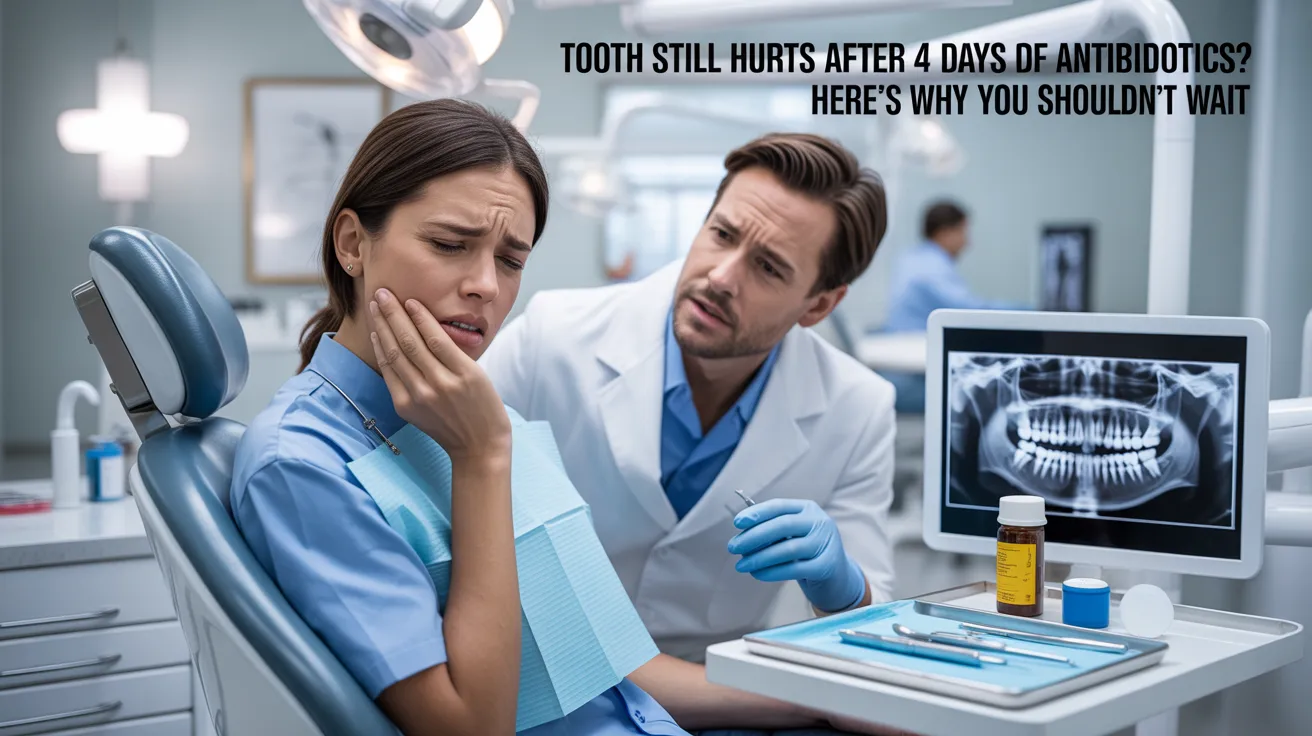
Tooth pain that does not improve after several days of antibiotics can be worrying. Many people expect antibiotics to fix the problem quickly, so when a tooth still hurts after 4 days of antibiotics, it is often a sign that infection control alone is not enough. Understanding why this happens can help you make the right decision before the problem becomes more serious.
Why Are Antibiotics Prescribed for Tooth Infections?
The real effects of antibiotics in dental infections
To manage harmful bacteria and decrease inflammation, dentists prescribe antibiotics. Antibiotics limit the spread of infection, ease pressure from swelling, and assist the immune system in fighting. They do reduce symptoms, but they do not eliminate the damaged tissue or the trapped bacteria inside the tooth.
Common dental diseases that are treated using antibiotics
Antibiotics are usually used in the treatment of:
- Tooth abscess
- Gum infection
- Post-procedure infection
Swelling, fever, or facial pain may result from these infections. These symptoms are stabilized with the help of antibiotics, but still, dental treatment is necessary to eliminate the cause of infection.
The reason why antibiotics are rarely a sufficient solution
In case of tooth infection, pus or bacteria can be trapped deep within the tooth or the bone. These spaces are not readily accessible by antibiotics, which is why the infection recurs or never fully resolves.
So, what is normal and what is not during recovery? Let us understand.
Is It Normal That a Tooth Still Hurts 4 Days After Antibiotics?
Expected pain relief timeline
The vast majority of individuals feel better on the second or third day. It might not heal fully, but it is supposed that the pain will go away gradually. Normal healing can include mild pain in chewing or heat sensitivity.
Signs that antibiotics are not working
When the tooth still hurts after 4 days of antibiotics or even when the pain worsens, then it indicates that the infection is still alive. Red flags include:
- No reduction in pain or swelling
- The worsening of pain despite the medication
The reason why it is dangerous to wait
Dental infections do not always stay in the same location. The delay in care can permit bacteria to enter the blood, face, and jaw. This may result in a medical crisis out of a manageable problem.
Next, let’s look at the most common reasons pain continues despite medication.
Common Causes of Persistent Tooth Pain Following Antibiotics
The source of infection has not been eliminated
In case the abscess still exists or the dental pulp is dead or infected, the bacteria keep multiplying. This is the reason why pain is not improving in most of the cases.
Resistance to antibiotics or wrong prescription
Occasionally, the antibiotic fails to match the bacterial type that produces the infection. Other times, doses are missed. The results are bacterial survival and symptoms persist in both cases.
Infection spread beyond the tooth
If bacteria have already spread in the jawbone or in the spaces around the face, the treatment with antibiotics might not be sufficient. Such an extent of spread typically requires emergency dental care.
Structural dental damage is causing pain
A cracked tooth or severe decay can cause lingering pain even after the infection is controlled. A dentist needs to check the structure, then make his/her decision regarding treatment.
Knowing the cause will result in treatment alternatives that, in reality, solve the problem.
Treatment Options When Tooth Pain Persists After Antibiotics
Definitive dental treatments
Dentists might do these to completely prevent the infection:
- Root canal treatment
- Surgical drainage of the abscess
These processes eliminate the bacteria at the roots, which cannot be done by the antibiotics alone.
When teeth extraction
In case the tooth is too damaged or it is frequently infected, it might be safer to extract it. Extraction of the tooth helps in avoiding further spread and maintaining the general well-being.
Managing post treatment pain
A few days of mild soreness are expected after treatment. Dentists prescribe follow-up to ensure that the progress of the healing is at the right pace.
This brings up the question of how East Side Modern Dentistry tackles such cases in a safe manner.
How EMD Treats Persistent Tooth Pain Safely and Effectively?
Evidence-based diagnosis at EMD
We start with proper diagnostics, imaging, and clinical assessment. This is aimed at identifying the source of infection and preventing complications at an early stage.
Individualized treatment design
We prefer to use conservative treatments where it is possible, but intervene decisively when needed. Each patient is provided with a plan depending on his/her dental and medical needs.
Patient education and prevention
Maintenance care, advice on oral care, and long-term planning are advised for patients to prevent repeat infections.
Frequently Asked Questions
Why does the tooth still hurt after 4 days of antibiotics?
Usually, because the infection source is still present, it requires dental care.
How long should antibiotics take to reduce tooth pain?
The majority of the patients report that they see a change two to four days later.
Can antibiotics fail to treat a tooth infection?
Yes, particularly when there are bacteria in the tooth or those that are resistant to the medication.
Is it better to change antibiotics if the pain continues?
You should not change medication independently. A dentist should assess whether the antibiotic is appropriate.
When is it necessary to visit a dentist and not wait?
If there is no improvement by day four or symptoms are worsening, seek dental care immediately.
Is it possible to be seriously ill in case of a late diagnosis?
Yes. Untreated dental infections can spread, causing facial swelling and, in rare cases, systemic infection.
Key Takeaway
If a tooth still hurts after 4 days of antibiotics, then it indicates that the source of infection has not been eliminated. The treatment of the teeth is the sole final solution, and a delay in treatment can only lead to the issue being more severe. Early treatment protects both oral health and overall health, and assistance can be obtained at EMD when required.
Leave a Reply