
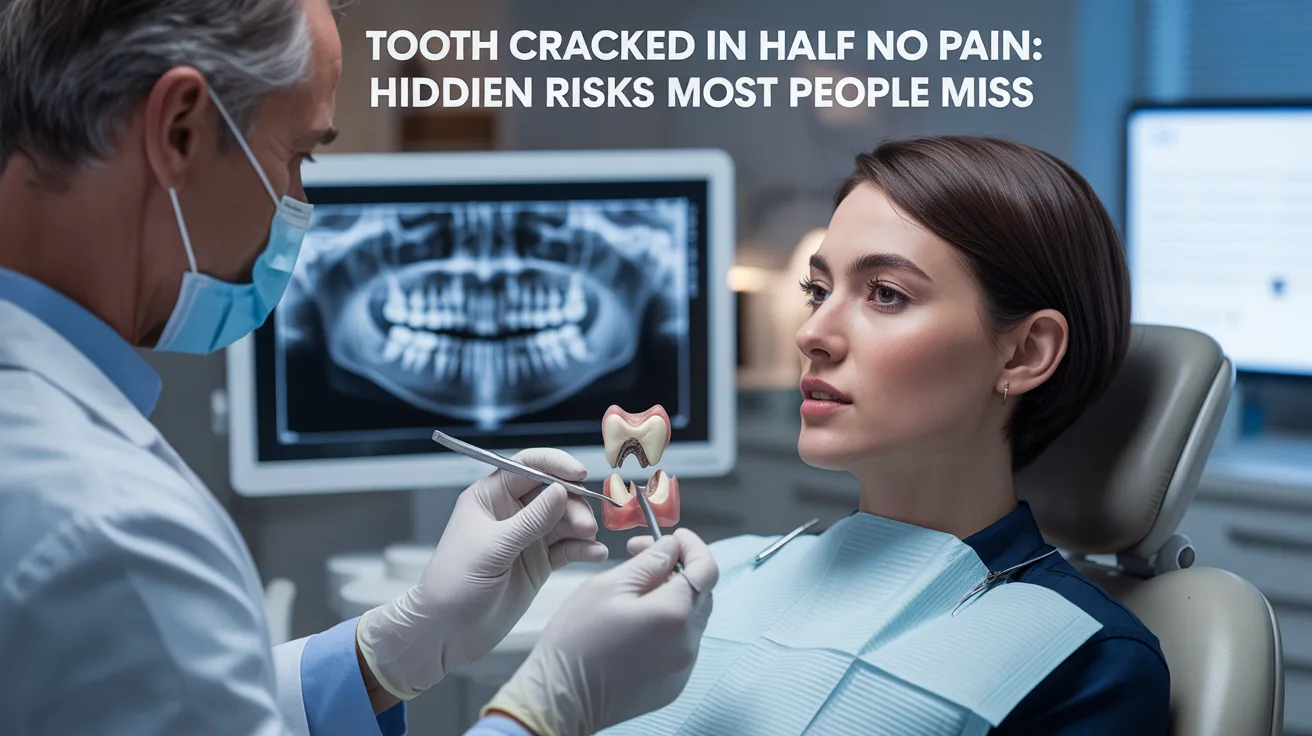
Hearing a crack in your tooth can be unsettling. For many people, the surprise is that there is no pain at all. A tooth cracked in half with no pain may seem harmless at first, but this situation can hide serious problems that develop quietly. Getting it checked early often saves the tooth and prevents future complications.
Can a Tooth Be Cracked in Half Without Any Pain?
Why is pain not always present with a cracked tooth?
Teeth have nerves located in the inner chamber called the pulp. If a fracture occurs only in the enamel or dentin, which are the outer and middle layers, you may not feel pain because the nerve has not been disturbed.
Common misconceptions about pain-free dental damage
Many people assume that no pain means no problem. Unfortunately, dental nerve reactions are delayed in many cases of fracture. Some patients develop pain weeks or months later once bacteria or pressure reach the pulp tissue.
Why does the absence of pain often delay treatment?
Since there is no discomfort at first, patients tend to wait. The crack, however, continues to weaken the tooth and increases the risk of complete breakdown or tooth loss.
These delays bring us to the different types of cracks that may remain silent early on.
Types of Tooth Cracks That May Not Cause Pain Initially
Craze lines and superficial enamel cracks
They are shallow cracks in which only enamel is involved. They are predominantly cosmetic and they do not normally pose an immediate threat to tooth structure.
Vertical cracks extending into dentin
The cracks extend to deeper layers of the tooth, leading to structural compromise. The inner parts are more vulnerable to bacteria even in the absence of symptoms.
Split tooth vs cracked tooth
Even when a tooth is broken, there are still links. A split tooth consists of two parts that do not move together. Split teeth are more radical and, in most cases, need to be extracted.
Why does the depth of the fracture determine urgency?
Cracks that include the pulp are emergencies since the bacteria may easily travel rapidly to the inner tissue.
Hidden Risks of a Tooth Cracked in Half With No Pain
Microscopic fractures aided through bacteria entry
The tooth has tiny holes into which the bacteria enter and spread. This may cause infection, although you might even be feeling good and nothing unusual.
Progressive pulp damage
When the pulp gets inflamed, patients may develop sudden throbbing pains or sensitivity. In other instances, the nerve may die silently with no signs or symptoms.
Gum and jawbone complications
Deep infection may extend past the tooth to the gums or the jawbone. Bone loss is more difficult to treat and may spell doom to adjacent teeth.
Risk of sudden tooth failure
A cracked tooth may fracture all the way through during the eating or chewing process.
It will be easier to prevent such cracks when the cause of such a crack is known.
What Causes a Tooth to Crack Without Immediate Pain?
Chewing hard
Teeth would be stressed by biting hard foods, grinding, or clenching and form microscopic fissures, which would grow with time.
Dental restorations weaken tooth structure
Older crowns or huge fillings can deprive the tooth of natural support.
Trauma and microfractures
Fractures may be caused by sports injuries, falls or by biting something hard accidentally, and may not show symptoms at the same time.
Why do aging teeth crack more easily?
Since aging causes enamel to weaken, teeth in old age become less flexible and more prone to splitting.
Even the cracks that are silent should be treated effectively to take care of the tooth.
Treatment Options for a Tooth Cracked in Half With No Pain
Minor cracks; conservative treatment
The tooth can be strengthened by bonding or crowns, which prevent the spreading of cracks.
Root canal treatment in case of threatened pulp
Root canal treatment eliminates the damaged or infected pulp and enables the saving of the tooth by use of a crown.
When tooth extraction becomes unavoidable
Extreme vertical fractures or even completely fractured teeth cannot be restored and have to be removed.
Why does early treatment preserve more of the natural tooth?
Early dental visits typically result in reduced intervention and reduced long-term bills.
How EMD Manages Cracked Teeth Before Pain Starts?
Early crack detection at EMD
We examine in fine detail to detect cracks before they develop.
Philosophy of tooth preservation
We aim for minimally invasive care and use protective restorations to maintain natural structure whenever possible.
Individualized care mapping
We assess bite pressure, fracture location, and durability in the long run to provide customized solutions to patients.
Frequently Asked Questions About a Tooth Cracked in Half With No Pain
Is it natural that a tooth with a crack does not cause pain?
Yes, in particular, when the crack is not extended to the nerve.
Is it possible that a cracked tooth will begin to hurt at a later date?
Yes, most patients develop delayed sensitivity or throbbing pain.
How long can a cracked tooth last without treatment?
It varies person to person, but the majority of the cracks get worse with time.
Does a cracked tooth necessarily require a crown?
Not necessarily, but it is the crowns that are most likely to be protective.
Is it possible to have the self-healing of a cracked tooth?
There is no way that teeth can regenerate enamel or close cracks.
When should I see a dentist if my tooth cracks but does not hurt?
Immediately, to avoid severe infection or loss of teeth.
Key Takeaway
A tooth cracked in half with no pain is not a completely harmless situation. Early examination is the most effective way of preserving the tooth as well as preventing the occurrence of unexpected problems. In case of a suspected crack, the dental team at East Side Modern Dentistry can examine, stabilize, and treat the tooth before the pain sets in.
Leave a Reply