
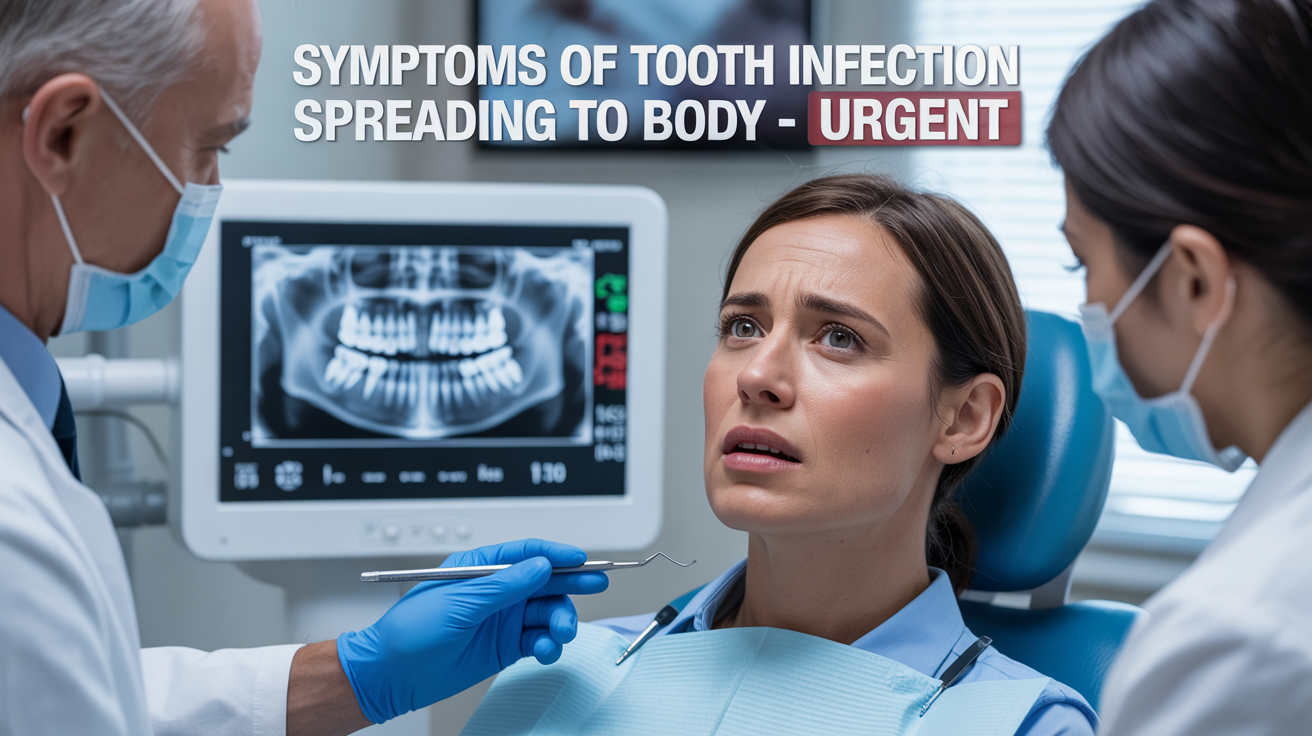
An infected tooth often originates through some sort of pain or swelling within the mouth. If left untreated, it could spread beyond your mouth. When the bacteria start migrating into the body, it becomes serious. Knowing the symptoms of a tooth infection spreading into the body will help you act before it becomes life-threatening.
What Does It Mean When a Tooth Infection Spreads to the Body?
A tooth infection generally starts deep inside the tooth or gums. This often occurs because of untreated decay or an abscess, a pocket of pus caused by bacteria. As the infection grows, bacteria may escape the tooth.
These bacteria can easily enter the bloodstream or lymphatic system. Once this occurs, the infection is carried to other parts of the body. This is why symptoms of dental infections should never be ignored. Once you understand this spread, you will see why early care is so important.
Early Warning Signs That a Tooth Infection Is Spreading
The human body often sends out signals as symptoms of tooth infection spreading to the body before a serious emergency occurs. It is important to keep a note of them.
General Body Symptoms
Common symptoms include fever and chills. This is the body fighting infection, and many may complain of a general feeling of extreme tiredness or weakness.
Some describe it as a flu-like feeling that does not improve. These symptoms mean that the infection may no longer be limited to the tooth.
Facial and Neck Changes
The swelling of the face or jaw may be worsening or spreading. It may feel tight or painful.
Lymph nodes in the neck may be swollen or tender. Additionally, there may be neck stiffness or soreness. These are indications that the infection is spreading from the mouth.
Early recognition of these signs helps avoid complications.
Serious Symptoms That Require Immediate Attention
Some symptoms of tooth infection spreading to body are signs that the infection has reached a dangerous stage.
Symptoms of Breathing, Heart, and Circulation
Swelling that includes the airway can cause shortness of breath. This is a medical emergency.
Other symptoms include a racing heart and chest discomfort. These symptoms indicate that the infection is now affecting vital systems.
Neurological and Systemic Red Flags
Confusion or dizziness can indicate reduced oxygen or the spread of infection. A severe headache should never be ignored.
Signs of sepsis may appear as well. Sepsis is a life-threatening response to infection. Its symptoms include high fever, fast breathing, and clammy skin.
These symptoms require immediate medical attention.
How Tooth Infections Spread Throughout the Body?
As mentioned earlier, bacteria spread through the bloodstream and lymphatic system. These pathways act like highways inside the body.
Common areas involved may include the sinuses, jawbone, heart, and even the brain. That is why a neglected dental infection may become dangerous.
The spread indicates the reason for urgent dental treatment.
Who Is at Higher Risk for Infection Spread?
People with diabetes have slower healing and a higher risk. A weakened immune system also increases danger.
It greatly reduces the body's ability to fight bacteria, and delayed dental care allows the infection to grow unchecked.
Deep decay and untreated abscesses are major risks. Knowing your risk helps you stay alert.
Is a Spreading Tooth Infection a Medical Emergency?
Go to the emergency room right away if you have trouble breathing, chest pain, confusion, or a high fever.
If symptoms are worsening but not severe, urgent dental care remains critical. Dentists treat the source of the infection that medical care alone cannot treat.
Knowing where to go may save time and lives.
How Dentists Diagnose a Spreading Tooth Infection?
Dentists carry out an in-depth oral and facial examination. They examine for facial swelling, pain, and signs.
Dental X-rays help locate hidden infections in the tooth or bone. When necessary, dentists may collaborate with medical providers.
Accurate diagnosis leads to quicker recoveries.
Treatment Options for Tooth Infections Spreading to the Body
Antibiotics are used to control bacteria. They help stop further spread.
However, antibiotics would not be sufficient on their own. The source needs to be treated, which involves root canal, drainage, or tooth removal might be considered. Full healing requires the treatment of the infection, as well as its cause.
Proper treatment prevents recurrence.
How EMD Treats and Manages Serious Tooth Infections?
The emphasis at Eastside Modern Dentistry is on early detection. Urgent cases are managed with gentleness and speed.
The team focuses on removing the source of infection in a safe way. Always included are the comfort of the patient and clear communication.
Preventive dental care to avoid future infections is emphasized. Patients are guided and supported at all times.
Early care ensures better outcomes.
FAQs Regarding Tooth Infection Spreading To The Body
How quickly can an infection of the tooth spread to the body?
It can spread within days or weeks.
Can a tooth infection cause fever along with tiredness?
Yes, these are common early signs.
Can a tooth infection cause sepsis?
Yes, if left untreated.
Are antibiotics sufficient to stop a spreading infection?
No, the source needs to be treated.
When should I go to the ER with a tooth infection?
If breathing, chest, or mental symptoms occur.
Leave a Reply