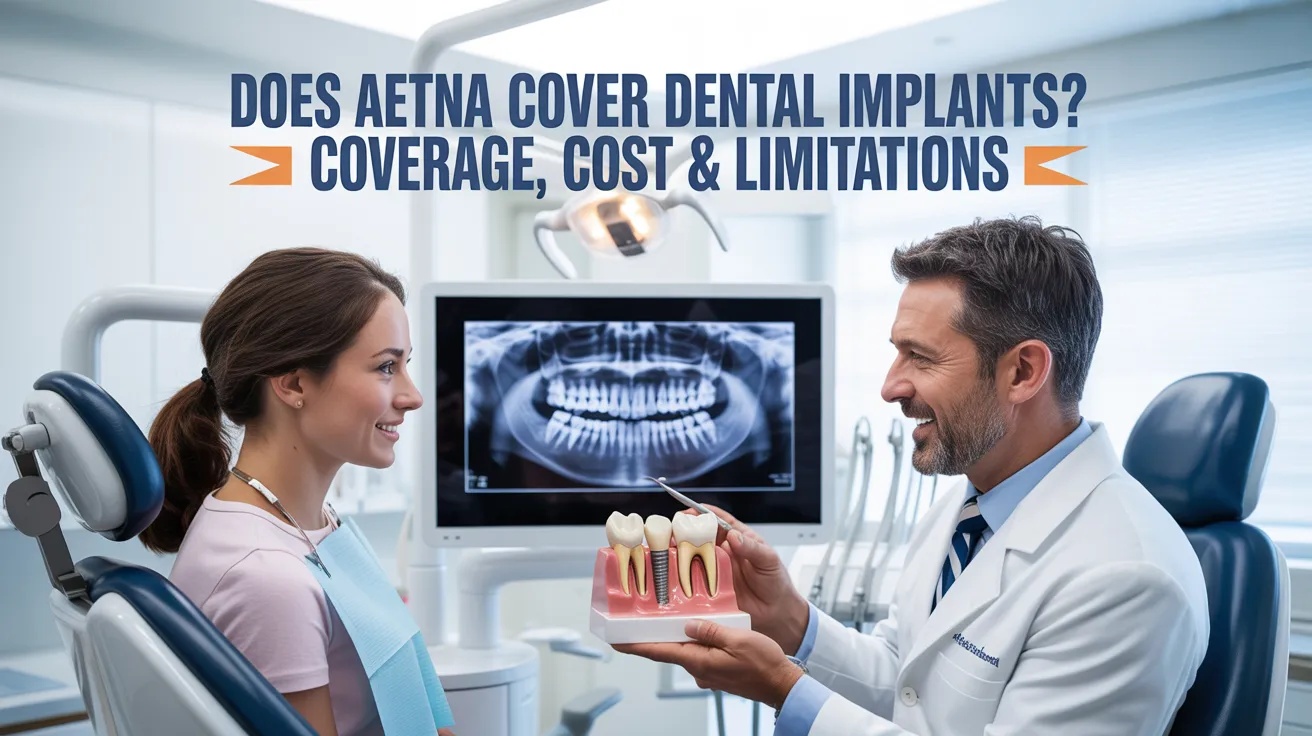
The question that many patients planning to replace their teeth usually ask is whether their insurance will cover it. Dental implants could be partially covered by the Aetna dental insurance, depending on the plan. The implants typically fall in the category of major procedures, and the coverage may be 0 percent to 50 percent, or none at all. One should also learn the details of individual policies to know benefits, restrictions, and out-of-pocket costs before commencing treatment.
How Much Does Aetna Cover for Dental Implants?
Typical Coverage Percentage
Dental implants insurance is a mixed coverage across Aetna plans. Other plans do not have coverage of implants; moreover, basic plans do not cover advanced procedures. In other instances, a PPO plan can pay approximately 30 percent to 50 percent of the treatment cost. The precise percentage varies depending on the policy and rate of coverage chosen.
Annual Maximum Limits
The Aetna dental plans have a maximum limit that is usually set at 1000 to 2000 dollars per year. This limit is the sum that the insurance company will pay in a year. After this point, any extra expense of treatment will have to be borne by the patient.
Example Cost Scenario with Aetna Insurance
An implantation done on the teeth can cost thousands of dollars. When a plan covers half but has an annual maximum limit, then only a part of the treatment shall be reimbursed. The rest is the patient's responsibility, which may still be considerable.
What Parts of Dental Implant Treatment May Be Covered?
Coverage for Initial Consultation and Exams
Consultations, dental check-ups, and X-rays are some typical diagnostic services that are usually borne at a more favorable rate. These are necessary steps in the treatment planning and assessment.
Coverage for Tooth Extraction
Extraction is typically a basic procedure, including most plans in case of a damaged tooth that needs to be removed before the implant can be put in.
Coverage for Implant Placement
Depending on the policy, the surgical implantation of the post can be furnished or not. Some plans do not cover it at all, and there are schemes of partial coverage.
Coverage for Crown or Prosthetic
The top implant cover can be partially covered, particularly when it is deemed essential in restoring functionality.
Why Some Implant Components Are Not Covered
Insurance companies can consider implants as either elective or advanced surgery. Consequently, this can exclude some aspects, like posts on the implants or complicated surgeries, from the standard coverage.
What Aetna Dental Insurance Typically Does NOT Cover
Cosmetic vs Medically Necessary Treatments
Aesthetic procedures that are cosmetic, like facial enhancement, are not normally covered. When the treatment is necessary to restore the functions, it is more likely to be covered.
Implant Exclusions in Basic Plans
Simple Aetna plans do not usually cover dental implants. Such plans might require patients to upgrade or seek different cover plans.
Frequency Limitations and Restrictions
Some treatments can be limited in terms of the number of times they can be carried out or be covered during a given duration.
Understanding Policy Fine Print
It is important to review the finer stipulations of the policy. These involve exclusions, waiting periods, and coverage limits that can have a great influence on the determination of the treatment.
Cost of Dental Implants With and Without Aetna
Average Cost Without Insurance
Dental implants are also relatively costlier dental procedures as they are more complex. These costs normally consist of surgery, materials, and after-care.
Estimated Cost After Aetna Coverage
In case of partial coverage, the patients can still be expected to pay a large percentage of the overall cost. The last amount is contingent on annual limits and the percentage of coverage.
Hidden Costs to Consider
The cost of treatment can be augmented by other procedures. These are bone grafting, sinus lift surgery, and temporary restorations, which are not necessarily insurable.
Long-Term Value of Implants
Dental implants have a long-term functionality and life, which, though expensive initially, is beneficial in the long run. They assist in the preservation of the oral structure, as well as minimize the occurrence of repeated treatments.
How to Maximize Your Aetna Benefits for Dental Implants
Choosing In-Network Providers
The choice of dental offices accepting Aetna contributes to the minimization of the cost of treatment and eases the process of paying the bill. Rates are negotiated with in-network providers and reduce total costs.
Using Annual Maximum Strategically
Patients are able to organize treatment over many years to exploit the annual maximum better. Such a strategy assists in sharing the costs and enhances the use of coverage.
Combining Medical and Dental Insurance
Medical insurance could be useful in some incidences in respect to oral surgery procedures. The coordination of benefits would assist in minimizing the cost.
Planning Multi-Stage Treatments Across Years
Because implant procedures may be conducted in phases, a strategy of dividing treatment into various insurance periods may serve to optimize the insurance payout.
How to Verify Your Aetna Dental Implant Coverage
Checking Your Insurance Policy
Patients need to go through their policy paperwork in order to know how they are covered, such as in percentages, lines, and annual limit.
Contacting Aetna Support
There is always a possibility to discuss the benefits directly with the insurance provider and make sure that the benefits do exist and that the person is eligible to get the implant procedures.
Asking Your Dental Clinic
Dental clinics usually help clients in confirming the insurance cover and approximating the cost before the treatment is started.
Questions to Ask Before Treatment
The patient must enquire about the coverage rates, what out of pocket or kind of expense is likely to be incurred, and whether he or she needs pre-authorization of the procedure.
Why Choose EMD for Dental Implants with Aetna Insurance
Assistance with Aetna Insurance Verification
EMD assists the patients by confirming their insurance status and clarifying their coverage before they start planning treatment.
Advanced Implant Technology
The clinic employs the current techniques and equipment to make the placement of implants accurate and effective.
Experienced Dental Specialists
Complex procedures are addressed by qualified persons, keeping in mind the safety and long-term outcomes.
Transparent Pricing and Financing Options
Well-defined expenses and payment plans allow patients to plan their treatment with confidence.
Personalized Treatment Planning
Every patient will have an individual treatment plan according to the state of the dental and insurance coverage.
FAQs on Aetna Dental Implant Coverage
1. Does Aetna cover dental implants?
Aetna may offer partial coverage depending on the plan, but some policies exclude implants entirely.
2. How much does Aetna cover for dental implants?
Coverage typically ranges from 0 percent to 50 percent, depending on the policy.
3. Are dental implants considered cosmetic by Aetna?
In some cases, implants may be classified as elective unless they are required for functional restoration.
4. What is the annual maximum for Aetna dental plans?
Most plans have annual limits between 1000 and 2000 dollars.
5. Can I get partial coverage for implant crowns?
Yes, crowns may be partially covered if they are considered necessary for restoring function.
6. How can I reduce implant costs with Aetna?
Using in-network providers and planning treatment stages strategically can help reduce expenses.
7. Do I need pre-authorization for implants?
Some plans require pre-authorization, so it is important to confirm this before starting treatment.
Leave a Reply