
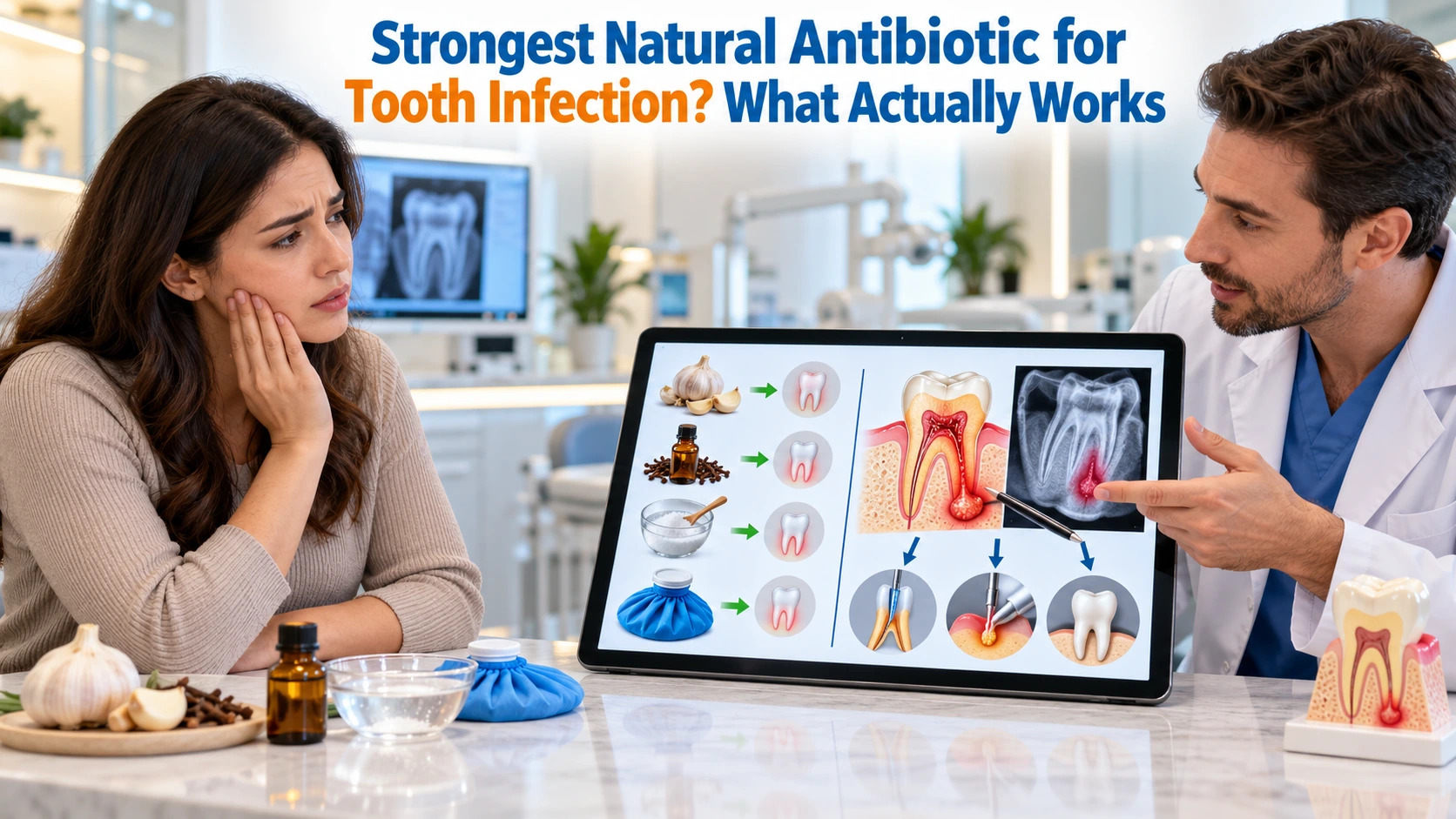
It's late, your jaw is throbbing, and the dental office is closed. So you search for the strongest natural antibiotic for a tooth infection and hope something in your kitchen will fix it. Almost everyone tries the kitchen first.
This guide covers what home remedies can actually do, which ones can hurt you, and when waiting stops being safe.
Is There a Natural Antibiotic for a Tooth Infection?
No natural remedy can cure a tooth infection. Some, like saltwater or clove oil, may ease pain or reduce germs on the surface, but none can reach bacteria inside the tooth or jawbone. Only a dentist can remove the source, usually by draining the abscess, cleaning the root canal, or removing the tooth.
Think of it in three levels. Natural remedies can soothe pain and, at best, suppress surface germs. Only a dentist can treat the source. Most home remedies never get past the first two. Pain relief isn't infection control.
Online, people call garlic, turmeric, and clove oil natural antibiotics. Scientists call them natural antimicrobials because some slow germs in a lab dish. A lab dish isn't a tooth, and limited research shows none of them clear a dental abscess.
Which Home Remedies Help, and Which Are Risky?
Some remedies are gentle and useful for comfort. Others can burn your gums.
|
Remedy
|
May help with
|
Can’t do
|
Main risk
|
| Warm salt water | Soothing gums | Treat the infection | Low |
| Cold compress | Swelling and pain | Treat the infection | Skin irritation |
| Clove oil | Short-term numbing | Reach the abscess | Gum burns; harmful if swallowed |
| Garlic | Germ-fighting in lab tests | Reach the abscess | Gum burns |
| Turmeric, oil pulling | Mild mouth care | Clear an abscess | Delayed care |
Two mistakes come up often:
- Placing an aspirin tablet on the gum, which burns the tissue
- Using undiluted tea tree or oregano oil, which irritates and burns
Why Natural Remedies Can't Reach an Abscess
An abscess is a pocket of pus at a tooth's root. Bacteria usually enter through a cavity, a crack, or gum disease, kill the nerve, and collect where rinses and oils can't reach.
Even prescription antibiotics struggle here. They travel through the blood, and the dead area has little blood flow. That's why dentists clean or drain the infected area first. Antibiotics buy time, and the dentist removes the source.
Why the Pain Can Suddenly Stop
Sometimes a bump on the gum bursts, a bad taste floods your mouth, and the pain drops. It feels like healing. It isn't.
The pressure is gone, but the source remains. A dead nerve can also stop hurting while the infection stays. Fading pain isn't proof the infection is gone.
What Can You Do Tonight for the Pain?
You can make tonight easier while you wait for care:
- Take an over-the-counter pain reliever as directed on the label. Ask a pharmacist first if you have stomach, kidney, or blood-thinner concerns.
- Hold a cold compress on your cheek for about 15 minutes.
- Rinse gently with warm salt water.
- Sleep with your head raised on an extra pillow.
- Chew on the other side, and skip very hot or cold food.
Call your dentist when the office opens, or sooner if they have an emergency line. Not sure how urgent it is? Call and describe your symptoms. The staff can help decide how fast you need to be seen.
When Is a Tooth Infection an Emergency?
Go to an emergency room or call 911 if you have any of these:
- Swelling that spreads toward your eye, neck, or under your jaw.
- Trouble breathing or swallowing
- A fever with chills
- Trouble opening your mouth wide
- Feeling very weak, dizzy, or confused
The ER can treat a spreading infection and may give antibiotics, but it usually can't fix the tooth, so you'll still need a dentist afterward. Urgent care has the same limit.
There's no safe number of days to wait. If you have only a toothache, call a dentist the same or next business day, because infections can change fast.
How Do Dentists Treat a Tooth Infection?
Dentists focus on removing the source:
- Root canal: cleans out the infected inside of the tooth, which often saves it
- Extraction: removes a tooth that's too damaged to save
- Drainage: releases built-up pus
Add antibiotics when the infection is spreading, you have a fever, or your immune system is weak. Many localized infections are treated without them once the source is gone. If you're allergic to penicillin, tell the dentist, because other options are available.
In the US, antibiotics need a prescription, and the dentist should examine the tooth first. If cost is what's holding you back, ask about payment plans, insurance help, dental school clinics, or community health centers.
FAQ's
Can a tooth infection go away on its own?
Rarely. The pain may fade if the nerve dies or the abscess drains, but the infection usually stays and can return worse.
Can I get antibiotics without seeing a dentist?
In the US, no. They need a prescription, and a dentist should confirm they're the right choice. Antibiotics alone also rarely clear an abscess.
Can I take leftover antibiotics from a past illness?
No. The medicine may not match these germs, and a low dose can mask symptoms and help germs become resistant.
Before You Call a Dentist
Have three details ready: which tooth hurts, how many days it's been going on, and whether you have swelling or a fever. Those answers help the office decide how soon to fit you in.
If you're near Issaquah, Washington, Eastside Modern Dentistry offers emergency dental care and can discuss insurance and payment options with you. No matter where you go, seeing a dentist early is the kindest thing you can do for your tooth.
Sources to link: ADA clinical guideline on antibiotic use for pulpal and periapical dental pain and swelling; Cleveland Clinic, "Antibiotics for Tooth Infections."