
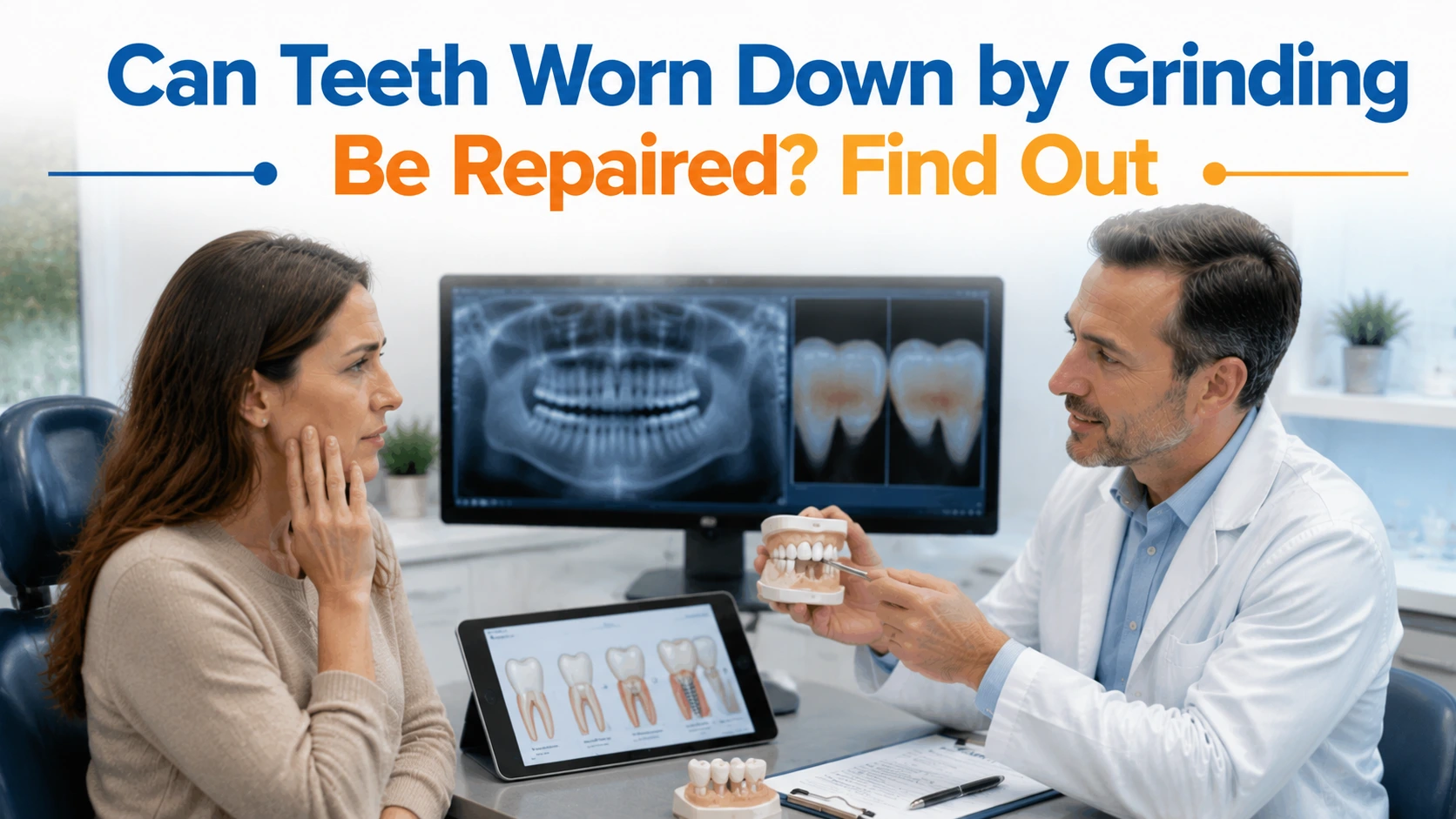
You may first notice the edges of your front teeth looking flat, uneven, or shorter than before. Some people also develop sensitivity, small chips, jaw tightness, or repeated damage to fillings without realizing that teeth grinding may be the cause.
Teeth worn down by grinding can often be repaired. Lost enamel does not grow back, but a dentist can rebuild the missing shape and protect weak areas with bonding, veneers, onlays, or crowns. The right option depends on how much tooth structure remains, where the wear appears, and whether grinding is still active.
Although people often search for “grinded teeth repair,” dentists usually describe this problem as worn-down, ground-down, or damaged teeth caused by bruxism.
How Does Teeth Grinding Damage Your Teeth?
Teeth grinding, also called bruxism, creates repeated contact between the upper and lower teeth. It may happen during sleep or while a person is awake, focused, stressed, or driving.
Enamel is strong, but it can gradually wear away under repeated pressure. Once the thinner enamel layer is lost, the softer dentin underneath may become exposed. This can make the teeth more sensitive and easier to damage.
Common signs of grinding-related wear include:
- Flat biting surfaces
- Short or uneven front teeth
- Small chips along the edges
- Cracks in teeth or fillings
- Sensitivity to hot or cold foods
- Morning jaw tightness
- Headaches after waking
- Changes in the bite
A common mistake is assuming that all worn teeth are caused only by grinding. Acid reflux, fizzy drinks, frequent acidic foods, and hard brushing can also weaken enamel. When acid erosion and grinding happen together, the teeth may wear faster.
How Severe Is the Tooth Wear?
Dentists do not judge wear only by appearance. They also check the depth of enamel loss, the number of teeth involved, the strength of the remaining structure, and whether the bite has changed.
Mild Tooth Wear
Mild wear may cause slight flattening, tiny chips, or limited sensitivity. The bite often remains stable, and only one or two teeth may be affected.
Possible care may include:
- Monitoring the wear
- Using a custom dental guard
- Rebuilding small edges with composite bonding
- Reducing habits that increase clenching
Early treatment may allow the dentist to preserve more natural tooth structure.
Moderate Tooth Wear
Moderate wear may make the teeth look clearly shorter or uneven. Sensitivity may become more frequent, and several teeth or old fillings may show damage.
Depending on the location and strength of the teeth, treatment may involve bonding, veneers, or partial restorations called onlays.
Advanced Tooth Wear
Advanced wear may expose dentin, weaken several teeth, cause deeper cracks, or reduce the height of the bite. Some people may also struggle to chew comfortably.
Crowns, onlays, or a planned combination of restorations may be required. Full-mouth reconstruction is considered only when widespread wear affects both function and appearance.
How Do Dentists Repair Teeth Damaged by Grinding?
The best treatment is not always the strongest or most expensive option. Dentists usually aim to choose the least invasive repair that can handle the patient’s actual bite forces.
Composite Bonding
Composite bonding uses tooth-colored resin to rebuild worn or chipped sections. It is commonly used for mild damage, especially along the edges of the front teeth.
Bonding usually requires little removal of healthy tooth structure. It can also be repaired if a small area chips later.
The main limitation is that heavy grinding may wear or break the material. A custom guard is often recommended after treatment.
Porceain Veneers
Veneers are thin ceramic shells placed over the front surface of teeth. They can improve tooth length, shape, color, and symmetry.
They may suit moderate front-tooth wear when enough healthy enamel remains. However, veneers are not the right choice for everyone who grinds, as high bite forces may cause chipping or loosening.
Dental Onlays
An onlay repairs part of a damaged back tooth without covering the whole tooth. It may be used when bonding is not strong enough, but a full crown would remove more healthy structure than needed.
Onlays are often missed in general treatment guides. For selected patients, they can strengthen the tooth while preserving more of its natural surface.
Dental Crowns
A crown covers most or all of a weakened tooth. It may be recommended when grinding has caused major structure loss, a large crack, or repeated failure of an old filling.
Crowns provide broad protection, but they require more tooth preparation than bonding or onlays. They repair the weakened tooth but do not stop bruxism.
Full-Mouth Reconstruction
Full-mouth reconstruction may be considered when many teeth have lost height, and the bite no longer works properly.
The treatment plan may combine crowns, onlays, and bonding. Careful bite planning is essential because rebuilding several teeth without balancing the bite can create discomfort or overload the new restorations.
Bonding vs. Veneers vs. Crowns
Each option has a different purpose.
- Bonding: Often used for mild chips and limited wear
- Veneers: May suit moderate cosmetic wear on front teeth
- Onlays: Useful when part of a back tooth needs stronger support
- Crowns: Usually reserved for teeth with major structural damage
Bonding is more conservative and easier to repair, but it may chip sooner under strong grinding forces.
Veneers can provide a natural cosmetic result, but they require sufficient healthy tooth structure and protection against ongoing grinding.
Crowns provide greater coverage, but they require more preparation and are not necessary for every worn tooth.
The treatment choice should be based on tooth strength, bite pressure, repairability, appearance, and long-term maintenance.
Should Bruxism Be Managed Before Repairing the Teeth?
Repairing worn teeth without evaluating the grinding may place the new dental work under the same pressure that caused the original damage.
A practical treatment plan often follows three stages:
- Restore the lost tooth shape or strength.
- Stabilize active problems such as cracks, jaw pain, or uneven bite pressure.
- Protect the teeth and restorations from continued grinding.
Bruxism management may include a custom dental guard, greater awareness of daytime clenching, stress management, improved sleep habits, or a review of medications that may increase grinding.
People who snore loudly, wake up gasping, or remain tired after sleeping may also need to discuss possible sleep-related problems with a healthcare professional.
Natural measures may reduce some triggers, but they cannot rebuild missing enamel. Relaxation exercises, limiting evening caffeine intake, and avoiding chewing gum may help some people, yet visible tooth damage still requires a dental assessment.
Can a Night Guard Protect Repaired Teeth?
A bruxism dental guard creates a protective barrier between the upper and lower teeth. It may reduce direct wear and help protect natural enamel, as well as bonding, veneers, crowns, and fillings.
A night guard does not repair existing damage. It may also protect the teeth without fully stopping the jaw muscles from clenching. This is why some people continue to feel morning jaw tightness even when their teeth are better protected.
A custom guard is made to fit the patient’s teeth and bite. It can be adjusted after restorative treatment to distribute pressure more evenly.
Store-bought guards may provide temporary protection, but they may feel bulky or fit poorly. They may also be unsuitable when several teeth have been restored.
Can Teeth Grinding Cause Cavities or Tooth Loss?
Teeth grinding does not directly cause cavities. Cavities develop when bacteria produce acids that weaken the tooth.
However, grinding may crack enamel, damage fillings, and expose dentin. Broken restorations may also create areas where plaque is harder to remove.
Grinding does not usually cause tooth loss by itself. Severe, untreated wear can weaken teeth and lead to fractures that make them difficult to save.
Seek prompt dental care if you notice:
- Sudden pain while biting
- A visible crack
- A broken tooth or filling
- Rapidly increasing sensitivity
- A loose restoration
- Swelling around a damaged tooth
Is Surgery Needed to Fix Teeth Grinding?
Surgery is not normally used to repair teeth worn down by grinding. Most cases are treated with restorative dentistry, protective appliances, habit changes, and care for contributing conditions.
Surgery may only be considered when a separate jaw-joint, airway, or skeletal condition has been diagnosed. Conservative treatment is usually explored first.
Be cautious of claims that one procedure can permanently cure every form of bruxism. Teeth grinding may have multiple triggers, so treatment should be based on the specific cause and symptoms.
When Should You See a Dentist?
Arrange a dental examination if your teeth look shorter, flatter, cracked, or more sensitive than before. You should also seek care if your jaw feels sore in the morning or your fillings keep breaking.
During the visit, the dentist may:
- Review your symptoms and health history.
- Examine the pattern and depth of tooth wear.
- Check for cracks, decay, and damaged fillings.
- Assess how the upper and lower teeth meet.
- Examine jaw movement and muscle tenderness.
- Use X-rays or digital scans when more serious damage is suspected.
- Discuss repair and protection options.
Early evaluation does not always mean extensive dental work. Mild wear may only need monitoring and protection, while damaged areas may be treated before they become more difficult to repair.
FAQ’s
Can a dentist build short teeth back up?
Yes. A dentist may use bonding, veneers, onlays, or crowns to restore lost height. The choice depends on the amount of healthy tooth structure that remains.
Will dental bonding break if I grind my teeth?
Bonding can chip under strong grinding forces, but it is also easier to repair than many ceramic restorations. Wearing a custom guard may help protect it.
Can I get veneers if I have bruxism?
Some people with bruxism can receive veneers, but the grinding must be assessed first. A dentist will check the bite, enamel level, and risk of veneer damage.
Do crowns stop teeth grinding?
No. Crowns repair and protect damaged teeth, but they do not stop the grinding habit. Ongoing bruxism may still place pressure on crowns.
Is worn-tooth repair only cosmetic?
No. Treatment may also reduce sensitivity, protect weak teeth, improve chewing, and prevent cracks from becoming worse.
How long does worn-teeth repair last?
The lifespan depends on the material, bite force, location, oral care, and whether a guard is used. Regular dental checks can identify early wear or small chips.
What type of dentist treats worn-down teeth?
A general or restorative dentist can treat many cases. A prosthodontist may be involved when several teeth or the full bite need reconstruction.
Will dental insurance cover treatment?
Coverage varies. Repairs needed for function or structural damage may receive different coverage than treatment considered mainly cosmetic.
Protect Worn Teeth Before the Damage Progresses
Worn teeth can often be restored, but the repair should match both the damage and the forces acting on the bite. A dental examination can show whether protection alone is enough or whether weakened areas should be rebuilt before they crack further.