
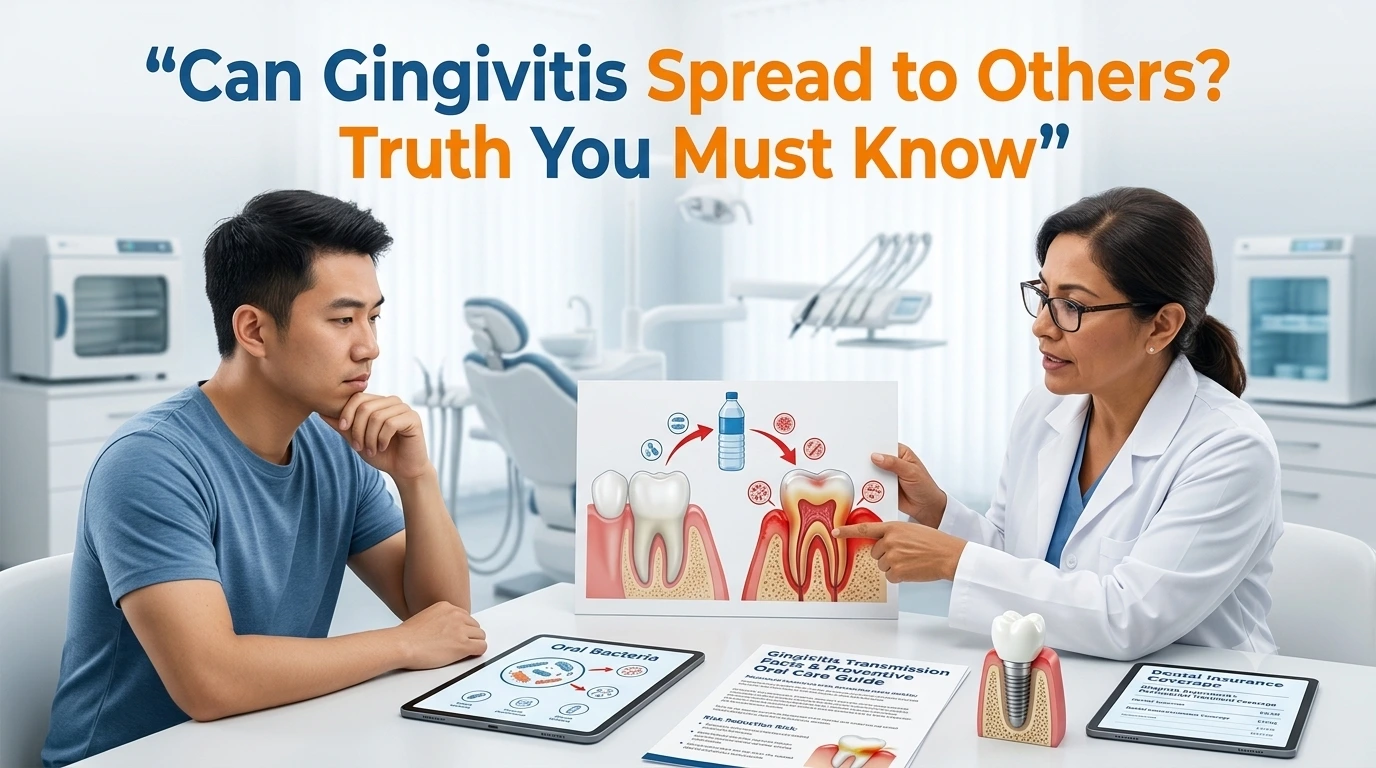
If you've recently been diagnosed with gingivitis or learned that your partner has gum disease, you may be wondering:
Is gingivitis transmittable? Can you pass gingivitis to another person?
It's a reasonable concern. Many people worry about spreading gum disease bacteria through kissing, sharing drinks, or everyday family interactions.
The good news is that gingivitis is not contagious like a cold or the flu. However, there is an important detail many people don't understand: the bacteria associated with gingivitis can be transferred from one person to another.
Understanding the difference between bacterial transfer and gum disease itself can help you protect your oral health and make informed decisions about prevention.
In this article, you'll learn how gingivitis develops, whether it can spread through saliva, what activities may increase bacterial transfer, and how preventive dental care can help keep your gums healthy.
Can Gingivitis Spread to Others? Quick Answer
Gingivitis itself is not contagious. However, the bacteria associated with gingivitis can spread through saliva during activities such as kissing or sharing oral hygiene items. Whether someone develops gingivitis depends on plaque buildup, oral hygiene habits, immune response, and overall gum health.
What Is Gingivitis?
Gingivitis is the earliest stage of gum disease. It occurs when plaque, a sticky bacterial film, builds up along the gumline, causing inflammation of the gum tissue.
When plaque is not removed through regular brushing and flossing, it can harden into tartar. This creates an environment where harmful bacteria thrive, leading to redness, swelling, and bleeding gums.
Common Signs of Gingivitis
- Red or swollen gums
- Bleeding while brushing or flossing
- Tender gum tissue
- Persistent bad breath
- Increased gum sensitivity
The encouraging news is that gingivitis is usually reversible when detected and treated early.
Is Gingivitis Transmittable?
Many people are surprised to learn that gingivitis itself does not spread from person to person. What can spread is the bacteria that contribute to gum disease.
This Distinction Is Critical
A person can be exposed to oral bacteria without ever developing gingivitis. Gum disease develops only when harmful bacteria combine with plaque buildup and poor oral hygiene habits.
Disease vs. Bacterial Transfer
| Myth | Fact |
| Gingivitis is contagious | No |
| Gum disease bacteria can spread | Yes |
| Kissing automatically causes gingivitis | No |
| Healthy gums reduce risk | Yes |
| Good oral hygiene lowers susceptibility | Yes |
Think of bacterial transfer as planting a seed. Whether that seed grows depends on the environment. A healthy mouth with good oral hygiene is much less likely to develop gingivitis.
How Do Gingivitis Bacteria Spread?
Oral bacteria can spread through saliva, especially during activities that involve close contact with the mouth.
Common Ways Bacteria May Transfer Include:
- Kissing
- Sharing drinks
- Sharing utensils
- Sharing toothbrushes
- Sharing retainers or mouthguards
However, bacterial exposure alone is not enough to cause gingivitis.
Understanding the Oral Microbiome
One area many articles overlook is the role of the oral microbiome.
Your mouth naturally contains hundreds of bacterial species. Some are beneficial, while others can contribute to plaque formation and gum inflammation.
When harmful bacteria become dominant, plaque biofilm develops along the gumline. Over time, this may trigger gingival inflammation and eventually lead to gingivitis.
Can Parents Pass Gum Disease Bacteria to Children?
Parents can transfer oral bacteria to children through saliva-sharing behaviors, but this does not mean a child will automatically develop gingivitis.
Examples Include:
- Sharing spoons
- Testing food with the same utensil
- Cleaning pacifiers with saliva
- Sharing toothbrushes
Children with healthy brushing habits and regular dental visits are much less likely to develop gum problems.
In clinical practice, preventive education for families often plays a major role in reducing the risk of future gum disease.
Activities That May Increase the Risk of Bacterial Transfer
Some activities expose people to more oral bacteria than others.
Household Risk Matrix
| Activity | Risk Level |
| Sharing Toothbrushes | High |
| Sharing Retainers | Moderate-High |
| Kissing | Moderate |
| Sharing Oral Appliances | Moderate |
| Sharing Drinks | Low |
| Sharing Utensils | Low |
Among these activities, sharing toothbrushes poses the greatest concern because it directly transfers bacteria between mouths.
For this reason, dentists strongly recommend never sharing toothbrushes.
The 4-Factor Gingivitis Model
Gingivitis usually develops when four conditions come together:
1. Harmful Bacteria
Certain bacteria contribute to plaque formation.
2. Plaque Accumulation
Plaque provides a protective environment for harmful bacteria.
3. Host Immune Response
Every person's immune system responds differently.
4. Oral Hygiene Habits
Regular brushing and flossing help control bacterial growth.
Additional Risk Factors Include:
- Smoking
- Diabetes
- Dry mouth
- Hormonal changes
- Poor nutrition
This explains why two people may be exposed to the same bacteria but experience very different outcomes.
Can Gingivitis Become Periodontitis?
Yes. Untreated gingivitis can progress to periodontitis, a more advanced form of gum disease that can damage the bone that supports the teeth.
Periodontitis May Cause:
- Gum recession
- Bone loss
- Loose teeth
- Tooth loss
The good news is that early intervention often prevents this progression.
This is one reason preventive dentistry is so important. Identifying gingivitis early can help avoid more complex treatment later.
How to Prevent Gingivitis and Protect Your Oral Health
Preventing gingivitis starts with controlling plaque and maintaining healthy daily habits.
Prevention Checklist
✓ Brush twice daily with fluoride toothpaste
✓ Floss every day
✓ Schedule professional dental cleanings
✓ Replace your toothbrush regularly
✓ Avoid tobacco products
✓ Drink plenty of water
✓ Eat a balanced diet
✓ Never share toothbrushes
✓ Attend routine preventive dental visits
At Eastside Modern Dentistry, preventive dentistry focuses on identifying gum problems early and helping patients maintain healthy gums before serious complications develop.
When Should You See a Dentist?
You should schedule a dental visit if you notice gingivitis symptoms that do not improve with better oral hygiene.
Warning Signs Include:
- Bleeding gums
- Swollen gums
- Persistent bad breath
- Tender gum tissue
- Receding gums
Many people ignore these symptoms because they are often painless at first. Unfortunately, waiting too long can allow gingivitis to progress into more serious gum disease.
A professional dental evaluation can identify problems early and help preserve long-term oral health.
FAQ’s
Can you pass gingivitis to another person?
You cannot directly pass gingivitis. However, you can transfer oral bacteria that may contribute to gum disease under the right conditions.
Can kissing cause gingivitis?
Kissing can transfer bacteria, but it does not automatically cause gingivitis. Good oral hygiene remains the most important factor.
Can sharing food spread gingivitis?
Sharing food may transfer some bacteria, but the risk is generally lower than that of sharing oral hygiene items.
Can mouthwash prevent bacterial transfer?
Antimicrobial mouthwash may help reduce bacterial levels, but it should not replace brushing, flossing, and regular dental care.
Key Takeaways
Many people assume gingivitis spreads from person to person, but the reality is more nuanced.
Gingivitis is not contagious. However, the bacteria associated with gum disease can spread through saliva. Whether those bacteria lead to gingivitis depends largely on oral hygiene habits, plaque accumulation, immune response, and overall oral health.
The best defense against gingivitis is prevention. Daily brushing and flossing, professional dental cleanings, and routine dental exams can help keep your gums healthy and prevent gum disease from progressing.
If you are experiencing bleeding gums, gum tenderness, or other signs of gingivitis, scheduling a preventive dental evaluation can help identify problems early and protect your long-term oral health.