
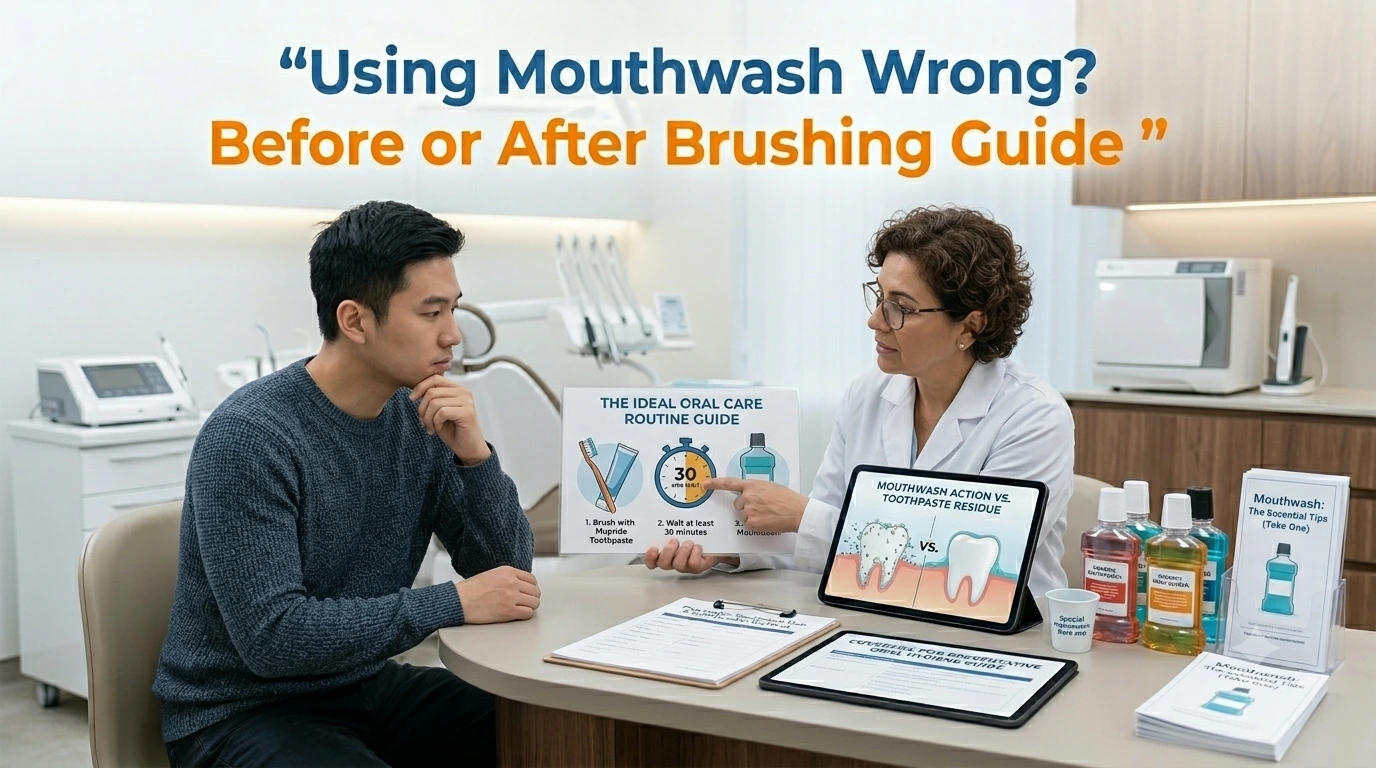
Many people use mouthwash every day, but surprisingly, many are unsure whether they are using it correctly. One of the most common questions dentists hear is:
Should you use mouthwash before or after brushing?
The answer matters because the timing of mouthwash can affect how well fluoride toothpaste protects your teeth. While mouthwash can support oral hygiene, freshen breath, and reduce bacteria, using it at the wrong time may reduce some of its benefits.
At Eastside Modern Dentistry, questions about the timing of mouthwash use frequently come up during preventive dental visits. Understanding the proper sequence can help you get the most out of your daily oral care routine and better protect your teeth and gums.
In this guide, you'll learn exactly when to use mouthwash, how to use mouthwash correctly, common mistakes to avoid, and what dentists recommend for long-term oral health.
What Is Mouthwash?
Mouthwash is a liquid oral rinse designed to reduce bacteria, freshen Breath, strengthen enamel with fluoride, or support gum health. It is intended to complement brushing and flossing—not replace them.
Different mouthwashes serve different purposes. Some focus on cavity prevention, while others help manage bad Breath, gum inflammation, or dry mouth.
The Most Effective Oral Hygiene Routine Combines:
- Brushing twice daily
- Flossing once daily
- Appropriate mouthwash use
- Regular preventive dental visits
Why Does Mouthwash Timing Matter?
Mouthwash timing matters because fluoride toothpaste continues protecting teeth after brushing. Using mouthwash immediately afterward may dilute or wash away some of the fluoride left on tooth surfaces.
To understand why, it helps to know how fluoride works.
Every day, acids from food, beverages, and oral bacteria attack your teeth. This process can weaken enamel through a process called demineralization.
Fluoride helps reverse early damage through remineralization, strengthening enamel and making teeth more resistant to decay.
When you brush with fluoride toothpaste, a small amount of fluoride remains on your teeth. Dentists often recommend allowing this fluoride to stay in place for a period of time rather than immediately rinsing it away.
How Fluoride Supports Preventive Dentistry
Preventive dentistry focuses on stopping problems before they become serious. Fluoride is one of the most effective tools for preventing tooth decay.
When combined with:
- Good brushing habits
- Daily flossing
- Professional cleanings
- Regular dental exams
Fluoride can significantly reduce the risk of cavities and support long-term oral health.
What Happens If You Use Mouthwash Immediately After Brushing?
Using mouthwash immediately after brushing is generally not harmful, but it may reduce the retention of fluoride on your teeth. Waiting before rinsing may help maximize cavity protection.
If you've been using mouthwash after brushing for years, don't worry, you haven't been damaging your teeth.
However, research suggests that immediate rinsing may reduce the concentration of fluoride left on the enamel.
A Simple Adjustment Can Make Your Routine More Effective:
- Brush thoroughly with fluoride toothpaste.
- Spit out excess toothpaste.
- Avoid rinsing with water.
- Wait approximately 30 minutes before using mouthwash.
This approach allows fluoride to remain on the teeth longer while still providing the benefits of mouthwash.
Mouthwash Before vs After Brushing: Which Is Better?
| Timing | Benefits | Considerations |
| Before Brushing | Freshens the mouth and may loosen debris | Less emphasis on fluoride retention |
| Immediately After Brushing | Common and convenient routine | May reduce fluoride concentration on teeth |
| Separate Time of Day | Maximizes fluoride retention | Requires additional planning |
For cavity prevention, using mouthwash separately from brushing is often preferred.
How to Use Mouthwash Correctly
The best way to use mouthwash is as part of a complete oral hygiene routine that includes brushing, flossing, and routine dental care.
Morning Routine
- Brush for two minutes.
- Clean between teeth with floss or interdental cleaners.
- Spit out toothpaste.
- Use mouthwash later if desired.
Evening Routine
- Floss thoroughly.
- Brush with fluoride toothpaste.
- Spit out excess toothpaste.
- Avoid rinsing immediately.
How Long Should You Swish?
Most mouthwash products recommend swishing for:
30 to 60 seconds
Always follow the instructions on the product label.
Should You Rinse With Water After Mouthwash?
Generally, no.
Rinsing with water immediately after using mouthwash may reduce the effectiveness of active ingredients.
Does the Type of Mouthwash Change the Answer?
Yes. Different types of mouthwash are designed for different oral health goals, and the ideal timing may vary by product.
Fluoride Mouthwash
Designed to strengthen enamel and reduce cavity risk.
Recommended for:
- Frequent cavities
- Orthodontic patients
- Higher cavity risk individuals
Antiseptic Mouthwash
Helps reduce bacteria that contribute to plaque and gingivitis.
May be recommended for patients with gum inflammation.
Alcohol-Free Mouthwash
Often preferred for people with:
- Dry mouth
- Sensitive oral tissues
- Daily use needs
Cosmetic Mouthwash
Primarily provides temporary fresh breath.
May not offer the same therapeutic benefits as fluoride or antiseptic rinses.
Best Mouthwash Timing Based on Your Goal
One important detail many articles overlook is that the best timing depends on what you're trying to achieve.
| Oral Health Goal | Recommended Timing |
| Cavity Prevention | Separate from brushing |
| Fresh Breath | After meals or as needed |
| Gum Health | As recommended by your dentist |
| Braces or Orthodontics | Fluoride rinse at a separate time |
| Dry Mouth | Throughout the day as directed |
A routine that works well for one person may not be ideal for someone dealing with cavities, gum disease, dry mouth, or orthodontic appliances.
Why Mouthwash Is Only One Part of Good Oral Hygiene
Mouthwash can support oral health, but it cannot replace brushing and flossing because it does not physically remove plaque from tooth surfaces.
Brushing physically removes plaque biofilm from teeth, while mouthwash helps reduce bacteria and support oral hygiene.
Together, they contribute to:
- Cavity prevention
- Healthier gums
- Reduced plaque buildup
- Fresher breath
- Long-term enamel protection
When Should You Talk to a Dentist About Your Oral Hygiene Routine?
If you experience recurring cavities, persistent bad Breath, gum irritation, dry mouth, or uncertainty about your oral care products, a dentist can help create a personalized preventive care plan.
You Should Consider Scheduling an Evaluation If You Notice:
- Frequent cavities
- Bleeding gums
- Chronic bad Breath
- Tooth sensitivity
- Dry mouth
- Questions about oral care products
At Eastside Modern Dentistry, we take a personalized approach to preventive dentistry. Every patient's oral health needs are different, and the right mouthwash recommendation depends on your individual risk factors and goals.
Key Takeaways
- Mouthwash should support brushing and flossing—not replace them.
- For many adults, using mouthwash separately from brushing helps preserve the benefits of fluoride.
- Fluoride helps strengthen enamel and prevent cavities.
- Different types of mouthwash serve different purposes.
- The ideal routine depends on your oral health goals and dental needs.
- Preventive dental care remains the foundation of long-term oral health.
FAQ’s
Should you use mouthwash before or after brushing?
For most adults, mouthwash is best used at a separate time from brushing or about 30 minutes after brushing with fluoride toothpaste.
How long should you wait after brushing to use mouthwash?
A waiting period of approximately 30 minutes is often recommended to maximize fluoride exposure.
Is mouthwash better in the morning or at night?
Both can be effective. The best timing depends on your oral health goals and the type of mouthwash you use.
Can mouthwash help prevent cavities?
Yes. Fluoride-containing mouthwashes may help strengthen enamel and reduce the risk of cavities when used appropriately.
Should you use mouthwash after every meal?
Not necessarily. The need for mouthwash varies based on your oral health needs and your dentist's recommendations.
Is alcohol-free mouthwash better?
Alcohol-free mouthwash is often preferred for people with dry mouth, sensitive tissues, or those seeking a gentler daily rinse.
Final Thoughts
The question of whether to use mouthwash before or after brushing may seem small, but it can influence how effectively your oral hygiene routine protects your teeth.
For many adults, using mouthwash separately from brushing allows fluoride toothpaste to do its job while still providing the benefits of a rinse.
If you're unsure which mouthwash is right for you or want personalized guidance on your oral care routine, a preventive dentistry visit can help. At Eastside Modern Dentistry in Issaquah, our team is committed to helping patients build healthy habits that support lasting oral health.