
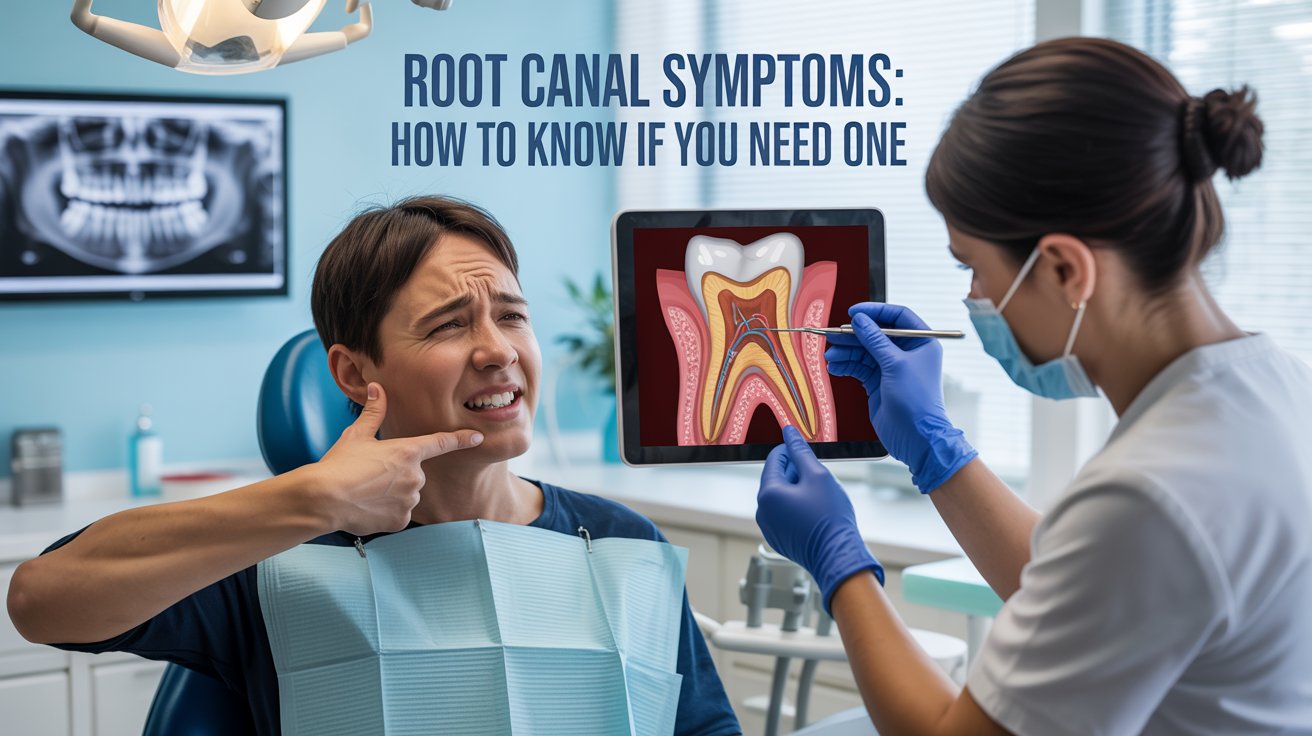
Do you have pain, sensitivity, or swelling of your teeth? You might be asking yourself whether these are symptoms that you require a root canal. It may be difficult to determine whether the problem is severe enough to need treatment.
This means that by ignoring symptoms, you may cause pain to escalate, make the procedure more complex, or even permanently damage your tooth. You should have an understanding of the symptoms to act promptly.
This paper will discuss the typical symptoms of a root canal, and you can see when you need to visit the dentist to be treated.
What is a Root Canal?
A root canal is a dental treatment that is done to cure an infection or damage that is within a tooth. The pulp has nerves and blood vessels, and therefore, when infected it may result in pain and swelling.
The process entails extracting the infected pulp, rinsing the inside of the tooth, and sealing it to avoid any additional infection. The treatment of a tooth involves the placement of the crown on the tooth in most cases to regain its functionality and strength.
Root Canals are used to conserve a tooth that would have to be extracted, which preserves natural teeth and oral health.
Common Root Canal Symptoms
Root canal symptoms are considered to have a number of symptoms, which show an issue within the tooth. Early identification can be used to avoid complications.
- One of the common signs is tooth pain, particularly during chewing or when exerting force on the teeth. The pain can be chronic or intermittent.
- Hot or cold sensitivity that persists even when the source is eliminated may also be an indicator that there is a problem in the tooth.
- The presence of swelling and tenderness of the gums in the area of the affected tooth may be a sign of infection.
- Darkening of the tooth is another symptom usually due to damage or infection in the pulp.
It may develop a small bump on the gums that looks like a pimple, which may leak pus and is a sign of an abscess.
How Do You Know If You Need a Root Canal?
To know the answer to the question, what is the reason you should know you need a root canal, you have to closely observe your symptoms.
In case of deep infection that cannot heal itself, the pain can be severe, persistent, or aggravated over time.
Another significant symptom is sensitivity, which is persistent, particularly when it comes to changes in temperature.
Findings such as swelling in the gums or face, and discomfort may indicate the spread of the infection.
When several symptoms are observed simultaneously, it raises the chances of having a root canal.
The promptness of the detection of root canal symptoms ensures their timely treatment and prevents more severe complications.
Signs You Shouldn’t Ignore: When to See a Dentist
Postponing treatment might exacerbate the problem of the teeth and can even cause loss of teeth or cause further infection. What could start in a mild form can easily develop into a more serious condition when unattended to.
You are to visit a dentist as soon as possible in case you feel severe or persistent pain in the tooth, if you feel that it is sensitive to hot or cold, if you notice that your gums or face are swollen, or if you see that your mouth is infected with pus or bad taste. These are usually signs that the infection has penetrated to the deeper parts of the tooth.
Pain that disrupts daily activities, sleeping, or eating cannot be overlooked. Although the pain may be sporadic, it can also indicate underlying problems that may need to be addressed by a professional.
At a dental appointment, the dentist can carry out a complete check-up, have X-rays to see the level of damage or infection, and decide on the need to have a root canal. With early diagnosis and prompt treatment, it is possible to save the tooth and avoid more complications.
Comparison Overview
| Condition | Symptoms | Severity | Treatment |
| Root Canal Issue | Lasting pain, swelling, tenderness, and abscess. | High | Root canal treatment |
| Cavity | Sensitivity, mild to moderate pains. | Moderate | Filling |
| Gum Disease | Swelling, bleeding gums, and bad breath. | Varies | Cleaning and medication |
| Tooth Fracture | Painful bite. | Moderate to high | Crown or extraction |
FAQ
What are the symptoms of a root canal?
The constant pain, sensitivity, swelling, and infection are good signs that you might require a root canal.
Will a tooth cure itself or does it need a root canal?
When the pulp is infected, it cannot heal itself and normally needs to be subjected to a root canal.
What would be the result of not attending to root canal symptoms?
Symptoms should not be overlooked and might result in serious infection, pain, and even loss of teeth.
Is a root canal bad?
No, root canals are safe surgeries that help to ease your pain and preserve your natural tooth.
How We Can Help
At EMD, we are experts in the early detection and treatment of root canal symptoms, which will help you prevent complications and keep your teeth healthy.
Our Approach
We start with an elaborate consultation and diagnosis to get acquainted with your symptoms. Our team applies sophisticated methods in order to decide on the necessity of a root canal and carry out the procedure with accuracy and attention.
Why Choose Us
Our priorities are patient-centered, effective, and comfortable treatment. Our highly qualified staff and advanced technology will help make your root canal treatment as pain-free as possible and help us maintain your overall oral health in the long-term.
Leave a Reply