
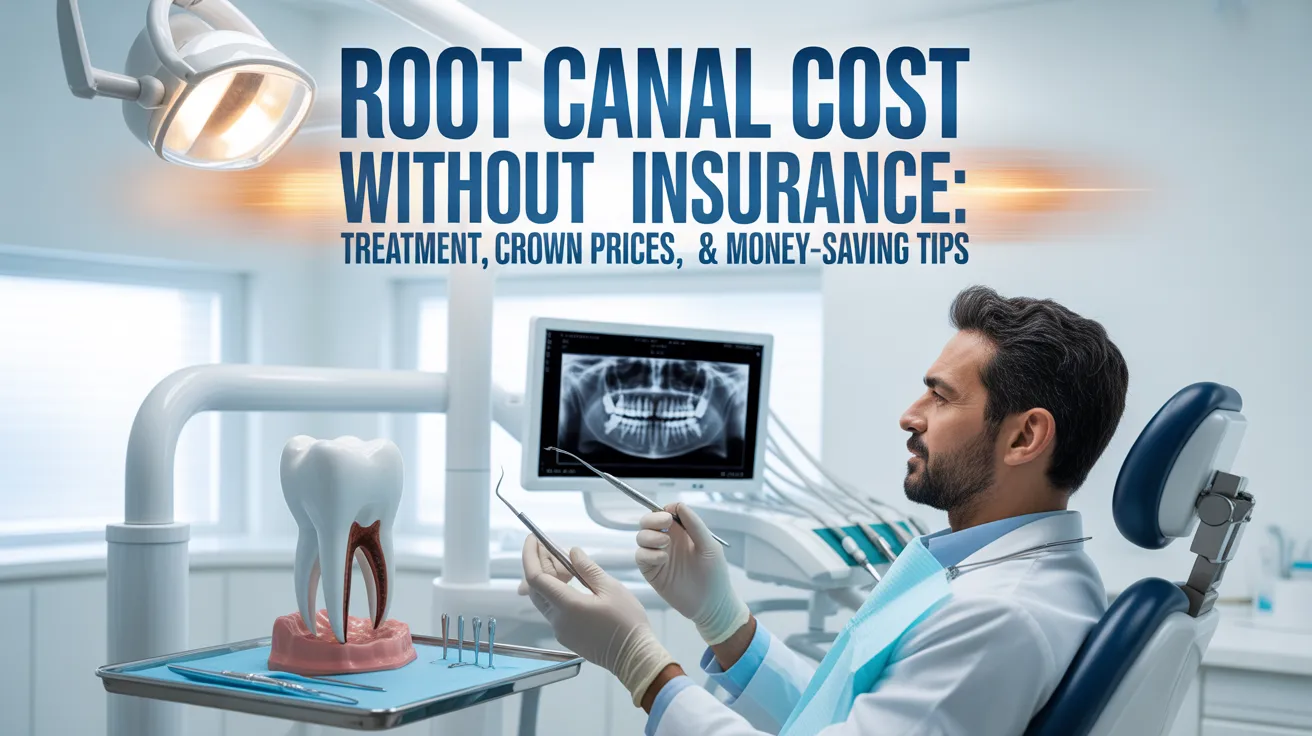
Root canal treatment without insurance means patients pay the full procedure cost directly to the dental clinic rather than using negotiated insurance rates. The overall cost will be based on the involved tooth, the intensity of infection, diagnostic imaging requirement and the necessity of a crown after.
Though the initial expense may be huge, early intervention will avoid loss of teeth, spreading of the infection, and more complicated interventions. Easy cost talks and treatment plans enable patients to know their options and take care in a confident manner by maintaining their own teeth and overall dental health.
What Is a Root Canal and Why Is It Needed?
Root canal is the treatment of the infection within the tooth pulp. This is advised by dentists when decay penetrates the inner tissue, when there is a severe infection or abscess, or a crack exposing the nerve has occurred due to trauma. Such symptoms are permanent pain, temperature sensitivity, swelling, or tenderness on chewing. Early treatment eliminates infection and maintains the natural tooth, and this prevents more complex and expensive measures in the future.
What Happens During a Root Canal Procedure?
A clinical examination and X-rays are used by the dentist to determine the level of infection. Following the numbing of the area, the infected pulp is excised within the canals. The canals are flushed, cut, and sealed to avoid gaining the infection again. A temporary filling is a safeguard for the tooth before final restoration.
Why a Crown Is Often Required After a Root Canal
Root canal therapy of teeth makes them lose structural strength. A dental crown replenishes strength and use. It defends the tooth against fracture and permits regular chewing. In the case of root canal no insurance, patients ought to add the cost of the crowns to the total cost of the treatment to be successful in the long run.
Root Canal Cost Without Insurance - Real Price Breakdown
The number of patients who pose the question of how much a root canal costs without insurance is high. Prices depend on the location of teeth, complexity, and the type of provider.
Average Cost of a Root Canal Without Insurance
The national averages are 700-1000 for a front tooth. The average price of the premolars is around 800 to 1200. The price of molars is usually between 1000 and 1500 dollars since it has several canals. An endodontist could have higher prices than a general dentist because of special training and modern equipment.
Cost Differences Based on Tooth Location
Front Tooth Root Canal: One canal is typical of anterior teeth, which simplifies the procedure and reduces the cost.
Premolar Root Canal: Premolars can either have one or two canals, which is very time-consuming and expensive.
Molar Root Canal: Molars commonly contain canals three or more. They are the most costly to purchase since they are located at the rear of the mouth, thus making them complicated to procure
What Factors Influence the Final Cost?
The time of treatment depends on the severity of the infection. Root canal retreatment complicates the process. It may be made more expensive with advanced imaging tests like a CBCT scan. The location will affect the pricing standards. Total cost may also be increased by emergency appointments.
What to Expect After a Root Canal
Recovery Timeline
The tenderness can be mild in a few days. The majority of the patients bounce back to normal activities within a short time.
Pain Management
Over-the-counter drugs tend to manage pain. Acute or chronic pain needs to be examined.
Significance of Timely Crowned.
Late placement of the crowns predisposes to fracture. Correct restoration safeguards the tooth under treatment and enhances its life span.
Results to be Noticed as Indications of Complications.
Follower care should be taken right away in cases of swelling, extreme pain, or repetitive sensitivity.
Affordable Root Canal Solutions at EMD
Eastside Modern dentistry offers transparent pricing consultations before treatment. The patients are thoroughly informed about procedure prices and restoration prices.
Root Canal and Crown Cost Planning at EMD
Since the price of root canal and crown without insurance tends to go up to a bigger investment, clinicians develop their own treatment plans and describe the progression of every step. Emphasis is laid on conserving natural teeth by way of conservative care.
Flexible Payment Options for Uninsured Patients
House finance recommendations assist patients in coping with the costs. Phased treatment planning can be used to plan treatments based on financial comfort and clinical priority.
Why Patients Trust EMD
Modern diagnostic technology has been adopted by experienced dental practitioners to guarantee proper treatment. Informed decisions are supported by safety commitment and transparency.
Frequently Asked Questions
1. How much is a root canal without insurance on average?
The majority of procedures are between 700 and 1500 dollars, based on the type of tooth and the provider.
2. Why does the cost of a root canal without insurance vary so much?
Prices are influenced by the location of teeth, the severity of infection, the skills of the provider, and the imaging requirements.
3. How much does a root canal and crown cost without insurance combined?
The total amount usually ranges between 1,500 and 3,000 per combined cost based on type of crowns and the location of teeth.
4. Is it cheaper to extract a tooth instead of getting a root canal?
Extraction can also be cheaper in the short term, it is replaced by implants or bridges, which are more expensive in the long term.
5. Can I delay placing a crown after a root canal?
Delay is a risk factor for fractures and can negate treatment results.
6. Do dental schools offer affordable root canal treatment?
There are student clinics that are under supervision and offer lower fee services.
7. Are payment plans available for uninsured patients?
Most clinics, such as Eastside Modern Dentistry, have financing options for qualified patients.
Final Thoughts - Planning for Root Canal Costs Without Insurance
The cost of root canals without insurance is determined based on the complexity, location of the tooth, and the need to restore. Early planning, which includes taking into account the expenses of the crown, helps to avoid any financial burden. Quick treatment eliminates infection and pain, and it also saves natural teeth. Understanding and asking questions of your dental caregiver and reviewing costs can enable you to make well-informed choices that will keep your teeth healthy.
Leave a Reply