
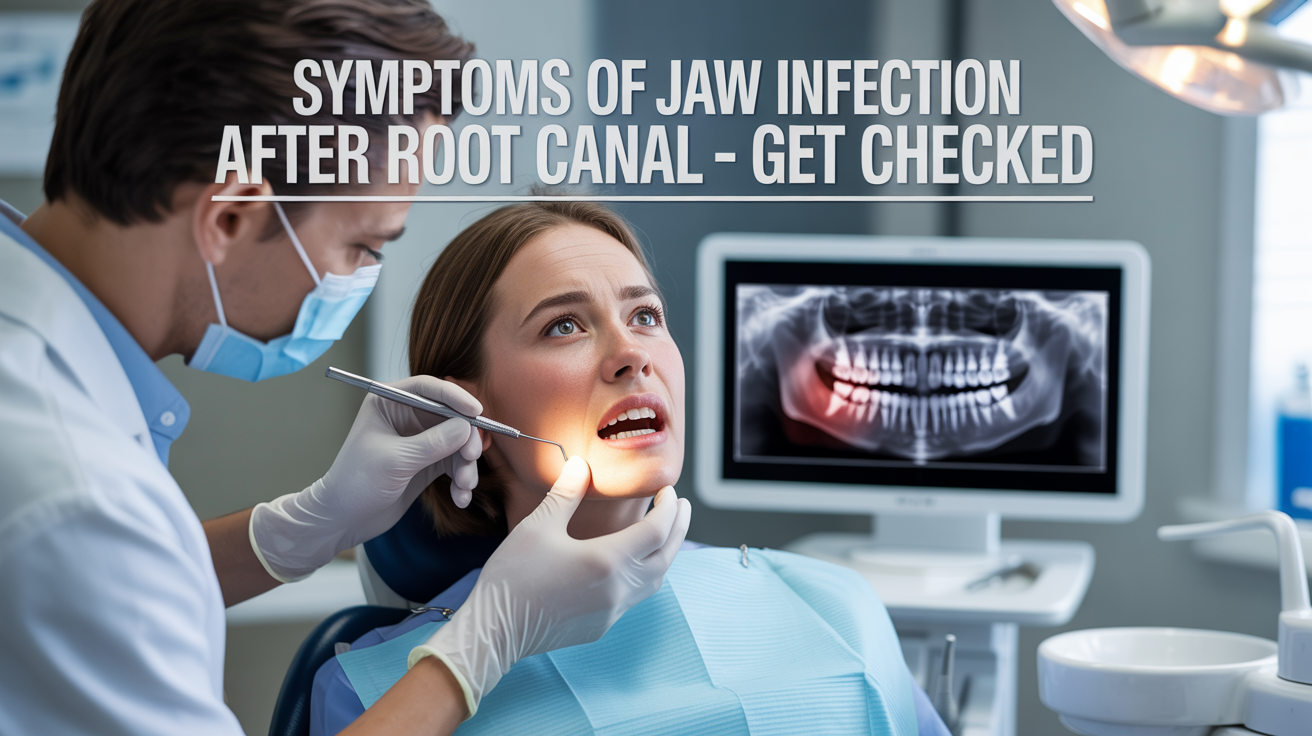
Root canal is not supposed to be a solution to a dental issue, but rather an extension of one. The healing process is smooth and easy for the majority of patients. However, infection may occur in the jaw after treatment in rare cases. When this occurs, a patient may be experiencing confusing and dismissible symptoms.
Being aware of the symptoms of jaw infection after root canal would allow you to take action on time and prevent severe complications.
What Is a Jaw Infection After a Root Canal?
A post-root canal infection of the jaw takes place when bacteria are left in the vicinity of the tooth root or when bacteria invade the area later. The infection is not limited to the tooth, but it also enters the adjacent jawbone or soft tissue.
Some discomfort after a root canal is expected. Light pain, aching, or discomfort normally subsides in a few days. The behavior of an infection and thus the symptoms of jaw infection after root canal are different. Pain may exacerbate, or the swelling may get bigger, or the symptoms may recur after appearing to have gone away. The most notable danger indicator is that change.
Knowing this difference will enable you to know when healing is normal and when there is something wrong.
Signs of Infection After Root Canal
Jaw infections are usually silent to begin with. Early symptoms might be mild in nature, but they should not be overlooked.
Jaw Pain and Discomfort After Root Canal
The most typical symptom is continuous pain in the jaw. The pain can be deep, aching, or throbbing as opposed to sharp.
Another red flag is the pain that appears during the process of chewing or biting. In case the tooth causes discomfort days after treatment, one may have an infection. Such pain usually does not subside; it becomes more pronounced.
Swelling and Inflammation Signs
The swelling of the lower face or the jaw is not normal healing. The area can either appear puffy or tight and tender.
Along the jawline, tenderness may also develop. Light touch with pain can also be one of the symptoms of jaw infection after root canal. The swelling typically indicates that the infection is spreading in the subsurface.
Oral and Sensory Changes
It might manifest as a constant bad taste or a nasty smell. This may occur during the draining of infected fluid to the mouth.
Another warning sign is soreness of the gums around the treated tooth. The gums are either swollen, sore, or tender. All these symptoms usually indicate that the bacteria are still alive.
It is easy to treat these changes early.
Severe Jaw Infection Symptoms
Certain symptoms indicate that the infection is no longer localized and requires immediate treatment.
Jaw Movement Problems and Stiffness
Jaw stiffness or inability to open your mouth may happen. This can be like being tight or restricted.
The swelling that extends to the face, neck, or under the chin is particularly alarming. This may interfere with breathing or swallowing, and it should be addressed immediately.
Systemic Symptoms of Jaw Infection
Fever or chills means that the body is fighting against an infection. This does not follow a regular dental treatment.
It may be followed by fatigue or a general unwell feeling. All these are indications that the infection could be spreading to the whole body, learn to recognize the symptoms of sepsis from tooth infection so you know exactly when to act. Understanding the full picture of jaw infection spreading to body can help you respond before it reaches that point.
Normal Healing vs Infection Signs
Mild soreness is associated with a normal root canal. A majority of patients experience slow progress in a couple of days.
Infection looks different. Instead of easing, pain increases, many patients describe lying awake wondering why their tooth hurts more at night. It becomes more swollen and not less. The symptoms can come and go, and then come at short notice. Such patterns are indicative of the fact that the process of healing is not going in the right direction.
Causes of Jaw Infection After Root Canal
In some cases, there are small spots of infection that are hidden within the tooth. With time, bacteria may multiply once again.
Fissures in the tooth or the delay in laying a crown give a chance to the bacteria to come back. This increases the risk of jaw involvement and possible infection spread to the brain.
Some of the health conditions are also risky in this scenario. Diabetes, smoking, and a low immune system reduce the healing process and complicate the management of infections.
Being aware of the cause would prevent the recurrence.
Is Jaw Infection a Dental Emergency?
The swelling would extend, there would be fever, and the inability of the jaw to move would require immediate dental treatment. A very severe infection can be implied by these symptoms.
If pain or swelling persists even without severe symptoms, urgent dental evaluation is still important. The damage is avoided in the long run through early treatment.
How Dentists Diagnose Jaw Infection
Dentists start by paying close attention to the jaw, gums, and treated tooth. They observe swelling, tenderness, and drainage.
Dental X-rays or higher imaging are useful in the identification of infection within the bone or in the tooth root. Reviewing past treatment details also guides an accurate diagnosis. The solution can be attained when there is a clear diagnosis.
Jaw Infection After Root Canal Treatment
Antibiotics aid in the prevention of bacteria and also in the management of inflammation. They alleviate the symptoms without getting rid of their root cause.
So, it is necessary to treat the source of the infection. This may involve re-treating the root canal or draining infected tissue.
There are some extreme circumstances where tooth extraction could be necessary to safeguard the bone and the general oral health. Timely treatment results in improved outcomes.
The Treatment of Jaw Infection Following Root Canal with EMD
At Eastside Modern Dentistry, it begins with proper assessment and straightforward responses. High-technology images assist in revealing latent infection.
Every patient is provided with an individual plan that is centered on comfort and safety. It is aimed at preventing infection and maintaining oral health.
Follow-up visits provide adequate healing. The patients are assisted throughout the process.
FAQs
Is Sore Jaw After Root Canal Normal?
Normal pain fades. The pain of infection becomes more painful or recurring.
Can Jaw Infection Heal on Its Own?
No. It has to be professionally done.
How Serious Is a Jaw Infection?
Without treatment, it may be severe.
Can Antibiotics Treat Jaw Infection?
No. The cause of infection should be addressed.
When Should I Visit a Dentist?
As soon as symptoms begin or get complicated.
Leave a Reply